Last updated: August 29, 2026
Building an outreach list for gerontologists is trickier than it sounds. Gerontology itself is a broad, multidisciplinary field that overlaps with geriatric medicine but isn’t identical to it, and the professionals who fall under this umbrella work in clinical care, research, policy, and education. That variety makes precise contact targeting genuinely useful — and genuinely hard to get right without a maintained data source.
Before using any list, it’s worth understanding the distinction: gerontologists study aging broadly, across physical, psychological, and social dimensions, while geriatricians are physicians who diagnose and treat age-related medical conditions. Some contact lists blend both groups together, which can dilute relevance if your outreach depends on speaking to one specialty specifically.
What’s on this page:
What’s Included in a Gerontologists Contact List

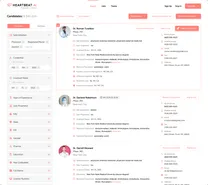
A usable list for this niche typically covers more than a name and email address. Look for these fields when evaluating any provider:
- Name and practice location
- Contact numbers (work, cell, mobile)
- Email address
- Specialization or subfield
- Years of experience
- Sole proprietor status
- Licensed states and license number
- Fax and mailing address
Heartbeat’s database includes these data points for gerontology-related professionals as part of a broader healthcare provider directory, and lists can be filtered by state, specialization, or CRM-ready format.
 Accuracy & coverage of personal contact info were unrivaled by other platforms… this gives any healthcare recruiter a competitive advantage when engaging hard-to-reach healthcare providers.
Senior Growth Strategist






Why List Accuracy Matters More Here Than in Most Verticals
Gerontology-adjacent roles span clinical practice, academia, social work, and policy — which means contact data ages differently across subgroups. A nurse practitioner might change employers every few years; a university-based researcher might keep the same email for a decade. Generic list vendors that scrape once and never refresh tend to perform worst in exactly this kind of mixed-role vertical.
- Targeting precision: filtering by specialization avoids sending clinical-trial recruitment messages to a policy researcher who never sees patients.
- Response rates: current, verified contacts naturally produce fewer bounces and more opens than static, unmaintained lists.
- Cost control: every outdated contact is wasted send volume, and at scale that adds up.
- Compliance exposure: stale lists increase the odds of contacting someone who has changed roles, opted out elsewhere, or is otherwise a poor fit.
Categories You’ll Typically Find in a Gerontology-Focused Database
Gerontology-related contact lists usually span several adjacent titles rather than a single job description. Common categories include:
| Gerontologists Categories |
| Adult-Gerontology Primary Care Nurse Practitioner |
| Geriatric Pharmacist |
| Physical Therapy Geriatric Specialist |
| Gerontological Nurse |
| Gerontologic Nutrition Specialist |
| Adult-Gerontology Acute Care Nurse Practitioner |
| Geriatrics for Family Medicine |
| Geriatrics for Internal Medicine |
| Geriatric Psychiatrist |
| Social Worker in Gerontology |
Coverage by State
Contacts in this niche are available across all 50 states. If you need city- or state-level targeting for a regional campaign, staffing search, or research outreach effort, browse the state directory below:
| Gerontologists By States |
| Gerontologists in Alabama |
| Gerontologists in Alaska |
| Gerontologists in Arizona |
| Gerontologists in Arkansas |
| Gerontologists in California |
| Gerontologists in Colorado |
| Gerontologists in Connecticut |
| Gerontologists in Delaware |
| Gerontologists in Florida |
| Gerontologists in Georgia |
| Gerontologists in Hawaii |
| Gerontologists in Idaho |
| Gerontologists in Illinois |
| Gerontologists in Indiana |
| Gerontologists in Iowa |
| Gerontologists in Kansas |
| Gerontologists in Kentucky |
| Gerontologists in Louisiana |
| Gerontologists in Maine |
| Gerontologists in Maryland |
| Gerontologists in Massachusetts |
| Gerontologists in Michigan |
| Gerontologists in Minnesota |
| Gerontologists in Mississippi |
| Gerontologists in Missouri |
| Gerontologists in Montana |
| Gerontologists in Nebraska |
| Gerontologists in Nevada |
| Gerontologists in New Hampshire |
| Gerontologists in New Jersey |
| Gerontologists in New Mexico |
| Gerontologists in New York |
| Gerontologists in North Carolina |
| Gerontologists in North Dakota |
| Gerontologists in Ohio |
| Gerontologists in Oklahoma |
| Gerontologists in Oregon |
| Gerontologists in Pennsylvania |
| Gerontologists in Rhode Island |
| Gerontologists in South Carolina |
| Gerontologists in South Dakota |
| Gerontologists in Tennessee |
| Gerontologists in Texas |
| Gerontologists in Utah |
| Gerontologists in Vermont |
| Gerontologists in Virginia |
| Gerontologists in Washington |
| Gerontologists in West Virginia |
| Gerontologists in Wisconsin |
| Gerontologists in Wyoming |
How This Kind of Data Gets Compiled and Maintained
A workable process for a specialty list like this generally follows a few consistent steps:
- Sourcing from multiple channels: pulling from licensing boards, professional associations, and public healthcare directories reduces reliance on any single point of failure.
- Verification at intake: checking new records against known-good fields (license status, current employer) before they enter the active list.
- Segmentation by role: tagging by specialization and experience level so users can filter rather than blast a single undifferentiated list.
- Privacy compliance: aligning collection and storage practices with applicable data protection rules.
- Ongoing refresh cycles: re-verifying records on a schedule rather than treating the list as a one-time deliverable.
What Heartbeat Offers for This Vertical

Broad Healthcare Database
Heartbeat’s prospector covers over 11 million healthcare professionals, spanning physicians, nurses, dentists, and allied specialists — gerontology-adjacent roles included. A Chrome extension also lets you look up contact details directly while browsing LinkedIn, Facebook, and other platforms.
Refreshed Records
The database is updated on a regular cycle, covering direct cell numbers, personal emails, and direct dial lines, rather than being frozen at the point of collection.
Predictive Accuracy Modeling
Heartbeat applies predictive modeling to estimate contact accuracy across its database. Vendors typically publish their own accuracy benchmarks, so it’s reasonable to ask any provider — including Heartbeat — for current methodology and sample verification before committing to a large campaign.
Filterable by State or Region
Search and export can be narrowed by state or region, which matters for staffing searches or regional marketing pushes rather than a national blast.
What to Check Before You Buy a List

Legal Compliance
Confirm the data collection and email practices align with applicable rules, including CAN-SPAM requirements in the U.S. and GDPR or CCPA where relevant to your audience. This protects you from compliance exposure and keeps your outreach credible.
Consent and Privacy
Respecting how contacts were sourced and giving clear opt-out options builds trust and reduces spam complaints over time.
Fit for Your Actual Use Case
A list built for marketing outreach may not be the right shape for recruiting or research collaboration. Match the data fields — specialization, license status, years of experience — to what your campaign actually needs.
Refresh Cadence
Ask how often records are re-verified. A list that hasn’t been touched in a year will underperform regardless of how large it is.
Source Transparency
Providers that can explain where their data comes from are generally easier to trust than those that can’t.
Depth of Fields
Specialization, license state, and experience data allow for real segmentation instead of a flat, one-size-fits-all send.
Who Actually Uses Lists Like This

Healthcare Marketers
Agencies promoting services, products, or facilities focused on geriatric care use these contacts to reach professionals whose caseload skews older-adult.
Pharmaceutical Companies
Contacts here support clinical trial recruitment conversations and product-launch communications aimed at professionals who work with aging populations.
Recruitment Agencies
Staffing firms use specialty and location filters to match candidates with open roles in hospitals, clinics, and research settings.
Gerontology Researchers
Academic and applied researchers use directories like this to find collaborators and share findings across institutions.
Elderly Care Facilities
Nursing homes, assisted living operators, and home care agencies use these contacts to establish consulting relationships or referral partnerships.
Insurance Providers
Carriers building senior-focused plans sometimes use this data to connect with professionals who can speak to the needs of that population.
A Practical Outreach Workflow

- Narrow before you send. Pick a subgroup — dementia care, nutrition, policy research — rather than emailing the entire list at once.
- Lead with something useful. Share a relevant resource, finding, or practical insight instead of opening with a pitch.
- Personalize past the first name. Reference the recipient’s actual specialization where you have it.
- Build in opt-outs. Clear unsubscribe options aren’t optional under CAN-SPAM and similar regulations.
- Watch the numbers and adjust. Open rates, click-throughs, and bounces tell you whether the list segment is actually working — cut what isn’t.
Limitations Worth Knowing
No purchased list is perfect. Titles in this field vary by employer and region, so the same role may be labeled differently across records. Academic and policy-focused gerontologists may have less frequently updated contact info than clinicians tied to a hospital system. And any list, however well maintained, is a snapshot — treat periodic re-verification as part of the cost of using it, not an optional extra.
Conclusion
A well-maintained contact list for gerontology-related professionals is useful mainly because it lets you filter by role and specialty instead of guessing. That matters most for marketers, pharmaceutical outreach teams, recruiters, researchers, and elder care operators who need to reach a specific slice of this varied field rather than everyone in it.
FAQs
What is a gerontologist email directory?
It’s a collection of contact records for professionals working in gerontology — a field that includes clinicians, researchers, and other specialists focused on aging — typically organized by specialization, location, and license status.
How can I personalize emails for gerontologists effectively?
Address the recipient by name, reference their specific specialization or research focus where known, and keep the message concise and directly relevant to their work.
Why does list accuracy matter so much in this niche?
Gerontology-related titles span clinical, academic, and policy roles that change and turn over at different rates, so an unmaintained list degrades faster here than in more uniform specialties — leading to bounced emails and wasted outreach budget.