What’s on this page:
Key takeaways
- The article describes a healthcare executive list with contact details and fields such as role, location, and specialty.
- The listed leadership categories include roles such as health information manager, hospice administrator, director of nursing, and chief nursing officer.
- The article says the list can be filtered by role, specialty, or state; confirm current availability with the vendor.
- Before buying, ask how data is sourced, verified, refreshed, and deduplicated.
- Before sending commercial email, assess the laws and requirements that apply to your recipients and campaign.
Last updated: August 28, 2026

Hospital leadership doesn’t sit still.
Hospital CEO positions turned over at a rate of 16 percent for the third consecutive year in 2022, according to the American College of Healthcare Executives, and ACHE itself represents more than 48,000 healthcare executives who lead hospitals and health systems. That kind of movement means a mailing list built a year ago is already showing cracks: titles change, people switch organizations, and inboxes get abandoned. If your outreach depends on reaching hospital and health system leadership directly, list quality determines whether your message lands or bounces.
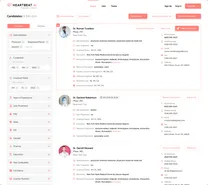
Heartbeat.ai says its database covers healthcare executives across U.S. cities and provides names, roles, and contact details. Ask the vendor how recently records were checked and how often they are refreshed.
What’s Included in a Heartbeat Healthcare Executives Email List

The list is described as including:
- Broad network: Access to a healthcare professional database that includes direct cell phone numbers and personal email addresses.
- Filtering by role and specialty: Segment executives by title, specialty, and other criteria so outreach reaches the right decision-makers instead of a generic leadership roster.
- Verification processes: Data runs through checks intended to reduce bounces and outdated entries.
- Detail beyond contact info: Job history, licensing, and specialty data that support both marketing and recruitment use cases.
- Efficiency: Targeted lists reduce wasted sends and support a better return on outreach spend compared to broad, unfiltered lists.
Data Fields Typically Included
- Executive name
- Location
- Contact numbers (work, cell, mobile)
- Email address
- Specialization
- Years of experience
- Sole proprietor status
- Licensed states
- License number
- Fax
- Address
 Accuracy & coverage of personal contact info were unrivaled by other platforms… this gives any healthcare recruiter a competitive advantage when engaging hard-to-reach healthcare providers.
Senior Growth Strategist





Why List Quality Matters for Outreach to Healthcare Executives

Open rates and engagement
Accurate, current email addresses can help messages reach the intended recipients, but open and reply rates also depend on the message, audience, and timing. Precise targeting can reduce sends to outdated addresses.
Targeted outreach
A clean list lets you focus on executives relevant to your goal—recruitment, partnership, or product marketing—instead of sending the same message to a broad leadership roster.
Brand reputation
Relevant, well-targeted outreach may support trust with healthcare executives. Sloppy, mistimed, or misaddressed messages can undermine it.
ROI and lead generation
Accurate contact data can reduce spending on undeliverable emails, though overall campaign return also depends on factors such as the offer, message, and audience.
Cost control
Bounced emails take time to address and can affect sender reputation. A well-maintained list may help reduce these risks, but it cannot eliminate them.
Healthcare Executive Roles You’ll Find in the Database
The database is described as covering a range of leadership functions across healthcare organizations, including:
| Healthcare Executive Categories |
|---|
| Health Information Manager |
| Hospice Administrator |
| Director of Nursing |
| Healthcare Consultant |
| Chief Nursing Officer |
| Clinical Director |
| Practice Manager |
| Project Manager |
Healthcare Executives by State
The article describes U.S. coverage and state-level breakdowns for regional targeting. Confirm current coverage and availability with the vendor.
How the Data Gets Compiled

Sourcing
Heartbeat.ai describes its data as coming from multiple healthcare-industry channels, including directories, associations, and professional networks. Ask the vendor to explain and substantiate its sourcing methods.
Accuracy checks
Heartbeat.ai says entries are reviewed for current titles and roles. Because executives can change jobs or organizations, ask how recently records were checked.
Cleansing and deduplication
Heartbeat.ai says duplicate and conflicting records are removed before a list is delivered. Ask how these checks are performed and what they cover.
Privacy and compliance
Before using a purchased list for email campaigns, verify how the data was collected and assess your obligations under applicable laws. CAN-SPAM applies to commercial email in the United States; other requirements, including GDPR, may apply depending on the recipients and circumstances. This is not legal advice.
Transparency
Ask vendors to explain their sourcing and verification methods before buying, rather than relying on general claims about data quality.
Why Consider Heartbeat.ai’s Healthcare Executives List

Verification and refresh cycle
Heartbeat.ai says contact data is verified and refreshed regularly. Ask for details about the refresh schedule and how the vendor measures record accuracy.
Coverage
Heartbeat.ai describes its database as covering U.S. providers and executives, with additional coverage in other regions. Confirm the geographic coverage relevant to your campaign.
Data integrity practices
Heartbeat.ai says it uses verification processes to maintain its database. Ask how often records are checked and what verification means in practice.
Filtering for relevance
The article says you can filter the list by roles, specialties, or states. Confirm which filters and records are currently available.
What to Check Before Buying a Healthcare Executives Email List

- Accuracy: Ask how recently the data was verified and what the bounce rate has been for past customers.
- Compliance: Confirm the vendor’s data collection practices and understand your own obligations under CAN-SPAM and any applicable privacy laws before sending.
- Consent and trust: Lists built with attention to privacy tend to produce better engagement than lists that ignore it.
- Quality over volume: A smaller, accurate, well-targeted list usually outperforms a larger one full of outdated contacts.
- Industry fit: A list built specifically around healthcare roles and titles will match your targeting better than a generic executive database repurposed for healthcare.
Who Typically Uses This Kind of List

Pharmaceutical companies
Pharmaceutical companies may use targeted executive data for partnership conversations or product marketing. Confirm that the contacts and proposed outreach are appropriate for your purpose.
Individual healthcare professionals
Healthcare professionals may use relevant contacts for networking or exploring career opportunities. Use contact information in a way that respects applicable privacy rules and recipient preferences.
Marketing and advertising agencies
Agencies may use targeted executive data to plan campaigns for healthcare leadership. Results depend on the quality of the data, targeting, and message.
Research institutions
Researchers may use professional contacts to invite people to surveys or collaborative studies. Follow applicable research, privacy, and consent requirements.
Investment firms and analysts
Investment firms and analysts may use executive contact data for industry research. Verify information independently before relying on it for investment decisions.
Non-profit organizations
Non-profit organizations may use targeted outreach to support awareness campaigns or partnership development. Ensure the outreach is relevant and complies with applicable requirements.
Using the List Effectively

- Personalize the message: Reference the recipient’s role or organization rather than sending a generic template.
- Confirm consent where required: Respecting opt-in and privacy expectations matters more in healthcare than in most other B2B sectors.
- Include a clear call to action: Tell the recipient exactly what you want them to do next.
- Write a subject line that earns the open: It’s the only part of the email guaranteed to be read.
- Track performance: Open rates, click-throughs, and reply rates tell you whether your targeting and messaging are working — adjust based on what the data shows, not assumptions.
- Keep the pitch tight: Whether the goal is a sale, a partnership, or a hire, a clear and concise message outperforms a long one.
The Bottom Line
A healthcare executives email list may support recruitment, partnership development, or targeted marketing, but its usefulness depends in part on how current and relevant the records are. When leadership changes, older contact details may become inaccurate, leading to delivery problems or unwanted outreach.
Heartbeat.ai says it uses regular verification cycles for its healthcare executive data. Ask the company for details about those checks and how it handles inaccurate or outdated records.
FAQs
How can I use the email list for marketing?
Send personalized messages to healthcare executives promoting relevant products, services, or partnership opportunities. Targeting the right roles increases the likelihood of a response compared to a mass, unsegmented send.
How does the email list help with recruiting healthcare professionals?
Direct contact information lets recruiters reach decision-makers and candidates without going through gatekeepers, which speeds up outreach for open roles.
What practices support data privacy and compliance?
Look for vendors that describe their sourcing and verification methods clearly, and confirm your own obligations under regulations like CAN-SPAM before launching a campaign.