Last updated: August 28, 2026

If your work involves reaching endodontists — for recruiting, sales, market research, or professional collaboration — the quality of your contact data determines whether that outreach goes anywhere. A list full of outdated titles or dead inboxes wastes time no matter how good the message is.
Heartbeat AI maintains an endodontist contact database built from multiple verification sources rather than a single static directory. Below is what’s in the list, how it’s assembled, and how to use it without annoying the people you’re trying to reach.
What’s on this page:
What’s Included in a Heartbeat Endodontists Email List

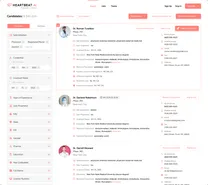
Heartbeat AI‘s endodontist data covers providers across the United States, with fields you can filter and combine for targeted outreach rather than a flat, one-size list.
- Contact details: work and mobile numbers plus email addresses, kept current through ongoing verification.
- Nationwide coverage: records spanning all 50 states, useful whether you’re recruiting regionally or running a national campaign.
- Filterable criteria: build segments by specialization, experience level, or location instead of emailing everyone the same message.
- Multiple use cases: the same dataset supports recruiting, sales prospecting, market research, and professional networking.
- Sourced from vetted partners: data is drawn from 200+ partners, which helps catch errors a single-source list would miss.
Data Fields Typically Included
- Endodontist name
- Location
- Work and mobile phone numbers
- Email address
- Specialization
- Years of experience
- Sole proprietor status
- Licensed states
- License number
- Fax
- Practice address
 Accuracy & coverage of personal contact info were unrivaled by other platforms… this gives any healthcare recruiter a competitive advantage when engaging hard-to-reach healthcare providers.
Senior Growth Strategist





Why Verified Contact Data Matters

A list that’s only partly accurate isn’t just inconvenient — it actively hurts your outreach. Here’s what changes when the data holds up:
- Fewer wasted sends: messages reach real, current addresses instead of bouncing or landing with someone who’s changed roles.
- Faster segmentation: filtering by specialization or location lets you skip broad blasts in favor of relevant, smaller campaigns.
- Better response rates: professionals are more likely to engage when a message is clearly relevant to their practice area.
- Time saved on manual research: you’re not cross-checking directories or state license boards one name at a time.
- A defensible compliance position: ethically sourced, consent-aware data reduces the risk that comes with scraped or purchased lists of unknown origin.
Endodontist Categories in the List
The database spans a range of practice focuses within endodontics, which is useful if your outreach needs to target a specific niche rather than the field broadly.
Endodontists by State
Coverage extends across all U.S. states, which matters if your outreach is regional — a hospital system hiring in one metro area doesn’t need a national list, it needs a filtered one.
| Endodontists By States |
| Endodontists in Alabama |
| Endodontists in Alaska |
| Endodontists in Arizona |
| Endodontists in Arkansas |
| Endodontists in California |
| Endodontists in Colorado |
| Endodontists in Connecticut |
| Endodontists in Delaware |
| Endodontists in Florida |
| Endodontists in Georgia |
| Endodontists in Hawaii |
| Endodontists in Idaho |
| Endodontists in Illinois |
| Endodontists in Indiana |
| Endodontists in Iowa |
| Endodontists in Kansas |
| Endodontists in Kentucky |
| Endodontists in Louisiana |
| Endodontists in Maine |
| Endodontists in Maryland |
| Endodontists in Massachusetts |
| Endodontists in Michigan |
| Endodontists in Minnesota |
| Endodontists in Mississippi |
| Endodontists in Missouri |
| Endodontists in Montana |
| Endodontists in Nebraska |
| Endodontists in Nevada |
| Endodontists in New Hampshire |
| Endodontists in New Jersey |
| Endodontists in New Mexico |
| Endodontists in New York |
| Endodontists in North Carolina |
| Endodontists in North Dakota |
| Endodontists in Ohio |
| Endodontists in Oklahoma |
| Endodontists in Oregon |
| Endodontists in Pennsylvania |
| Endodontists in Rhode Island |
| Endodontists in South Carolina |
| Endodontists in South Dakota |
| Endodontists in Tennessee |
| Endodontists in Texas |
| Endodontists in Utah |
| Endodontists in Vermont |
| Endodontists in Virginia |
| Endodontists in Washington |
| Endodontists in West Virginia |
| Endodontists in Wisconsin |
| Endodontists in Wyoming |
How the Data Gets Compiled

Heartbeat uses several legal, consent-aware collection methods rather than relying on one source:
Publicly Available Sources
Professional directories, industry publications, and official websites provide data that’s openly accessible and legally obtainable.
Industry Partnerships
Collaboration with industry partners provides access to shared databases and networks that help keep records current.
Professional Networks
Dental and healthcare associations surface contact details that endodontists have shared for networking purposes.
Opt-In Submissions
Some contact information comes directly from providers who voluntarily submit it for inclusion in relevant databases.
Verification Processes
Records are cross-referenced across multiple sources to catch outdated or inconsistent entries before they reach a list.
Regulatory Compliance
Collection and storage follow applicable data protection and privacy regulations rather than treating compliance as an afterthought.
What to Check Before You Buy a List

Not every provider list is built the same way. Before committing to one, run through this checklist:
- Update frequency: ask how often records are refreshed — a list untouched for a year is already stale.
- Sourcing method: confirm the data came from ethical, consent-respecting channels rather than scraping.
- Regulatory compliance: verify the provider’s collection and usage practices align with applicable privacy laws.
- Filtering depth: check whether you can segment by specialization, location, or experience, not just pull a flat export.
- Geographic scope: match the list’s coverage to your actual target region — nationwide data is wasted if you only recruit locally.
- Use-case fit: confirm the list supports your specific goal, whether that’s recruiting, sales, or research outreach.
- Field completeness: look for names, locations, phone numbers, and specialization details rather than bare email addresses.
- Vendor transparency: the provider should be clear about how the data was gathered and how it’s maintained.
Who Actually Uses These Lists

The most common users of an endodontist contact list include:
- Healthcare service providers — hospitals and clinics recruiting or coordinating referrals.
- Medical equipment suppliers — vendors marketing tools and devices relevant to endodontic practice.
- Pharmaceutical companies — teams running clinical trial recruitment or educational outreach.
- Healthcare software developers — companies building healthcare software that endodontists might adopt.
- Research institutions — academic teams recruiting participants for studies or surveys.
- Marketing and advertising agencies — agencies running campaigns aimed at dental specialists.
- Job placement agencies — recruiters connecting endodontists with open roles.
- Educational institutions — programs seeking guest lecturers or alumni engagement.
- Professional associations — groups communicating updates and event details to members.
- Government health departments — agencies distributing regulatory or public health updates.
- Consulting firms — practice management or policy consultants building relationships in the field.
Getting Outreach Right: A Practical Workflow

Owning good data is only step one. Here’s a sequence that tends to work better than a single mass send:
1. Segment First
Split the list by location, specialization, or experience before writing a single word of copy. A message aimed at a general endodontist reads differently than one aimed at a pediatric specialist.
2. Personalize Beyond the Name
Reference something specific to the segment — a specialization, a regional detail — rather than a generic greeting with a mail-merge field.
3. Lead With Something Useful
Share a resource, relevant update, or clear reason the recipient should care, instead of opening straight into a sales pitch.
4. Make the Next Step Obvious
One clear call to action beats three vague ones. Decide what you want the reader to do and ask for exactly that.
5. Design for Mobile
Assume the email will be opened on a phone between patients. Keep it short and skip layouts that only render properly on desktop.
6. Watch Timing and Frequency
Space out follow-ups and be mindful of time zones. Overloading a small segment with frequent emails tends to backfire.
7. Test and Adjust
Try variations on subject lines or content with a portion of the list before rolling out the full send.
8. Track What Matters
Open rates, click-throughs, and reply rates tell you more about what’s working than send volume ever will.
9. Leave Room for Feedback
A short question or survey invite can surface useful signal about what your audience actually wants to hear from you.
10. Plan the Follow-Up Sequence
Map out two or three follow-ups in advance rather than deciding reactively after each send.
Limitations Worth Knowing
No provider database is perfect. Even well-maintained lists can include lag between a provider changing practices and that update reaching the dataset, and coverage can be uneven in less populated states. Treat any purchased list as a strong starting point that still benefits from your own periodic spot-checks, especially for high-value contacts.
Conclusion
A well-maintained endodontist email list saves time and improves response rates, but only if the underlying data is accurate and the outreach itself is thoughtful. Heartbeat AI combines verified provider data with filtering options that make it easier to reach the right endodontists instead of everyone at once.
If you’re building a campaign, recruiting pipeline, or research outreach effort around endodontists in the U.S., start with Heartbeat AI and narrow the list to the segment that actually matters for your goal.
FAQs
What is an endodontist email list?
It’s a curated database of contact information for professionals specializing in endodontics, used for targeted outreach rather than general dental marketing.
What information is typically included?
Most lists include names, email addresses, locations, and often additional fields like specialization, credentials, or years of experience.
Can I combine this list with other marketing channels?
Yes. Pairing email outreach with social media, webinars, or content marketing tends to produce a stronger overall response than relying on email alone.