Last updated: August 30, 2026
Washington’s hospital systems run some of the busiest ICUs on the West Coast, and staffing them, marketing to them, or simply reaching a critical care pharmacist for a research or vendor outreach effort all come down to the same problem: finding a working phone number or email address for someone who rarely posts a public directory listing.
This page explains what a critical care pharmacist contact list typically includes, why it’s hard to build one from scratch, and how Heartbeat’s database approaches the problem for Washington State.
What’s on this page:
What a Critical Care Pharmacist Does, and Why Contact Accuracy Matters
Critical care pharmacists work inside ICUs, trauma centers, and cardiac units, managing complex medication regimens for the sickest patients in a hospital. In Washington, programs like the PGY2 Critical Care Pharmacy Residency run jointly by UW Medicine and Harborview Medical Center train pharmacists specifically for this role, working across surgical, medical, and trauma ICUs.
Reaching this group matters for a few distinct reasons:
- Recruitment: Hospitals and health systems competing for a narrow pool of board-certified critical care pharmacists need direct lines of contact, not just a general HR inbox.
- Vendor and clinical outreach: Pharmaceutical companies, device makers, and clinical research teams often need to reach pharmacists directly about formulary decisions, trials, or continuing education.
- Professional networking: Conference organizers, professional associations, and peer researchers rely on updated contact records to keep their outreach lists current.
A stale or incorrect list wastes time on bounced emails and unanswered calls, and in recruitment specifically, delays can mean losing a candidate to a competing offer.
Healthcare Landscape in Washington State
Washington’s critical care pharmacy workforce is concentrated around a handful of major academic and regional medical centers. The University of Washington Medical Center and Harborview Medical Center anchor Seattle’s critical care training pipeline, and Seattle Children’s Hospital fills the pediatric critical care niche. Swedish Medical Center adds another large critical care service line in the same metro area.
Outside the Seattle area, regional hospitals across the state employ smaller critical care pharmacy teams, often generalists who split time between ICU coverage and other clinical duties. This means a usable Washington list needs to account for both the concentrated academic centers and the more scattered community hospital roles.
Why Building This List Yourself Is Harder Than It Looks
A few practical obstacles come up repeatedly when someone tries to compile this list manually:
- Privacy rules limit what’s public. HIPAA and related state privacy regulations govern patient data, not staff directories, but hospitals still restrict how much personal contact information they publish for employees.
- Pharmacists change roles often. Between residency completions, hospital moves, and retirements, a list compiled even a year ago can already be missing people or pointing to old employers.
- Public sources are fragmented. State licensing boards, including the Washington Department of Health’s provider lookup, confirm that someone holds an active pharmacist license, but they don’t typically include a specialty designation, a cell number, or a personal email.
- Professional networks help, but only partially. Platforms like LinkedIn or Doximity can confirm a current job title and employer, but contact details still usually have to be requested or inferred.
None of these sources alone produces a workable outreach list. Combining license verification, employer records, and professional network data narrows the gap, which is the approach aggregated healthcare contact databases like Heartbeat’s are built around.
What’s Included in Heartbeat’s Critical Care Pharmacist Contact Data
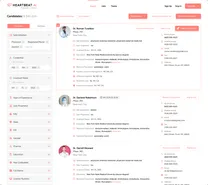
Heartbeat.ai compiles contact records for critical care pharmacists and related specialists, including cardiac, ICU, emergency medicine, pediatric, and neuro critical care pharmacists. Each record is built to include the fields recruiters and marketers actually need for outreach, rather than just a name and city.
- Critical care pharmacist name
- Location
- Contact numbers (work, cell, mobile)
- Email address
- Specialization
- Years of experience
- Sole proprietor status
- Licensed states
- License number
- Fax
- Address
Critical Care Pharmacist Contact Lists by State
Heartbeat maintains contact lists for critical care pharmacists across every U.S. state. Browse the table below to find a specific state’s list.
| Critical care pharmacist list by states |
|---|
| Critical care pharmacist list in Alabama |
| Critical care pharmacist list in Alaska |
| Critical care pharmacist list in Arizona |
| Critical care pharmacist list in Arkansas |
| Critical care pharmacist list in California |
| Critical care pharmacist list in Colorado |
| Critical care pharmacist list in Connecticut |
| Critical care pharmacist list in Delaware |
| Critical care pharmacist list in Florida |
| Critical care pharmacist list in Georgia |
| Critical care pharmacist list in Hawaii |
| Critical care pharmacist list in Idaho |
| Critical care pharmacist list in Illinois |
| Critical care pharmacist list in Indiana |
| Critical care pharmacist list in Iowa |
| Critical care pharmacist list in Kansas |
| Critical care pharmacist list in Kentucky |
| Critical care pharmacist list in Louisiana |
| Critical care pharmacist list in Maine |
| Critical care pharmacist list in Maryland |
| Critical care pharmacist list in Massachusetts |
| Critical care pharmacist list in Michigan |
| Critical care pharmacist list in Minnesota |
| Critical care pharmacist list in Mississippi |
| Critical care pharmacist list in Missouri |
| Critical care pharmacist list in Montana |
| Critical care pharmacist list in Nebraska |
| Critical care pharmacist list in Nevada |
| Critical care pharmacist list in New hampshire |
| Critical care pharmacist list in New jersey |
| Critical care pharmacist list in New mexico |
| Critical care pharmacist list in New york |
| Critical care pharmacist list in North carolina |
| Critical care pharmacist list in North dakota |
| Critical care pharmacist list in Ohio |
| Critical care pharmacist list in Oklahoma |
| Critical care pharmacist list in Oregon |
| Critical care pharmacist list in Pennsylvania |
| Critical care pharmacist list in Rhode island |
| Critical care pharmacist list in South carolina |
| Critical care pharmacist list in South dakota |
| Critical care pharmacist list in Tennessee |
| Critical care pharmacist list in Texas |
| Critical care pharmacist list in Utah |
| Critical care pharmacist list in Vermont |
| Critical care pharmacist list in Virginia |
| Critical care pharmacist list in Washington |
| Critical care pharmacist list in West virginia |
| Critical care pharmacist list in Wisconsin |
| Critical care pharmacist list in Wyoming |
How Heartbeat Compiles Its Data
Heartbeat.ai aggregates healthcare provider data, including cell phone numbers and personal emails, drawing from more than 200 official, private, and public sources to keep contact records current. The database covers approximately 11 million U.S. healthcare professionals, including roughly 8.8 million direct cell phone numbers, 9.3 million personal email addresses, and 6 million direct dial numbers.
Where a direct match isn’t available, Heartbeat applies predictive modeling to estimate likely contact information, reporting first-attempt accuracy of around 84% for cell phone numbers and 92% for personal emails. As with any predictive contact database, accuracy rates are averages across the full dataset rather than guarantees for any individual record, so verifying a specific pharmacist’s current employer before an outreach campaign is still good practice.
Who Uses a Critical Care Pharmacist Contact List
The same dataset serves several different workflows:
- Healthcare recruiters sourcing candidates for ICU pharmacy openings at Washington hospitals
- Medical device and pharmaceutical sales teams targeting formulary decision-makers
- Research coordinators recruiting clinical trial site staff
- Professional associations and conference organizers maintaining current member or attendee records
- Market researchers conducting surveys within a defined specialty
Regardless of the use case, outreach should respect professional communication norms: keep messages concise, disclose who’s reaching out and why, and comply with applicable communication regulations such as CAN-SPAM and TCPA for email and phone outreach.
Getting the Most from a Contact List
A few practices consistently improve response rates and reduce wasted effort:
- Segment by specialization first. A cardiac critical care pharmacist and a pediatric critical care pharmacist respond to very different messaging.
- Lead with something specific to their role, not a generic pitch. Recruiters especially benefit from referencing the actual unit or program at the hospital.
- Use phone and email as complementary channels rather than duplicating the same message on both.
- Re-verify contact data periodically, particularly for lists used over multiple recruiting cycles, since job changes are common in this specialty.
Conclusion
Finding accurate contact information for critical care pharmacists in Washington State is a genuine challenge, given privacy restrictions, workforce turnover, and fragmented public data. A compiled contact database narrows that gap by combining license verification, employer records, and predictive contact modeling into a single, searchable list. Whether the goal is recruitment, vendor outreach, or professional networking, having current contact data saves time and reduces the guesswork in reaching this specialized group.
Frequently Asked Questions
How can I find a comprehensive list of critical care pharmacists in Washington?
Search online directories of healthcare providers, contact local hospitals and medical centers directly, or use an aggregated contact database that combines license, employer, and specialty data.
What qualifications do critical care pharmacists in Washington typically have?
Most hold a Doctor of Pharmacy (Pharm.D.) degree, have completed a postgraduate residency such as a PGY2 in critical care pharmacy, and carry board certification in critical care pharmacy.
Are there specific hospitals in Washington known for strong critical care pharmacy teams?
University of Washington Medical Center and Harborview Medical Center jointly run an ASHP-accredited PGY2 Critical Care Pharmacy Residency, and Swedish Medical Center also maintains a critical care pharmacy service.