Last updated: August 28, 2026

Reaching licensed clinical pathologists directly is harder than it looks. Most public directories list a hospital switchboard or a department fax line, not a working email or cell number for the pathologist themselves. A dedicated clinical pathologists email list closes that gap by giving you verified contact details you can actually use for outreach, recruiting, or partnership conversations.
Heartbeat AI builds and maintains this kind of list for healthcare-focused teams. The platform lets you filter by specialty, location, and other criteria so you’re not sending generic outreach to an entire specialty at once.
What’s on this page:
What’s Included in Heartbeat’s Clinical Pathologist Email Lists

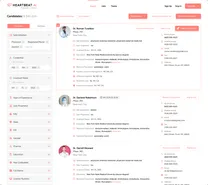
Heartbeat AI maintains contact data for clinical pathologists and other medical professionals. Here’s what a typical list gives you access to:
- Full contact record: email, phone number, and mailing address for each pathologist.
- Direct outreach capability: send marketing or recruiting materials without routing through a hospital front desk.
- Regularly refreshed records: contact details are checked and updated on an ongoing basis.
- Filterable fields: narrow results by location, subspecialty, and other criteria.
- Networking access: connect with professionals in clinical pathology for collaboration or hiring.
Data Fields Typically Included
- Name
- Location
- Contact numbers (work, cell, mobile)
- Email address
- Specialization
- Years of experience
- Sole proprietor status
- Licensed states
- License number
- Fax
- Mailing address
 Accuracy & coverage of personal contact info were unrivaled by other platforms… this gives any healthcare recruiter a competitive advantage when engaging hard-to-reach healthcare providers.
Senior Growth Strategist






Why a Verified List Beats DIY Research

Direct access, no gatekeepers
You reach the pathologist’s own inbox or phone instead of a general department line, which cuts the time between first contact and a real conversation.
Time saved on sourcing
Manually pulling contact details from state license boards, hospital staff pages, and professional directories takes hours per name. A compiled list removes that step.
Better-targeted outreach
Sending relevant messages to people who actually match your criteria tends to perform better than blasting a broad, unfiltered audience.
Fewer bounced or dead contacts
Lists that are checked and refreshed periodically reduce the odds of hitting outdated addresses, though no list stays perfectly current forever — job changes and retirements happen constantly in healthcare.
Filtering by criteria that matter to you
Location, subspecialty, and experience level filters let you build a narrower, more relevant contact set instead of one generic file.
A starting point for professional networking
Access to verified contacts can support legitimate collaboration and relationship-building within clinical pathology, provided outreach stays professional and relevant.
Clinical Pathologist Subspecialties You’ll Find in the Data
A clinical pathologist email directory typically includes professionals across several recognized subspecialties, each with distinct clinical focus areas:
| Clinical Pathologist Categories |
| Anatomic Pathologists |
| Clinical Microbiologists |
| Chemical Pathologists (Clinical Chemists) |
| Immunopathologists |
| Molecular Pathologists |
| Forensic Pathologists |
| Neuropathologists |
| Dermatopathologists |
| Gastrointestinal Pathologists |
| Renal Pathologists |
| Pulmonary Pathologists |
| Pediatric Pathologists |
| Transfusion Medicine Specialists |
| Clinical Informatics Pathologists |
Clinical Pathologists by State
If you need coverage by geography, here’s the state-by-state breakdown of where clinical pathologist contacts are available.
How This Data Gets Compiled

Sourcing
Data is pulled from multiple sources, including healthcare databases, professional directories, and registries specific to clinical pathology.
Verification
Each contact record is checked so that emails, phone numbers, and addresses correspond to active, practicing clinical pathologists.
Ongoing refresh cycles
Healthcare staffing changes constantly — pathologists switch labs, retire, or change specialties. Lists need to be refreshed on a regular schedule to stay useful.
Compliance
Any legitimate provider working with healthcare contact data in the U.S. should structure its practices around HIPAA requirements and general data-privacy obligations.
Segmentation
Lists can be filtered by geography, experience level, and subspecialty so outreach can be narrowed to a relevant subset instead of an entire specialty.
Quality control
Duplicate removal and error correction are standard steps before a list is considered ready for outreach use.
What Heartbeat.ai Offers Beyond the List

Database scope
Heartbeat.ai maintains a database covering over 11 million U.S. healthcare workers, including pathologists, physicians, nurses, dentists, and pharmacists.
Contact accuracy
The platform reports roughly 84% accuracy for phone numbers and 92% for emails. No dataset of this size is perfect, and accuracy figures should be treated as approximate rather than guaranteed for every individual record.
Workflow tools
A Chrome Extension lets you pull direct contact details without leaving the page you’re researching on.
Search filters
You can search by specialty, sub-specialty, or procedures performed — useful when you need a narrow slice of clinical pathologists rather than the full specialty.
Team features
Recruitment teams can set up shared accounts, manage spend limits, and pull usage reports across members.
Pricing tiers
Different pricing plans are available depending on whether you’re working solo, inside an agency, or as part of a larger organization.
Additional services
Data enrichment and workflow automation add-ons are available alongside the core list product.
Checklist: What to Verify Before Buying a Clinical Pathologist Email List

- Specificity: confirm the list actually targets clinical pathologists — professionals who analyze tissue and fluid samples in a lab setting — rather than a broader pathology category.
- Freshness: ask how often records are refreshed. A list that hasn’t been updated in a year will have a meaningfully higher bounce rate.
- Legal compliance: the provider should be able to speak to how it handles privacy obligations like HIPAA or GDPR where applicable.
- Source transparency: a credible provider should be able to describe, at a general level, where its data comes from.
- Customization: check whether you can filter by location, subspecialty, or experience level before you buy.
- Cost versus value: the cheapest option is rarely the most accurate, and the most expensive isn’t automatically the best fit for your use case.
- Sample access: if a trial or sample set is available, use it to spot-check accuracy before committing to a larger purchase.
Who Actually Uses This Kind of List

- Medical equipment and supply companies marketing lab equipment directly to pathologists.
- CME providers promoting courses, workshops, or conferences relevant to clinical pathology.
- Healthcare recruiters and HR teams identifying and contacting candidates for pathology department openings.
- Research institutions and universities reaching out for collaboration or study participation.
- Medical publishers promoting journals or books to a targeted specialist audience.
- Healthcare IT vendors marketing lab-specific software such as Laboratory Information Systems (LIS) or EMR platforms built for pathology workflows.
Using the List Without Wasting It

Having accurate contact data doesn’t guarantee a response. How you use it matters just as much.
Know who you’re emailing
Clinical pathologists diagnose disease through lab analysis of tissue and fluid samples. Content that’s relevant to their day-to-day work will land better than generic marketing copy.
Stay within legal boundaries
Outreach should align with applicable rules like CAN-SPAM, GDPR, or HIPAA depending on where your recipients are located and what data you’re handling.
Personalize beyond the first name
Reference their subspecialty or location where relevant. Generic mail-merge messages read as generic, even with a name inserted.
Lead with useful content, not a pitch
Research updates, lab technique changes, or relevant technology news tend to get more engagement than a straight sales pitch.
Keep the writing simple
Short paragraphs, plain language, and bullet points read better than dense blocks of text, even for a specialist audience.
Write honest subject lines
The subject should match the content. Misleading hooks damage trust and hurt deliverability over time.
Track what’s working
Monitor open and click rates and adjust future outreach based on what actually gets attention.
Limitations to Keep in Mind
No purchased or licensed list is permanently accurate. Pathologists change jobs, retire, or move between institutions, and even a well-maintained database will have some percentage of stale records at any given time. Treat accuracy figures as an average across a large dataset, not a guarantee for any single contact. Pair any list with basic verification steps — checking bounce rates and removing hard bounces promptly — as part of your regular workflow.
Conclusion
A verified clinical pathologist email list solves a specific, practical problem: reaching specialists who are otherwise buried behind hospital switchboards and outdated directories. It’s useful for recruiters, equipment vendors, CME providers, and researchers alike, but only when the data is current, properly sourced, and used with some restraint. If you’re evaluating providers, Heartbeat AI is worth checking against the criteria above — database size, refresh frequency, and compliance practices are the things that actually determine whether a list performs.
Frequently Asked Questions
What’s the typical cost for a clinical pathologist email list?
Pricing varies based on list size, customization options, and provider reputation. A cheaper list that’s poorly maintained often costs more in wasted outreach than a properly verified one.
Are there restrictions on using this data for marketing?
Yes. Outreach should follow applicable anti-spam laws and privacy regulations, include a clear opt-out option, and stay transparent about who’s sending the message and why.
Can I keep the list updated over time?
Most providers offer refreshed or re-verified data on a recurring basis. Removing inactive contacts and adding new ones periodically keeps deliverability rates higher than relying on a single static export.