Last updated: August 31, 2026
Ambulatory care nurses in Arkansas handle a growing share of patient care outside the hospital setting — outpatient clinics, dialysis centers, telehealth visits, and home-based follow-up. For recruiters, healthcare marketers, and organizations trying to build relationships with this workforce, finding accurate, current contact information is often the hardest part of the job.
This guide covers what makes ambulatory care nursing in Arkansas distinct, why contact data quality matters for outreach, and how to evaluate a contact list before you rely on it for recruiting or marketing.
What’s on this page:
Get an Email List of Ambulatory Care Nurses in Arkansas from Heartbeat
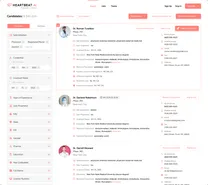
Heartbeat.ai’s contact database lets you search for licensed healthcare professionals across the United States, including ambulatory care nurses, using filters to narrow down by specialty, location, and other criteria.
Ambulatory care nursing covers a range of sub-specialties, from preoperative and postoperative care to urgent care, dialysis, telemetry monitoring, patient education, and telehealth nursing. If your outreach targets one of these areas specifically, a filtered list saves time compared to manually researching individual providers.
Overview of the Healthcare Industry in Arkansas
Arkansas’s healthcare system serves a largely rural population, which shapes how ambulatory care is delivered. Ambulatory care nurses often provide outpatient or in-home services that reduce the need for patients to travel long distances to hospitals or specialty centers.
Major healthcare systems in the state, including the University of Arkansas for Medical Sciences and Baptist Health Medical Center, anchor much of the state’s clinical capacity. Smaller community clinics, such as the Community Clinic of Northwest Arkansas, extend affordable care to underserved areas. Ambulatory care nurses working across these settings help fill gaps between rural and urban access to care.
Licensing Context for Arkansas Nurses
The Nurse Practice Act requires that any person practicing as a registered nurse, advanced practice nurse, registered nurse practitioner, practical nurse, or psychiatric technician nurse in this state shall be licensed by the Arkansas State Board of Nursing. The Nurse Practice Act requires biennial license renewal for practicing nurses.
Arkansas participates in the Nurse Licensure Compact, so nurses whose primary residence is another compact state and who hold an active multistate license may practice here without a separate Arkansas license. This matters for recruiters: a nurse holding a compact-state license may already be eligible to practice in Arkansas without going through a separate licensing process, which can shorten hiring timelines if you’re recruiting across state lines.
For registered nurse licensure specifically, initial licensure by examination requires completion of a Board-approved or Board-accepted nursing program and passage of the NCLEX. Both ADN and BSN graduates are eligible for initial RN licensure.
Why Accurate Contact Information Matters
Accurate contact details for ambulatory care nurses serve several distinct purposes:
- Clinical coordination — patients and care teams sometimes need direct lines for follow-up questions or scheduling changes.
- Recruitment — HR teams and recruiters use direct contact information to discuss job openings, credentialing, or career moves without relying on slow intermediary channels.
- Professional networking — conferences, continuing education programs, and peer collaboration often depend on having a reliable way to follow up after an initial introduction.
Outdated or incorrect contact data wastes recruiter time and can stall hiring pipelines that are already under pressure in specialized nursing roles.
Challenges in Finding Ambulatory Care Nurses in Arkansas
Sourcing candidates in this niche comes with a few recurring obstacles:
- Geographic dispersion. Arkansas’s rural layout means qualified nurses are spread across smaller communities rather than concentrated in a handful of metro hospitals.
- Specialty depth. Ambulatory care spans multiple sub-specialties, so a generic nursing search often returns candidates who aren’t a fit for outpatient, dialysis, or telehealth-focused roles.
- Data decay. Nurses change employers, phone numbers, and email addresses more often than static directories are updated, which means lists sourced once and never refreshed lose accuracy quickly.
Combining licensing board data, professional networking platforms, and a verified contact database tends to produce better results than relying on any single source. Telehealth also plays a practical role here: it allows nurses based in larger population centers to support patients in rural areas without requiring relocation, which can widen the effective candidate pool for organizations building remote or hybrid care teams.
What a Heartbeat Ambulatory Care Nurses Contact List Includes
Heartbeat.ai’s contact records for ambulatory care nurses are built to support both recruiting and outreach use cases. A typical record includes:
- Ambulatory care nurse name
- Location
- Contact numbers (work, cell, mobile)
- Email address
- Specialization
- Years of experience
- Sole proprietor status
- Licensed states
- License number
- Fax
- Address
Available Ambulatory Care Nurses in Our Contact List by State
Explore our contact database for ambulatory care nurses across other US states.
| Ambulatory care nurses by states |
|---|
| Ambulatory care nurses in Alabama |
| Ambulatory care nurses in Alaska |
| Ambulatory care nurses in Arizona |
| Ambulatory care nurses in Arkansas |
| Ambulatory care nurses in California |
| Ambulatory care nurses in Colorado |
| Ambulatory care nurses in Connecticut |
| Ambulatory care nurses in Delaware |
| Ambulatory care nurses in Florida |
| Ambulatory care nurses in Georgia |
| Ambulatory care nurses in Hawaii |
| Ambulatory care nurses in Idaho |
| Ambulatory care nurses in Illinois |
| Ambulatory care nurses in Indiana |
| Ambulatory care nurses in Iowa |
| Ambulatory care nurses in Kansas |
| Ambulatory care nurses in Kentucky |
| Ambulatory care nurses in Louisiana |
| Ambulatory care nurses in Maine |
| Ambulatory care nurses in Maryland |
| Ambulatory care nurses in Massachusetts |
| Ambulatory care nurses in Michigan |
| Ambulatory care nurses in Minnesota |
| Ambulatory care nurses in Mississippi |
| Ambulatory care nurses in Missouri |
| Ambulatory care nurses in Montana |
| Ambulatory care nurses in Nebraska |
| Ambulatory care nurses in Nevada |
| Ambulatory care nurses in New hampshire |
| Ambulatory care nurses in New jersey |
| Ambulatory care nurses in New mexico |
| Ambulatory care nurses in New york |
| Ambulatory care nurses in North carolina |
| Ambulatory care nurses in North dakota |
| Ambulatory care nurses in Ohio |
| Ambulatory care nurses in Oklahoma |
| Ambulatory care nurses in Oregon |
| Ambulatory care nurses in Pennsylvania |
| Ambulatory care nurses in Rhode island |
| Ambulatory care nurses in South carolina |
| Ambulatory care nurses in South dakota |
| Ambulatory care nurses in Tennessee |
| Ambulatory care nurses in Texas |
| Ambulatory care nurses in Utah |
| Ambulatory care nurses in Vermont |
| Ambulatory care nurses in Virginia |
| Ambulatory care nurses in Washington |
| Ambulatory care nurses in West virginia |
| Ambulatory care nurses in Wisconsin |
| Ambulatory care nurses in Wyoming |
How Heartbeat.ai Compiles This Data
Heartbeat.ai draws on a range of official, private, and public sources to build and maintain contact records for healthcare providers, including ambulatory care nurses. Records are refreshed on an ongoing basis to reduce the risk of outreach going to disconnected numbers or inactive email addresses.
No contact database is perfect. Job changes, license transfers, and personal contact updates happen constantly in nursing, so even a well-maintained list benefits from periodic verification before a large-scale outreach campaign.
Evaluating a Contact List Before You Buy
A few practical checks worth running before committing to any provider contact list:
- Specialty granularity. Can you filter by sub-specialty (dialysis, telehealth, preoperative, etc.) rather than just “nursing”?
- License verification. Does the list tie contact records to license status, so you can confirm a nurse is actively licensed in Arkansas or holds a compact-state license?
- Update cadence. How often is the underlying data refreshed, and is there any indication of source reliability?
- Compliance fit. Does using the list align with your organization’s privacy and outreach compliance requirements?
Who Uses Ambulatory Care Nurse Contact Lists?
Recruiters sourcing candidates for outpatient and clinic-based roles are the most obvious users, but marketing teams promoting continuing education, medical device sales representatives, and professional associations organizing conferences also rely on this type of data. Nonprofits and researchers conducting outreach related to nursing workforce issues are another common use case.
Using Contact Lists Effectively
A few practices tend to separate effective outreach from wasted effort:
- Segment by specialty and experience level rather than sending one generic message to an entire list.
- Keep initial outreach short, factual, and respectful of the recipient’s time — nurses in active clinical roles have limited windows for non-urgent communication.
- Follow up within a reasonable timeframe rather than letting a lead go cold, but avoid excessive repeat contact.
- Stay within applicable privacy and communication regulations when reaching out by phone or email.
Bottom Line
Ambulatory care nursing in Arkansas sits at the intersection of rural healthcare access and outpatient specialization, which makes sourcing the right contacts harder than a standard nursing search. Combining licensing board resources with a maintained contact database, and verifying data before large campaigns, gives recruiters and marketers a more reliable path to reaching the right professionals.
Frequently Asked Questions
What roles do ambulatory care nurses in Arkansas typically have?
Ambulatory care nurses in Arkansas typically provide direct outpatient care, monitor patient conditions, educate patients on self-care, and coordinate with other healthcare providers across outpatient and clinic settings.
What qualifications do ambulatory care nurses in Arkansas need?
Ambulatory care nurses generally need a nursing degree, active registered nurse licensure through the Arkansas State Board of Nursing (or a valid multistate compact license), and relevant clinical experience.
What are common challenges in this specialty?
Common challenges include high patient volumes, keeping current with evolving outpatient technologies, and covering rural areas where specialized nursing staff are harder to find.