Last updated: August 30, 2026
Finding current, working phone numbers and email addresses for allergists and immunologists in Oregon is a narrower task than it sounds. The specialty is small, practitioners move between hospital systems and private practice, and many rural areas have only a handful of specialists to begin with. This guide covers what a usable contact list should include, where Oregon’s allergy and immunology care is concentrated, and how Heartbeat’s database approaches the data problem.
What’s on this page:
Get an Allergist and Immunologist Email List for Oregon from Heartbeat
Heartbeat.ai’s database covers licensed healthcare professionals across the United States, including allergists and immunologists in Oregon. You can filter by specialty, location, and other criteria to build a targeted contact list rather than working from a generic directory.
The specialty breaks down into several sub-focuses, and a good list should let you distinguish between them: pediatric allergists, food allergists, inhalant allergists, drug allergist/immunologists, and venom and stinging insect allergist/immunologists. Clinical and laboratory immunologists are typically listed separately since their work skews more toward diagnostics and research than direct patient care.
Getting the specialty tag right matters more than it might seem. A list built for sales outreach to food-allergy specialists is useless if half the contacts are actually inhalant allergists — the messaging, referral patterns, and product relevance are different.
Allergy and Immunology Care in Oregon: A Quick Overview
Oregon’s allergy and immunology specialists are concentrated in Portland and the surrounding metro area, with fewer providers available as you move into rural parts of the state. The Section of Allergy and Clinical Immunology at OHSU provides comprehensive evaluation, diagnostic, and management services for adults and children with allergy, asthma, and immunologic disorders, with outpatient clinics in Portland and Beaverton. OHSU also serves as the primary academic referral center for the state of Oregon and several surrounding regions, which means specialists there often see patients referred from outside the immediate Portland area.
This referral pattern is worth knowing if you’re building outreach lists: a provider based in Portland may have a patient or professional network that extends well beyond city limits, and contact data that only captures a metro-area address can undersell that provider’s actual reach.
Why Accurate Contact Information Matters
Outdated contact records cause different problems depending on who’s using the list.
- Patients and caregivers managing ongoing allergy or immune conditions need a working line to their specialist’s office for scheduling and follow-up. A disconnected number or bounced email can delay a routine check-in.
- Recruiters lose time and candidates when contact details are wrong — a missed call or bounced email during an active search often means the candidate accepts another offer before you reach them.
- Researchers and industry professionals rely on accurate contacts to coordinate studies, share findings, or arrange collaborations. A wrong email address can stall a project by weeks if no one notices the message never arrived.
Why Allergist and Immunologist Contact Lists Go Stale Quickly
A few structural factors make this specialty harder to track than larger fields like primary care:
- Small provider pool. Fewer allergists and immunologists overall means each departure, retirement, or practice change has a proportionally bigger effect on list accuracy.
- Frequent moves between settings. Providers shift between hospital systems, academic medical centers, and private practice more often than the public-facing directories update.
- Uneven geographic distribution. Specialists cluster in Portland and other population centers, leaving rural regions with sparse, harder-to-verify listings.
Databases that pull from multiple sources — hospital directories, licensing boards, and professional associations — and refresh regularly tend to hold up better than static lists built once and never revisited. Geographic tagging also helps separate urban and rural providers so outreach can be targeted by region rather than guessed at.
What a Heartbeat Allergist and Immunologist Contact Record Includes
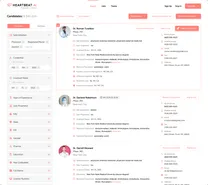
Heartbeat’s provider records for allergists and immunologists in Oregon are built to support outreach beyond a name and a general practice address. A typical record includes:
- Allergist and immunologist name
- Location
- Contact numbers (work, cell, mobile)
- Email address
- Specialization
- Years of experience
- Sole proprietor status
- Licensed states
- License number
- Fax
- Address
Allergist and Immunologist Lists by State
Browse allergist and immunologist contact lists in other states through our directory below.
| Allergist and immunologist list by states |
|---|
| Allergist and immunologist list in Alabama |
| Allergist and immunologist list in Alaska |
| Allergist and immunologist list in Arizona |
| Allergist and immunologist list in Arkansas |
| Allergist and immunologist list in California |
| Allergist and immunologist list in Colorado |
| Allergist and immunologist list in Connecticut |
| Allergist and immunologist list in Delaware |
| Allergist and immunologist list in Florida |
| Allergist and immunologist list in Georgia |
| Allergist and immunologist list in Hawaii |
| Allergist and immunologist list in Idaho |
| Allergist and immunologist list in Illinois |
| Allergist and immunologist list in Indiana |
| Allergist and immunologist list in Iowa |
| Allergist and immunologist list in Kansas |
| Allergist and immunologist list in Kentucky |
| Allergist and immunologist list in Louisiana |
| Allergist and immunologist list in Maine |
| Allergist and immunologist list in Maryland |
| Allergist and immunologist list in Massachusetts |
| Allergist and immunologist list in Michigan |
| Allergist and immunologist list in Minnesota |
| Allergist and immunologist list in Mississippi |
| Allergist and immunologist list in Missouri |
| Allergist and immunologist list in Montana |
| Allergist and immunologist list in Nebraska |
| Allergist and immunologist list in Nevada |
| Allergist and immunologist list in New hampshire |
| Allergist and immunologist list in New jersey |
| Allergist and immunologist list in New mexico |
| Allergist and immunologist list in New york |
| Allergist and immunologist list in North carolina |
| Allergist and immunologist list in North dakota |
| Allergist and immunologist list in Ohio |
| Allergist and immunologist list in Oklahoma |
| Allergist and immunologist list in Oregon |
| Allergist and immunologist list in Pennsylvania |
| Allergist and immunologist list in Rhode island |
| Allergist and immunologist list in South carolina |
| Allergist and immunologist list in South dakota |
| Allergist and immunologist list in Tennessee |
| Allergist and immunologist list in Texas |
| Allergist and immunologist list in Utah |
| Allergist and immunologist list in Vermont |
| Allergist and immunologist list in Virginia |
| Allergist and immunologist list in Washington |
| Allergist and immunologist list in West virginia |
| Allergist and immunologist list in Wisconsin |
| Allergist and immunologist list in Wyoming |
How Heartbeat Compiles This Data
Heartbeat.ai aggregates contact information for American healthcare providers, including cell phone numbers and personal emails, drawing from a network of official, public, and private sources. The company applies predictive modeling to infer likely contact details where direct records are incomplete, which is how it fills gaps that a single static directory typically can’t.
No provider database is perfect for a specialty this size. Expect some records to lag behind recent job changes, and treat any list — including this one — as a starting point that benefits from periodic re-verification rather than a permanent source of truth.
Who Uses Allergist and Immunologist Contact Lists?
The most common users are healthcare recruiters filling specialist roles, medical device and pharma sales teams targeting allergy and immunology practices, researchers coordinating studies, and industry associations organizing outreach or events. Anyone using this kind of data for commercial outreach should follow applicable data privacy and communication laws, including rules around unsolicited marketing.
Getting the Most Out of an Allergist and Immunologist Contact List
A few practical habits improve response rates and reduce wasted outreach:
- Match your message to the specialty tag — a food allergist and a venom/insect allergist have different clinical interests and won’t respond to the same pitch.
- Keep initial outreach short and state your purpose clearly in the first line; specialists get a lot of unsolicited contact and skim quickly.
- For recruitment, lead with concrete details — location, practice setting, schedule — rather than generic career-growth language.
- Re-verify contact details periodically, especially for providers who’ve recently changed practices, since specialty directories can lag behind real moves.
Where This Leaves You
Building or buying a contact list for Oregon’s allergist and immunologist community only pays off if the underlying data reflects the specialty’s actual size and turnover. A database that separates sub-specialties, tags urban versus rural locations, and refreshes on a regular cycle will hold up better than a one-time export. Heartbeat’s approach — multi-source aggregation plus predictive modeling — is built around that ongoing refresh cycle rather than a static snapshot.
Frequently Asked Questions
How can I find an allergist and immunologist in Oregon?
You can search a provider database like Heartbeat’s, check with your insurance provider for in-network specialists, or ask your primary care physician for a referral.
Are there allergy and immunology specialists in Oregon who focus on specific conditions?
Yes. Many providers focus on areas such as food allergies, asthma, or immunodeficiency disorders, and some clinics operate dedicated programs for these conditions.
Where is allergy and immunology care concentrated in Oregon?
Most specialists practice in the Portland metro area, with academic centers there also serving as referral points for patients from other parts of the state.