Connecting directly with doctors and medical professionals is more important than ever these days, especially for businesses and organizations in the healthcare industry.
Having doctors email addresses can boost your marketing efforts, help with research collaborations, and expand your professional network. But how to find doctors emails in the vast online world?
In this guide, we’ll explore seven effective methods for finding doctors’ emails. This includes both free and paid options to fit different needs and budgets.

Here are some of the best methods to find doctors’ email addresses:
- Professional networking sites
- Medical conferences and events
- Hospital and Clinic Websites
- Medical conferences and events
- Google searches
- Referrals from Colleagues or Contacts
- Email finder tools and services
Well, this is just the start. You have a detailed guide waiting on this topic with some great suggestions like Heartbeat. Heartbeat is a great platform to get the most accurate doctors email list. Keep on reading and more about everything.
What’s on this page:
7 Methods to Find Doctors Emails

Whether you’re a marketer, a researcher, or simply looking to network, finding doctors’ email addresses is a crucial step. Here are seven proven methods to efficiently gather these valuable contacts, each with unique advantages to suit different needs:
1. Professional Networking Platforms
Using professional networking platforms like LinkedIn is an effective way to find doctors’ email addresses. These sites facilitate networking by allowing users to create profiles, engage in industry-specific groups, and connect directly with professionals in the healthcare field.
To find a doctor’s email address, you should actively participate in discussions within healthcare-related groups. Use the platform’s search filters to narrow down your search to medical professionals.
Once you’ve identified potential contacts, connecting with them and initiating a direct message can lead to the exchange of email addresses. This method not only helps in finding emails but also in building professional relationships within the medical community.
2. Medical Directories and Associations
Medical directories and associations are valuable resources for anyone looking to compile a list of doctors email addresses. These organizations often maintain up-to-date databases of their members, including their contact information.
Accessing these lists may require a membership or a one-time access fee, depending on the directory. It’s essential to navigate these directories with respect for privacy and use the obtained information ethically.
When utilized properly, medical directories and associations can provide a direct link to a wide range of professionals in various specialties.
3. Hospital and Clinic Websites
Hospitals and clinics frequently publish the contact information of their medical staff on their websites. To find doctors mailing lists, visit the hospital or clinic’s official website and look for sections like “Our Doctors” or “Medical Staff.”
These sections often include profiles of their doctors, sometimes with direct email addresses or, at least, a way to contact them through the website.
If direct email addresses are not provided, consider using the general contact form or email address to request the specific information you need. Make sure to explain your reason for reaching out respectfully and clearly.
4. Medical Conferences and Events
Medical conferences and events offer a unique opportunity for face-to-face networking with healthcare professionals. These gatherings are prime for exchanging business cards, which often include email addresses.
To maximize your opportunities, prepare a concise introduction of yourself and your purpose for seeking connections. Following up with a courteous email after the event can help cement the relationship and ensure that the contact information is used effectively.
Engaging with professionals during networking breaks or sessions can significantly enhance your chances of building a valuable email list.
5. Google Search
A well-crafted Google search can surprisingly be one of the simplest ways to find doctors’ email addresses. You can uncover email addresses published on websites by using specific search queries including the doctor’s name, specialty, and keywords like “email” or “contact.” This method helps refine your search results effectively.
Employing advanced search techniques, such as using quotes for exact matches or specifying a site to search within, can refine your search results. This increases the likelihood of finding valid contact information.
This method requires persistence and a bit of creativity with search queries. However, it can produce valuable contacts without the need for subscriptions or memberships.
6. Referrals from Colleagues or Contacts
Seek recommendations from trusted colleagues or contacts within the medical community. Personal referrals often lead to genuine connections and access to reliable email addresses, enhancing your networking efforts.
7. Email Finder Tools and Services
Email finder tools and services offer a fast and reliable way to build comprehensive lists of doctor email addresses. They are highly effective for networking, marketing, and outreach purposes.
Here are the top 3 tools known for their quality and service:
1. Heartbeat.AI

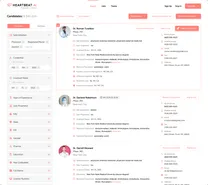
Heartbeat.AI simplifies how you connect with healthcare professionals in the U.S. Our platform gives you access to a large database with over 2.4 million physicians. It includes doctors, nurses, and dentists.
We offer detailed contact information, including cell phone numbers and personal emails, collected from over 200 trusted sources. This means you get up-to-date contact information, making it easier and more precise to reach out.
With Heartbeat.AI, you can trust the accuracy of the contact details, with cell phone numbers being 84% accurate and emails 92% accurate. This helps you connect with doctors quickly and effectively. Heartbeat.AI is a reliable choice for reaching out to healthcare professionals with respect.
About Heartbeat.AI
- Founded: 2020
- Headquarter: Delaware
- Company Size: 11-50 Employees
Features of Heartbeat.AI
Here are some of the key features of Heartbeat.AI:
- Chrome Extension: Heartbeat.AI’s Chrome Extension simplifies the process of finding contact information on LinkedIn and Facebook profiles, offering convenience and efficiency for users navigating social networks.
- Prospector Tool: With Heartbeat.AI’s Prospector tool, users can swiftly search for healthcare providers’ contact details directly from their web browser, accessing emails and cell phone numbers with ease, saving time and effort in their outreach efforts.
- File Upload Feature: Heartbeat.AI’s File Upload feature enables users to manage multiple contacts at once by uploading files containing contact information in bulk, facilitating list enhancement and verification tasks efficiently.
- Customizable Email Lists: You can create email lists customized to specific needs, such as by medical specialty or location. This lets you target your marketing campaigns more effectively.
- Commitment to Privacy: Heartbeat.AI follows privacy laws like GDPR and HIPAA closely. We protect your data to make sure you can trust us with your information.
Pricing
Heartbeat.AI provides customized pricing options according to each client’s unique requirements and list specifications. For a personalized quote, potential clients are invited to engage with our sales team.
Pros
- Regularly updated for current data.
- Accurate, verified doctor email lists.
- Customizable lists for targeted campaigns.
- Complies with privacy regulations.
Cons
- Premium services may be costly.
Claim $500 of Free Data
2. Definitive Healthcare

Definitive Healthcare offers leading healthcare contact databases, providing key insights and detailed lists of US healthcare providers.
This platform supports effective market segmentation, research, and analysis, empowering users with up-to-date information to navigate the healthcare industry successfully.
The service aims to transform data into actionable intelligence, helping clients identify opportunities and plan strategically for commercial success in healthcare.
About Definitive Healthcare
- Founded: 2011
- Headquarter: Framingham, Massachusetts
- Company Size: 501-1000
Features of Definitive Healthcare
Definitive Healthcare provides several key features to enhance your strategic capabilities in the healthcare market:
- Comprehensive Databases: Access to detailed lists of physicians, hospitals, and healthcare providers across the United States.
- Up-to-date Information: Ensures the latest and most comprehensive data on healthcare providers. This keeps you informed about current market dynamics.
- Market Segmentation and Analysis: Offers tools and data for effective segmentation, research, and differentiation among healthcare data providers.
- Actionable Healthcare Intelligence: Converts data, analytics, and expertise into actionable insights to drive commercial success.
- Identification of Opportunities: Helps in pinpointing the right markets, opportunities, and contacts crucial for shaping the future of healthcare.
Pricing
Definitive Healthcare has pricing that fits your needs, from one data product to a full set of tools. The cost depends on what you’re looking for, so it’s best to reach out to them to find out more.
Pros
- Comprehensive, up-to-date healthcare databases.
- Effective market segmentation and analysis tools.
- Actionable insights for strategic planning.
- User-friendly SaaS platform.
Cons
- Limited international provider information.
- Data relevance may vary by specific healthcare sectors.
3. DataCaptive

DataCaptive stands out as a top source for pediatrician email lists, known for its high accuracy and extensive details valuable to healthcare marketers. With a focus on targeted lists, DataCaptive helps businesses reach pediatricians worldwide.
Its dedication to data quality and the ability to customize messages ensure marketers can create more impactful communications. This results in better engagement and increased conversions.
About DataCaptive
- Founded: 2015
- Headquarter: Santa Clara, California
- Company Size: 1000-5000
Features of DataCaptive
Let’s explore some features of DataCaptive:
- Detailed Information: DataCaptive’s lists contain pediatrician names, affiliations, emails, phone numbers, and specialties for personalized campaigns.
- Regular Updates: Their databases are consistently updated. This ensures accurate and current contact details for effective outreach.
- List Customization: Offers customization of lists to align with specific marketing goals, improving engagement and response rates.
- Legal Compliance: Adheres strictly to privacy laws like GDPR and HIPAA, allowing marketers to confidently respect contact privacy.
Pricing
They provide 3 types of pricing. This includes Free, Basic, and Premium options. The Basic plan starts at $5/month, while the Premium plan is available for only $10/month.
Pros
- Extensive customization for targeted campaigns.
- Wide range of healthcare contacts.
- Complies with international privacy laws.
- Dedicated customer support team.
Cons
- Learning how to use data effectively can be quite challenging at first.
How to Find Doctors Emails for Free?

Among the seven methods to find doctors’ emails, there are a few you can use without spending money. Let’s explore these free approaches:
Professional Networking Sites
Sites like LinkedIn are useful for finding doctor emails for free. By creating a profile and joining healthcare groups, you can network with doctors. This method allows for direct communication and, eventually, the sharing of email addresses. It’s about building professional connections.
Google Searches
Using Google to search for doctors’ emails is another free method. Include the doctor’s name and keywords like “email” or “contact” in your search. You may need to experiment with different search terms, but this technique can be effective.
Hospital and Clinic Websites
Many hospitals and clinics list their doctors’ information on their websites. While direct email addresses might not be provided, you can often find a general contact form or email. This can be used to request the doctor’s specific email address. It’s a more indirect method but still free and useful.
Referrals from Colleagues or Contacts
Ask trusted colleagues or contacts in the medical field for referrals. Personal recommendations can lead to genuine connections and free access to doctors’ email addresses, boosting your networking efforts.
Medical Conferences and Events
Medical conferences and events serve as valuable platforms for networking and accessing doctors’ email addresses for free.
Attendees can engage in face-to-face interactions with healthcare professionals, exchange business cards, and establish connections that may lead to the sharing of email contacts. These events offer a conducive environment for expanding professional networks and obtaining valuable contacts.
How to Find Doctors Emails for Low Cost?

Out of the seven methods for finding doctors’ emails, some come at low costs. These budget-friendly strategies provide effective pathways to acquire accurate and comprehensive contact details. Now, let’s delve into these methods and their advantages.
Let’s examine these paid methods and their benefits.
Email Finder Tools and Services
Email finder tools and services, such as Heartbeat.AI, specialize in providing access to extensive databases of professionals, including doctors.
While these services come with a cost, they offer advanced search capabilities and up-to-date information, making the investment worthwhile. Users can quickly find accurate email addresses, saving time and enhancing the effectiveness of their outreach efforts.
Medical Directories and Associations
Subscriptions to medical directories and associations can also incur costs, but they provide valuable resources for finding doctors’ contact information.
These directories often include detailed profiles and are updated regularly, ensuring you have reliable and current data. Investing in a subscription can be a strategic move for those who frequently need to access a broad network of medical professionals.
What is the Best Method to Get a Doctor Email List?
The best method to acquire a doctor email list is through email list providers, and Heartbeat stands out as the leading provider in this field.
Heartbeat offers a comprehensive and accurate database of healthcare professionals, making it easy to access up-to-date contact information for doctors across various specialties.
Their service is recognized for its reliability, precision, and compliance with privacy laws. This ensures that users can conduct their outreach efforts confidently and effectively.
With Heartbeat, users gain the advantage of targeted communication, allowing for more personalized and impactful marketing or research campaigns. Choosing Heartbeat as your email list provider means accessing a valuable resource for connecting with medical professionals efficiently.
Why Heartbeat is the Best Tool For Getting Doctor Email Addresses?

Heartbeat is the top option to get doctor email addresses. Let’s explore some reasons why Heartbeat AI is the best choice:
Comprehensive Coverage
Heartbeat.AI covers information on all healthcare providers in the U.S., like doctors, nurses, and dentists. This wide range makes sure users can reach the most people possible, helping them find the right contacts for any healthcare project or marketing plan.
Quality Contact Information
Heartbeat.AI gives you direct cell phone and email details for healthcare professionals. This makes it easier to connect with them directly, leading to better conversations and more personal contact.
Time Efficiency
Heartbeat.AI aims to make your hiring and marketing tasks quicker, promising to cut down the time you spend by a lot. This speed-up lets users do their work faster, saving time for other important tasks.
Comprehensive Database and Contact Access
Users get to a big database of over 11 million U.S. healthcare workers, including direct access to millions of cell phones and phone numbers. This access helps users communicate quickly and efficiently with the people they need to reach.
Up-to-Date Information
Heartbeat.AI keeps its information fresh by getting data from more than 200 different sources. This ensures users have the latest contact details, including 9.3 million personal email addresses for better, more personalized outreach.
High Accuracy Rates
The platform uses special modeling to make sure its information is very accurate, with high rates for both cell phone numbers and personal emails. This accuracy means users can feel confident that their messages will get to the right people.
What are the Benefits of Doctors’ Email Lists?

Doctors’ email lists offer several advantages, especially for those in healthcare marketing, recruitment, and sales. Here are some key benefits:
Targeted Outreach
Email lists allow for precise targeting and ensure your messages reach the most relevant doctors based on specialty, location, or other criteria. This helps in creating more personalized and effective communication strategies.
Efficient Communication
With direct email addresses, communicating with healthcare professionals becomes faster and more efficient. Emails can deliver detailed messages, updates, and offers directly to a doctor’s inbox, facilitating immediate engagement.
Cost-Effective Marketing
Compared to traditional advertising or broad digital marketing campaigns, using email lists can be more cost-effective. It allows for a direct approach to interested parties without the need for intermediaries or costly ad campaigns.
Better Engagement Rates
Doctors are more likely to respond to messages that are relevant to their field and interests. Email lists that are well-segmented ensure higher open and engagement rates, as the content is customized to the recipients’ professional needs and interests.
Analytics and Feedback
Email marketing provides valuable data on recipient behavior, including open rates, click-through rates, and responses. This information can be used to refine future campaigns for better results.
Who Can Utilize Doctor Email Database?

Different organizations can use doctor email database for various purposes:
- Healthcare Marketing Agencies: These agencies can send specific marketing messages to doctors about healthcare services or products. This makes their campaigns more focused and effective.
- Pharmaceutical Companies: They can share information with doctors about new medicines, clinical trials, and medical updates. It helps to keep healthcare professionals informed about the latest developments.
- Research Institutions: Such institutions might use the database to find doctors who can participate in studies, share research outcomes, or collaborate on projects. This supports the advancement of medical science.
- Medical Event Organizers: These organizers can invite doctors to attend conferences, seminars, and other events. It ensures those who are most interested and relevant are informed and encouraged to participate.
- Healthcare Associations: Associations can use the list to communicate updates, news, and opportunities for professional growth to their members. This keeps the medical community connected and informed.
- Medical Publishers: Publishers can inform doctors about new journals, books, and articles. It helps in the continuous education of healthcare professionals.
How to Utilize Doctor Email List?

Only learning how to find doctors emails is not enough to satisfy your purpose. After that, you’ll have to learn how to utilize them.
Utilizing a doctors email list effectively involves a strategic approach to ensure your communications are welcomed and engage your intended audience. Here’s how you can make the most of your doctors email address list:
Segment Your List
Divide your email list based on criteria like specialty, geographic location, or interests. This allows for more personalized communication, as the content can be customized to meet the specific needs or interests of each segment.
Craft Relevant Content
Ensure the emails you send offer value to the recipients. This could be in the form of industry news, updates on the latest medical technologies, invitations to webinars or conferences, or insights into new research findings. The key is to make your emails informative and useful to the doctors receiving them.
Use a Clear Call-to-Action
Every email should have a clear purpose, whether it’s to encourage recipients to register for an event, read a recent publication, or participate in a survey. Make sure your call-to-action (CTA) is clearly stated and easy to find.
Maintain Compliance
When sending out emails, be mindful of privacy laws and regulations, such as GDPR in Europe and HIPAA in the United States. Ensure you have consent to email the contacts on your list and provide a clear way for recipients to opt-out if they choose.
Monitor and Adjust
Pay attention to how your emails are performing by tracking open rates, click-through rates, and engagement. Use this data to refine your strategy, adjust your content, and improve the effectiveness of your communications over time.
Who Can Be Targeted Using Doctor Email Lists?

Doctor email lists let you send messages to specific healthcare workers. Here’s who you can reach out to:
- Physicians: You can inform doctors about new treatments or invite them to medical conferences.
- Dentists: Useful for advertising dental products or educational events about dental care.
- Surgeons: With surgeons, you can share information on new surgery methods or tools, and special training events.
- Nurses: Send updates to the nurses about nursing practices or invite them to professional development events.
- Pharmacists: Notify pharmacists about new drugs or safety information related to medications.
- Medical Researchers: Invite medical researchers to join research projects or read new research findings.
Legal and Ethical Considerations
Using doctor email lists requires careful attention to laws and respect for the people you’re emailing. Make sure you follow rules like GDPR in Europe and HIPAA in the U.S., which protect people’s information and say you need permission to email them.
Always let people know who you are and why you’re emailing them, and make it easy for them to stop getting emails from you if they want. It’s also important to only send emails that are interesting and useful to them.
Conclusion
In this article, we explored seven effective strategies on how to find doctors emails. These are essential for anyone looking to engage with healthcare professionals in today’s digital world.
We’ve outlined a mix of free and paid methods. These include using professional networking platforms, attending medical conferences, utilizing public medical directories, and conducting precise Google searches.
Now, if you’re looking to improve your healthcare professional outreach, get in touch with Heartbeat AI. We offer access to an extensive database of doctors’ email addresses, making it easier for you to find and connect them. So, reach out to us and improve your communication efforts with healthcare professionals.
FAQs
Is it legal to send unsolicited emails to doctors?
Yes, you can send emails to doctors without asking them first, but you have to follow certain rules like GDPR in Europe and CAN-SPAM in the U.S.
How can I verify the accuracy of doctors’ email addresses obtained from databases?
To verify the accuracy of doctors’ email addresses, you can utilize email verification services or tools like Heartbeat AI and DataCaptive. These services help ensure that the email addresses are valid and up-to-date.
Are there any ethical guidelines for reaching out to doctors via email?
Yes, respect their time and profession, clearly state your intentions, and provide opt-out options in your emails.
How can I buy email database for doctors?
You can buy an email database for doctors from specialized healthcare database providers. Look for reputable companies online, review their offerings and pricing, and contact them to inquire about purchasing options.