What’s on this page:
Key takeaways
- Contact details for nephrologists can become outdated when physicians move or practices change.
- Provider counts vary by directory and methodology, so treat a published count as an estimate rather than a fixed total.
- A provider list can be filtered by specialty and location, according to Heartbeat.ai.
- Verify contact details before a large outreach campaign, and tailor messages to the provider’s practice focus.
- Bulk email and calling campaigns should account for applicable consent and legal requirements.
Last updated: August 31, 2026
For recruiters, medical device representatives, and health system staffing teams, the challenge in reaching nephrologists in Wisconsin is often not finding a name but confirming that the phone number or email is still current after a practice merger or physician move.
This piece walks through what nephrology coverage looks like in Wisconsin, why contact accuracy matters more in this specialty than in general practice, and how a data provider like Heartbeat fits into that workflow.
Get an Email List of Nephrologists in Wisconsin from Heartbeat
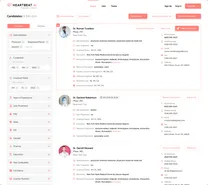
Heartbeat.ai says its database covers licensed healthcare professionals across the United States, including nephrologists in Wisconsin. The company says users can filter by specialty, location, and other criteria to build a targeted list rather than search hospital directories individually.
Nephrology itself splits into several sub-specialties worth knowing if you’re recruiting or targeting outreach: pediatric nephrologists treat children with kidney disorders, renal pathologists study kidney disease at the tissue level, dialysis nephrologists manage patients on ongoing dialysis, transplant nephrologists handle pre- and post-transplant care, and interventional nephrologists perform procedures such as dialysis access placement.
Identifying the sub-specialty you need before searching can make outreach more relevant. A general nephrology filter may include several types of specialists, so a transplant-focused campaign should be directed to providers whose practice matches that focus.
Nephrology Care in Wisconsin
Wisconsin has academic medical centers and community-based nephrology groups. The article names the University of Wisconsin Hospital and Clinics in Madison and Froedtert & the Medical College of Wisconsin in Milwaukee as examples with nephrology divisions and transplant programs, and Midwest Nephrology Associates as a community group serving the greater Milwaukee area.
Estimates of how many nephrologists practice in Wisconsin vary by source and methodology. Directory counts from services such as U.S. News have been reported in the low 200s statewide, but the figure can change as physicians retire, relocate, or join new practices. Treat any count as a dated estimate, not a fixed total.
Why Contact Accuracy Matters More in a Small Specialty
Nephrology is a smaller specialty than primary care or even most other internal medicine subspecialties. That has practical consequences for anyone doing outreach:
- Smaller talent pool, less room for error. If a recruiter’s list has a 20% bounce rate on a specialty with only a few hundred practitioners statewide, that’s a meaningful chunk of the addressable market gone.
- Faster staff turnover at group practices. Nephrologists move between hospital-affiliated groups and independent dialysis practices more often than some specialties, which means directory listings age quickly.
- Patient-facing urgency. For patients trying to reach a specialist for consultation, an outdated phone number or address listed on an old web page can delay care coordination.
These issues are not unique to Wisconsin. The article also points to a nationwide nephrologist shortage and uneven distribution between urban and rural areas as factors that can make staffing more challenging.
Working Around Access Gaps
Access to nephrologists may be more limited in rural parts of Wisconsin than around Madison and Milwaukee. Two approaches described for reducing travel or referral friction are:
- Telehealth for follow-up visits. Video consultations let established patients check in with a nephrologist without a long drive, though initial workups and dialysis access procedures still require in-person care.
- Updated provider databases for care coordination. Hospitals and referring physicians rely on current contact information to route patients to an available specialist quickly, especially when a local nephrologist has left a practice.
Neither of these solves the underlying supply problem. They reduce friction around it.
What’s in Heartbeat’s Nephrologist Contact Data
Heartbeat.ai says it aggregates provider information from public and private sources to create contact profiles for nephrologists and other healthcare professionals nationwide. The article says a typical record may include:
- Nephrologist name
- Location
- Contact numbers (work, cell, mobile)
- Email address
- Specialization
- Years of experience
- Sole proprietor status
- Licensed states
- License number
- Fax
- Address
Available Nephrologists in Our Contact List by State
Explore our email list of nephrologists across other U.S. states.
| Nephrologists by states |
|---|
| Nephrologists in Alabama |
| Nephrologists in Alaska |
| Nephrologists in Arizona |
| Nephrologists in Arkansas |
| Nephrologists in California |
| Nephrologists in Colorado |
| Nephrologists in Connecticut |
| Nephrologists in Delaware |
| Nephrologists in Florida |
| Nephrologists in Georgia |
| Nephrologists in Hawaii |
| Nephrologists in Idaho |
| Nephrologists in Illinois |
| Nephrologists in Indiana |
| Nephrologists in Iowa |
| Nephrologists in Kansas |
| Nephrologists in Kentucky |
| Nephrologists in Louisiana |
| Nephrologists in Maine |
| Nephrologists in Maryland |
| Nephrologists in Massachusetts |
| Nephrologists in Michigan |
| Nephrologists in Minnesota |
| Nephrologists in Mississippi |
| Nephrologists in Missouri |
| Nephrologists in Montana |
| Nephrologists in Nebraska |
| Nephrologists in Nevada |
| Nephrologists in New hampshire |
| Nephrologists in New jersey |
| Nephrologists in New mexico |
| Nephrologists in New york |
| Nephrologists in North carolina |
| Nephrologists in North dakota |
| Nephrologists in Ohio |
| Nephrologists in Oklahoma |
| Nephrologists in Oregon |
| Nephrologists in Pennsylvania |
| Nephrologists in Rhode island |
| Nephrologists in South carolina |
| Nephrologists in South dakota |
| Nephrologists in Tennessee |
| Nephrologists in Texas |
| Nephrologists in Utah |
| Nephrologists in Vermont |
| Nephrologists in Virginia |
| Nephrologists in Washington |
| Nephrologists in West virginia |
| Nephrologists in Wisconsin |
| Nephrologists in Wyoming |
How Heartbeat Compiles Nephrologist Contact Data
Heartbeat.ai says it builds nephrologist records by aggregating public and private information and matching it against licensing and practice data. The company describes its goal as broad coverage of the U.S. healthcare workforce and contact details checked against multiple sources.
No contact database is perfect. Providers change jobs, phone numbers, and email addresses, so any list—including this one—should be treated as a starting point rather than a guarantee of accuracy. Spot-checking contacts before a large outreach campaign is a prudent step regardless of the data source.
Who Uses a Nephrologist Contact List?
The most common users are healthcare recruiters filling open nephrology positions, medical device and pharmaceutical sales teams targeting kidney care specialists, market researchers studying the nephrology workforce, and referral coordinators trying to route patients efficiently. Occasionally, patients or caregivers use directories for the same purpose — finding a specialist for a second opinion.
Outreach to licensed medical professionals should respect applicable consent requirements. Bulk email and calling campaigns should also be reviewed for relevant spam, telemarketing, and other legal requirements.
Using a Nephrologist Contact List Well
A few practices separate effective outreach from noise:
- Lead with a specific, relevant reason for contacting the physician rather than a generic pitch.
- Keep messages short — nephrologists, like most specialists, have limited time between patients.
- Segment lists by sub-specialty (transplant, dialysis, pediatric) so the message matches the recipient’s actual practice focus.
- Confirm opt-in status before adding a contact to a recurring marketing sequence.
- Align any communication with HIPAA-adjacent professional standards, even though HIPAA itself governs patient data rather than B2B contact outreach.
Bottom Line
The article describes Wisconsin nephrology practices as concentrated around Madison and Milwaukee, with community practices serving other parts of the state. Because provider contact details can change, third-party lists should be treated as working resources and spot-checked before use. Heartbeat.ai presents its nephrologist data as a way to reduce the effort involved in finding contacts.
Frequently Asked Questions
What services do nephrologists in Wisconsin provide?
Nephrologists in Wisconsin diagnose and treat kidney-related conditions, including chronic kidney disease, kidney failure, dialysis management, and kidney transplant care.
How can I find a nephrologist in Wisconsin?
Common starting points include a referral from a primary care physician, your insurance provider’s directory, or a hospital system’s specialist directory such as those maintained by UW Health or Froedtert.
What should I expect during a visit to a nephrologist in Wisconsin?
A typical visit includes a review of medical history, a physical exam, and possibly blood or urine testing. The nephrologist will discuss findings and, if needed, outline next steps such as further testing or a treatment plan.