What’s on this page:
Key takeaways
- A pediatrician email list can support outreach segmented by specialty and location.
- Check how the provider sources, verifies, and refreshes its contact records before purchasing.
- Confirm that the list includes the states, specialties, and data fields your campaign requires.
- Use relevant messages and reasonable frequency, and honor opt-out requests.
- Review applicable privacy and marketing requirements for your intended use of contact data.
Last updated: August 28, 2026

A pediatrician email list can help healthcare marketers, recruiters, and vendors reach pediatric physicians by name, specialty, and location rather than relying on a generic practice address. Its usefulness depends on the accuracy and freshness of the contact details.
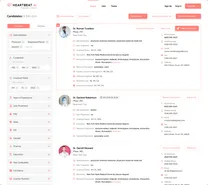
What’s in Heartbeat’s Pediatricians Email List

Heartbeat says its database organizes pediatric provider records by state and specialty, allowing customers to build outreach lists for specific campaigns rather than using one national list.
- Specialty profiling: Names, practice affiliations, and areas of pediatric expertise, so you can refine outreach to the right subset of providers.
- Geographic targeting: Filter by state or region using our doctors mailing lists approach, rather than treating the entire country as one audience.
- Campaign segmentation: Build lists around state-level regulatory differences or national trends, depending on what the campaign requires.
- Ongoing data updates: Contact information is refreshed on a recurring basis to reduce the number of bounced emails and disconnected numbers over time.
- Specialization filters: Narrow results to pediatricians with a specific subspecialty focus, which matters for anything beyond general outreach.
Data Fields Included in the Pediatrician Mailing List
- Pediatrician’s name
- Location
- Contact numbers (work, cell, mobile)
- Email address
- Specialization
- Years of experience
- Sole proprietor status
- Licensed states
- License number
- Fax
- Address
 Accuracy & coverage of personal contact info were unrivaled by other platforms… this gives any healthcare recruiter a competitive advantage when engaging hard-to-reach healthcare providers.
Senior Growth Strategist






Why a Verified List Matters More Than a Large One
A long list of pediatrician contacts is useful only if the addresses still work and recipients still hold the listed roles. Outdated data can waste send volume, contribute to sender-reputation problems through bounces, and increase the risk of contacting the wrong person or mishandling data.
- Regulatory alignment: Working from verified lists reduces the risk of contacting providers in ways that conflict with data protection or privacy rules.
- Cost efficiency: Targeting the right recipients cuts down on wasted outreach spend and follow-up effort on dead contacts.
- Time savings: Less time spent chasing bounced emails or disconnected numbers means more time on message and offer.
- Measurable results: Clean lists make open rates, response rates, and conversion tracking actually meaningful.
Pediatric Specialties You’ll Find in the List
Pediatric medicine includes general practice and a range of subspecialties. Segmenting a list by specialty can help match messages to relevant providers instead of sending the same pitch to everyone.
| Pediatrician Categories |
| General Pediatrician |
| Neonatologist |
| Pediatric Cardiologist |
| Pediatric Gastroenterologist |
| Pediatric Endocrinologist |
| Pediatric Pulmonologist |
| Pediatric Neurologist |
| Pediatric Nephrologist |
| Pediatric Rheumatologist |
| Pediatric Hematologist-Oncologist |
| Pediatric Infectious Disease Specialist |
Pediatricians Available by State
Coverage may vary by state, provider density, and how recently records were refreshed. Confirm current state-level availability with the provider before planning a campaign.
| Pediatrician By States |
| Pediatrician in Alabama |
| Pediatrician in Alaska |
| Pediatrician in Arizona |
| Pediatrician in Arkansas |
| Pediatrician in California |
| Pediatrician in Colorado |
| Pediatrician in Connecticut |
| Pediatrician in Delaware |
| Pediatrician in Florida |
| Pediatrician in Georgia |
| Pediatrician in Hawaii |
| Pediatrician in Idaho |
| Pediatrician in Illinois |
| Pediatrician in Indiana |
| Pediatrician in Iowa |
| Pediatrician in Kansas |
| Pediatrician in Kentucky |
| Pediatrician in Louisiana |
| Pediatrician in Maine |
| Pediatrician in Maryland |
| Pediatrician in Massachusetts |
| Pediatrician in Michigan |
| Pediatrician in Minnesota |
| Pediatrician in Mississippi |
| Pediatrician in Missouri |
| Pediatrician in Montana |
| Pediatrician in Nebraska |
| Pediatrician in Nevada |
| Pediatrician in New Hampshire |
| Pediatrician in New Jersey |
| Pediatrician in New Mexico |
| Pediatrician in New York |
| Pediatrician in North Carolina |
| Pediatrician in North Dakota |
| Pediatrician in Ohio |
| Pediatrician in Oklahoma |
| Pediatrician in Oregon |
| Pediatrician in Pennsylvania |
| Pediatrician in Rhode Island |
| Pediatrician in South Carolina |
| Pediatrician in South Dakota |
| Pediatrician in Tennessee |
| Pediatrician in Texas |
| Pediatrician in Utah |
| Pediatrician in Vermont |
| Pediatrician in Virginia |
| Pediatrician in Washington |
| Pediatrician in West Virginia |
| Pediatrician in Wisconsin |
| Pediatrician in Wyoming |
How This Data Gets Compiled
A usable pediatrician list typically depends on multiple steps, such as sourcing, verification, refresh cycles, specialty segmentation, and duplicate checks. Ask the provider how each step is performed.
- Aggregation: Records are pulled from medical directories, licensing boards, and professional associations rather than a single source.
- Verification: Entries are cross-checked against multiple trusted sources before being included.
- Regular refresh cycles: Contact details change as providers move practices or retire, so lists need to be re-verified on a recurring schedule, not treated as a one-time purchase.
- Specialty segmentation: Records are tagged by subspecialty, distinguishing neonatologists and pediatric cardiologists from general pediatricians, so campaigns can be targeted rather than blasted broadly.
- Quality checks: Duplicate and inconsistent entries are flagged and removed before a list ships.
Note on scale: there is no single universally cited count of practicing pediatricians. One AAMC analysis of the AMA Physician Masterfile estimated 60,305 actively practicing general pediatricians in the United States in 2021, though this figure covers general pediatricians only and doesn’t include subspecialists.
For related outreach approaches in another specialty, see our piece on the urologists email list.
Why Use Heartbeat.ai’s Pediatrician Mailing List

Broad Coverage
Heartbeat describes its contact base as supporting state, regional, and national campaigns. Confirm the available coverage for your target locations before choosing a provider.
Verification Focus
Heartbeat says contacts go through a verification process before inclusion. Ask what the process checks and when records were last reviewed, since practice affiliations and licensure details can change.
Data Enrichment
Records may include additional context, such as practice details, beyond a name and email address. Confirm which fields are available for the specific list you need.
Searchability
Heartbeat describes filters for license taxonomy codes, license issue and expiry dates, and registered credentials. Confirm that the specific fields and filters you need are available.
Track Record
Heartbeat says healthcare marketing and recruiting customers use its platform for pediatric and other provider outreach. Ask for information that helps you assess whether the service fits your needs.
What to Check Before Buying a Pediatricians Email List

Healthcare contact data should be evaluated for both accuracy and appropriate use. Before committing budget, ask the provider:
- Source credibility: Confirm the data traces back to medical associations, licensing boards, or healthcare institutions rather than unverified scraping.
- Verification process: Ask how often emails and phone numbers are re-checked, not just how they were originally collected.
- Privacy compliance: Confirm the provider’s practices align with applicable US privacy and healthcare data rules for the way you intend to use the data.
- Feedback loop: A mechanism for providers to correct or update their own listing improves accuracy over time.
- Security measures: Encryption and secure storage matter given the sensitivity of provider licensing and contact information.
- Audit cadence: Ask how frequently the list is refreshed; a list that’s a year old will have meaningfully higher bounce rates.
- Consent practices: Understand how the provider’s data was sourced and whether it reflects standard business-contact practices for licensed professionals.
Who Actually Uses a Pediatricians Email List

Pediatric Healthcare Consultants
Consultants offering practice-management, optimization, or compliance guidance may use the list to contact pediatricians, subject to applicable rules and recipients’ preferences.
HealthTech Startups
Companies building tools or devices for pediatric care may use the list to introduce products to relevant physicians, provided the outreach is appropriate and compliant.
Clinical Service Providers
Diagnostic labs and imaging centers may use the list to inform pediatricians about services relevant to referrals.
Pediatric Dentists and Orthodontists
Dental specialists may use the list to build professional relationships with pediatricians around shared patient care and referrals.
Child Psychology and Behavioral Health Specialists
Mental health providers focused on children may use the list to build referral relationships with pediatricians.
Medical Recruitment Agencies
Recruiters may use the list to contact pediatricians about job placements or locum tenens opportunities.
Pediatric Medical Product Suppliers
Suppliers of pediatric-specific instruments or supplies may use the list to reach physicians who could purchase or recommend their products.
Local Community Health Organizations
Community groups may use the list to contact local pediatricians about health fairs or outreach programs.
Healthcare IT Solutions Providers
Healthcare IT vendors may use the list to introduce practice-management or security tools to pediatric practices.
For a comparison of outreach approaches in a different specialty, see our article on the physical therapist email list.
Using the List Without Burning Out Your Contacts

Educational Content
Relevant clinical updates or industry news can give pediatricians a reason to engage with outreach beyond a sales pitch.
Product Demos and Trials
A product trial can let a pediatrician assess whether a product fits their workflow before making a commitment.
Targeted Offers
Offers tailored to a provider’s specialty or practice may be more relevant than a generic discount message.
Career Development Resources
Continuing education and skill-building content can provide useful material between sales-focused messages.
Event Invitations
Personalized invitations to conferences or networking events can make an event message more relevant than a generic invitation.
Job Opportunities
Recruiters may use the list to share locum tenens or permanent roles with pediatricians who could be interested.
A Practical Takeaway
A pediatrician email list is a tool for precision, not volume. Its value depends on accurate segmentation by specialty and state, current contact details, and outreach that respects providers’ time and preferences. Used carelessly, a large list can generate spam complaints. Relevant messages, reasonable frequency, and prompt handling of opt-out requests can support recruiting, sales, and partnership outreach.
FAQs
Are there restrictions on how often I can email pediatricians?
There’s no fixed legal cap on frequency for standard B2B outreach, but sending too often tends to trigger unsubscribes and spam complaints. Spacing out relevant, valuable messages works better than frequent generic blasts.
Can this list be used for international outreach?
Heartbeat’s list is built around US-based providers with US licensing and state data. International outreach would require a different data source built around the relevant country’s provider registries.
Are there guidelines on ethical use of this data?
Providers typically offer documentation on acceptable use, and standard practice is to use the data for legitimate business outreach, honor opt-out requests promptly, and avoid deceptive subject lines or sender identities.