Sole proprietor filter explained: how recruiters use it to reach practice owners
Ben Argeband, Founder & CEO of Heartbeat.ai — Keep it practical and recruiter-focused.
What’s on this page:
Who this is for
This is for recruiters targeting practice owners vs employed clinicians who need to reach a decision maker quickly (coverage approvals, adding clinicians, partnership conversations) and are tired of getting stuck with gatekeepers or the wrong contact at the practice.
This page explains the sole proprietor filter operationally: how it helps you prioritize owner-likely records and run a cleaner routing workflow. It is not tax guidance.
Quick Answer
- Core Answer
- The sole proprietor filter helps recruiters prioritize owner-likely practices so outreach reaches decision makers sooner and messaging matches owner incentives and time constraints.
- Key Insight
- Use it for owner-level decisions (coverage, adding clinicians, partnership). Treat it as a routing signal and confirm decision authority on first contact.
- Best For
- Recruiters targeting practice owners vs employed clinicians.
Compliance & Safety
This method is for legitimate recruiting outreach only. Always respect candidate privacy, opt-out requests, and local data laws. Heartbeat does not provide medical advice or counsel.
Use it when: you need an owner or owner-designated operator to approve staffing, coverage, or partnership steps. Skip it when: decisions are clearly centralized (large employed groups) and routing should start with HR or a medical director.
Framework: The “Decision Maker First” Workflow: owners answer differently
Owner outreach is not the same motion as associate outreach. Owners are balancing patient care, staff issues, vendor noise, and operational decisions. If your message sounds like a generic job pitch, it gets ignored. The “Decision Maker First” workflow is built around one goal: reach the person who can approve the next step.
- Route first, pitch second. Your first touch is a routing question, not a full offer.
- Use owner outcomes. Lead with schedule protection, coverage stability, reduced recruiting load, and retention risk.
- Confirm authority early. Treat “sole proprietor” as a targeting signal, not proof of ownership.
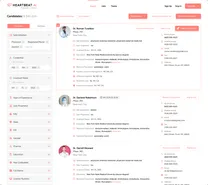
In Heartbeat.ai, this is implemented through targeting filters that help you segment toward owner-likely practices and then run a tighter outreach loop. For P1 workflows, teams also benefit from ranked mobile numbers by answer probability so the first dials are more likely to reach a human.
What the filter is (and what it is not)
- It is: a practical way to prioritize records that are more likely to map to an owner-led decision path.
- Heartbeat operational meaning: it helps you build an “Owner Lane” segment where your first objective is routing to the staffing approver (owner or owner-designated operator), not pitching the role.
- Owner-designated operator examples: practice administrator, office manager, operations lead, or a partner who handles staffing.
- It is not: a guarantee that the clinician you contact is the owner or the staffing approver.
- Your job: use the filter to choose who to contact first, then confirm who decides within the first conversation.
Step-by-step method
-
Start with the decision you need.
Write the decision in one line: “Approve adding a clinician,” “Approve coverage spend,” “Approve partnership discussions,” or “Approve schedule/call changes.” If the decision is operational or financial, you want an owner or owner-designated decision maker early.
-
Apply the sole proprietor filter to build an owner-likely segment.
Use the sole proprietor filter when your outreach is about owner-level decisions. This is about routing to a practice owner or true decision maker faster, not labeling someone’s finances.
-
Layer additional targeting filters to reduce misroutes.
Combine signals (specialty, geography, practice setting, role indicators) so you spend fewer touches on the wrong person. The goal is fewer transfers, fewer “not me,” and fewer dead-end voicemails.
Where this can fail: some practices are manager-led, group-owned, or multi-location with centralized staffing decisions. In those cases, your first win is identifying the operator who routes you to the approver.
-
Run two lanes: Owner Lane vs Associate Lane.
Owner Lane is routing + outcomes. Associate Lane is role-fit + schedule + comp structure. Do not mix them; it slows both.
-
Confirm decision authority in the first 60 seconds.
Use a neutral question: “Are you the person who decides on staffing/coverage here, or is that handled by someone else?” If it is someone else, ask for the name, best number, and best time window.
-
Log routing outcomes as data.
Track whether you reached the decision maker, got referred to them, confirmed the contact is not the decision maker, or could not determine. This turns the filter into a compounding advantage.
Diagnostic Table:
This is the dedicated USE_CASE_TABLE for owner outreach vs associate outreach. Use it to decide when the sole proprietor filter belongs in your search and how your first message should change.
| Use case | Use the sole proprietor filter? | Primary target | First-touch goal | First sentence that works | What to avoid |
|---|---|---|---|---|---|
| Partnership / succession / buy-sell conversations | Yes | Practice owner / managing partner | Confirm decision authority | “Are you the person who decides on adding a partner or clinician at [Practice]?” | Job-post language; long pitch |
| Coverage gaps (locums, call coverage, short-term stabilization) | Usually | Decision maker for coverage (owner or ops lead) | Route to staffing approver | “Who owns the coverage decision for your schedule?” | Assuming the clinician you reached controls staffing |
| Associate placement into a clearly employed group | Usually no | Recruiting/HR or medical director | Find the recruiter-of-record | “Who manages clinician recruiting for your group?” | Owner framing; it can be off-target |
| Adding a service line / expanding hours | Yes | Practice owner / managing clinician | Confirm who approves change | “Are you the decision maker on staffing for expanded hours?” | Leading with a resume dump |
| General networking / referrals (not hiring) | Sometimes | Clinical lead or owner depending on practice | Route to the right operator | “Who is best to speak with about coordination?” | Forcing an owner conversation when it is clinical ops |
The trade-off is… you will prioritize more owner-likely records, but you still need to confirm who actually approves staffing decisions at that location.
Weighted Checklist:
Use this to decide whether a record goes into your Owner Lane sequence. Score each item 0–2 (0 = no signal, 1 = weak, 2 = strong). Total 10+ = Owner Lane first; 6–9 = mixed lane; 0–5 = standard/associate lane.
- Sole proprietor filter match (0–2)
- Practice appears independent (not clearly a large employed group) (0–2)
- Role/title hints at ownership (owner, managing, principal, partner) (0–2)
- Your ask is owner-level (coverage budget, adding clinicians, partnership) (0–2)
- Routing clarity: you can identify the decision maker path within 1–2 touches (0–2)
Operational rule: if you cannot identify the decision maker path quickly, switch from “pitch outreach” to “routing outreach.” Your next message should ask who decides and when they are reachable.
Outreach Templates:
These templates are built for owner/decision-maker routing. Keep them short and outcome-based.
Template 1: Call opener (routing)
“Hi Dr. [Last]—quick routing question. Are you the person who decides on staffing/coverage at [Practice], or is that handled by someone else?”
If not them: “Who is the right decision maker, and what is the best time window to reach them?”
Template 2: Voicemail (owner lane)
“Dr. [Last], this is [Name]. I am calling because we help practices stabilize coverage without disrupting clinic flow. If you are the staffing decision maker, call me at [number]. If not, who should I speak with?”
Template 3: Email (owner lane)
Subject: Staffing decision maker at [Practice Name]?
Body: Dr. [Last]—are you the decision maker for adding clinicians/coverage at [Practice Name]? If not, who is the right contact? If yes, I can share a couple options that protect schedule and reduce recruiting load. —[Signature]
Template 4: SMS (only where appropriate and compliant)
“Dr. [Last]—[Name] here. Are you the staffing/coverage decision maker at [Practice]? If not, who should I reach out to?”
Common pitfalls
-
Treating the filter as proof of ownership.
Do not. Use it to prioritize, then confirm who decides. Your workflow should assume “owner-likely” until verified.
-
Using associate messaging on owner targets.
Owners respond to operational outcomes: schedule stability, reduced churn, and less recruiting burden. A long job pitch reads like noise.
-
Not separating routing outcomes from interest outcomes.
Owner targeting often wins by routing first. If you only track “interested/not interested,” you will not see where the process is breaking.
-
Over-touching the wrong contact.
If you have confirmed someone is not the decision maker, suppress them from Owner Lane and move to the right person. More touches to the wrong person is waste.
How to improve results
Improvement here is about measurement and iteration, not blasting more volume. Measure this by… tracking routing outcomes per 100 attempts: (1) decision maker reached, (2) decision maker referral obtained, (3) confirmed not the decision maker, (4) unknown.
Make the dispositions explicit so every recruiter logs the same thing:
| Disposition | Definition (what happened) | What you do next |
|---|---|---|
| DM confirmed | You spoke with the staffing/coverage approver (owner or owner-designated operator). | Move to qualification and next step scheduling. |
| DM referred | You reached a non-approver who provided the correct decision maker path. | Contact the referred person in the stated time window; note the referral source. |
| Not DM | You confirmed the contact is not the decision maker and did not provide a path. | Suppress from Owner Lane; try alternate routing channels for the location. |
| Unknown | You could not determine decision authority (no response, unclear, or blocked). | Adjust channel/time window/opener; do not keep repeating the same touch. |
If you track channel performance, use consistent definitions so your team’s numbers match:
- Connect Rate = connected calls / total dials (per 100 dials).
- Answer Rate = human answers / connected calls (per 100 connected calls).
- Deliverability Rate = delivered emails / sent emails (per 100 sent emails).
- Bounce Rate = bounced emails / sent emails (per 100 sent emails).
- Reply Rate = replies / delivered emails (per 100 delivered emails).
Implementation notes (what to do next week):
For definitional clarity on the term, see IRS: Sole proprietorships.
- Split your sequences into Owner Lane vs Associate Lane and label them in your ATS/CRM.
- Change the first touch in Owner Lane to a routing question. Your goal is “right person,” not “full pitch.”
- Standardize dispositions so reps log the same outcomes: DM confirmed / DM referred / not DM / unknown.
- Refresh and suppress: remove confirmed non-decision makers from Owner Lane and suppress opt-outs immediately.
- Review outcomes weekly and adjust one variable at a time (channel, time window, opener, or segment filters).
If you are tempted to buy a static list: buying static lists is risky because of decay. The modern standard is Access + Refresh + Verification + Suppression.
Legal and ethical use
Use owner targeting to reduce wasted outreach, not to pressure people. Keep messages relevant, honor opt-outs quickly, and follow local data rules and platform policies.
This page is not providing tax guidance. Also, do not represent the filter as definitive proof of ownership. Treat it as a workflow tool to prioritize who to contact first and what to ask.
Evidence and trust notes
We reference “sole proprietor” only for definitional clarity (not guidance): IRS: Sole proprietorships.
For how Heartbeat.ai approaches sourcing, verification, suppression, and updates, see: Trust methodology for provider contact data. Operationally, your outreach workflow should include suppression for opt-outs and periodic refresh so you do not keep contacting the wrong person at the same location.
Related resources for building segments and sequences:
- Physician list by specialty and state (segmentation before outreach)
- Dentist contact database (owner vs associate routing examples)
FAQs
What does the sole proprietor filter mean for recruiting?
It is a targeting signal to prioritize outreach toward owner-likely practices so you can reach a decision maker faster and use owner-appropriate messaging.
Is the sole proprietor filter the same as confirming someone is the owner?
No. Use it to prioritize and then confirm decision authority in the first conversation. Do not treat it as guaranteed ownership accuracy.
When should I not use the sole proprietor filter?
When you are recruiting into clearly employed settings where staffing decisions route through HR, a medical director, or centralized recruiting.
How do I verify I reached the decision maker without sounding awkward?
Ask a neutral routing question: “Are you the person who decides on staffing/coverage, or is that handled by someone else?” Then ask for the best contact path and time window.
What should I track to know if owner targeting is working?
Track “decision maker reached” and “decision maker referral obtained” per 100 attempts, plus channel metrics like Connect Rate and Reply Rate using consistent denominators.
Next steps
If your goal is faster owner conversations (not more noise), build an Owner Lane sequence and test it for one week with clean routing dispositions.
- start free search & preview data in Heartbeat.ai and apply the sole proprietor filter to your target market.
- Use physician list by specialty and state to tighten your segment before you launch touches.
- If you recruit dental, compare owner/associate routing patterns in the dentist contact database guide.
About the Author
Ben Argeband is the Founder and CEO of Swordfish.ai and Heartbeat.ai. With deep expertise in data and SaaS, he has built two successful platforms trusted by over 50,000 sales and recruitment professionals. Ben’s mission is to help teams find direct contact information for hard-to-reach professionals and decision-makers, providing the shortest route to their next win. Connect with Ben on LinkedIn.