What’s on this page:
Key takeaways
- Contact information for South Carolina nursing homes can become outdated as staff and facility details change.
- A contact list may help recruiters, marketers, and networking professionals organize outreach, but it does not replace direct verification.
- Facility types listed in the article include skilled nursing, assisted living, memory care, and continuing care communities.
- Verify current facility counts, licensing details, and contact information before relying on them.
- Outreach should respect privacy requirements, applicable anti-spam rules, and contact preferences.
Last updated: August 30, 2026
Recruiters, marketers, and networking professionals working in South Carolina’s long-term care sector often face the same problem: nursing home contact information changes, and generic directories may not keep pace. Hiring managers seeking facility administrators and vendors seeking regional operators need contact information they can verify before acting.
This page explains how nursing home contact data can support outreach, recruiting, and partnership efforts in South Carolina, along with common challenges and limitations to consider.
Get a Nursing Home Email List for South Carolina from Heartbeat
Whether you’re looking for healthcare professionals, specialists, or surgeons, Heartbeat.ai’s platform helps you find licensed professionals across the United States. Filters let you narrow results by facility type, location, and role so you’re not sifting through irrelevant contacts.
Facility types typically covered include skilled nursing facilities, residential care homes, long-term care facilities, convalescent homes, assisted living facilities, memory care units, and continuing care retirement communities.
If your outreach needs are specific, contact Heartbeat and describe your project. The team can explain options for narrowing a list by facility, role, or region.
Overview of South Carolina’s Long-Term Care Landscape
The number of licensed nursing homes in South Carolina varies by source and date. Facilities may open, close, or change licensure status, so verify the current count with an official source rather than relying on a single estimate.
The state’s senior population is growing. As more South Carolinians reach retirement age, demand for skilled nursing, assisted living, and memory care is expected to increase, which has direct implications for staffing needs and facility partnerships across the sector.
Larger health systems in the state, including academic medical centers and multi-hospital networks, influence regional care standards and often feed talent into nursing home staffing pipelines through training programs and clinical rotations. That connection matters for recruiters trying to map where candidates come from before they land at a long-term care facility.
Why Accurate Contact Information Matters
Accurate contact data can serve families, recruiters and hiring managers, and vendors or other industry professionals in different ways:
- Families need reliable phone numbers and, ideally, direct lines to relevant staff to stay informed about a resident’s care and status.
- Recruiters and hiring managers depend on current contact details to reach administrators and clinical leads directly, rather than routing through general facility switchboards that may delay a response by days.
- Vendors, partners, and industry professionals rely on accurate lists for networking, referral relationships, and knowledge-sharing across facilities.
Outdated contact information can waste time, slow hiring and partnership conversations, and make it harder for families to reach a facility when they need an answer.
Common Challenges in Finding South Carolina Nursing Homes
A few obstacles come up consistently when searching for the right facility or the right contact:
- Availability: Many facilities operate near capacity, and open beds don’t always match a family’s timeline.
- Cost variation: Rates differ meaningfully by region and facility type, making apples-to-apples comparisons difficult without organized data.
- Location constraints: A facility with the right care level may be inconveniently far from family or referring providers.
- Inconsistent quality signals: Ratings and reviews vary by source, and public data doesn’t always reflect day-to-day experience.
- Stale contact records: Staff turnover and administrative changes mean phone numbers and emails on public directories can go out of date quickly.
A well-maintained database that consolidates facility details, contact information, and specialization data can reduce the manual work of cross-referencing multiple sources. It won’t replace direct outreach or a facility visit, but it may help narrow the field before that legwork begins.
What a Heartbeat Nursing Home Contact List Includes
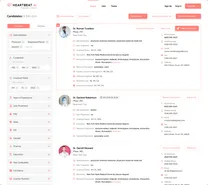
Heartbeat describes its nursing home contact data as a resource for recruiting, networking, and outreach that consolidates facility and provider details. Typical fields may include:
- Nursing home name
- Location
- Contact numbers (work, cell, mobile)
- Email address
- Specialization
- Years of experience
- Sole proprietor status
- Licensed states
- License number
- Fax
- Address
Available Nursing Home Lists by State
Heartbeat says it maintains nursing home contact lists across all fifty states. Browse the table below for other states you may need.
| Nursing homes by states |
|---|
| Nursing homes in Alabama |
| Nursing homes in Alaska |
| Nursing homes in Arizona |
| Nursing homes in Arkansas |
| Nursing homes in California |
| Nursing homes in Colorado |
| Nursing homes in Connecticut |
| Nursing homes in Delaware |
| Nursing homes in Florida |
| Nursing homes in Georgia |
| Nursing homes in Hawaii |
| Nursing homes in Idaho |
| Nursing homes in Illinois |
| Nursing homes in Indiana |
| Nursing homes in Iowa |
| Nursing homes in Kansas |
| Nursing homes in Kentucky |
| Nursing homes in Louisiana |
| Nursing homes in Maine |
| Nursing homes in Maryland |
| Nursing homes in Massachusetts |
| Nursing homes in Michigan |
| Nursing homes in Minnesota |
| Nursing homes in Mississippi |
| Nursing homes in Missouri |
| Nursing homes in Montana |
| Nursing homes in Nebraska |
| Nursing homes in Nevada |
| Nursing homes in New hampshire |
| Nursing homes in New jersey |
| Nursing homes in New mexico |
| Nursing homes in New york |
| Nursing homes in North carolina |
| Nursing homes in North dakota |
| Nursing homes in Ohio |
| Nursing homes in Oklahoma |
| Nursing homes in Oregon |
| Nursing homes in Pennsylvania |
| Nursing homes in Rhode island |
| Nursing homes in South carolina |
| Nursing homes in South dakota |
| Nursing homes in Tennessee |
| Nursing homes in Texas |
| Nursing homes in Utah |
| Nursing homes in Vermont |
| Nursing homes in Virginia |
| Nursing homes in Washington |
| Nursing homes in West virginia |
| Nursing homes in Wisconsin |
| Nursing homes in Wyoming |
How Heartbeat Compiles Nursing Home Contact Data
Heartbeat says it aggregates healthcare provider data from official, private, and public sources to maintain contact records. The stated goal is to reduce the time recruiters and outreach teams spend manually checking phone numbers and email addresses before starting a conversation.
Provider staffing changes regularly, so no directory can be guaranteed to be completely current. Facilities update rosters, staff leave or change roles, and contact details shift accordingly. Treat any list as a starting point for outreach, not as a guaranteed-accurate final record, and verify critical details directly with the facility.
Deciding If a Contact List Fits Your Use Case
Before purchasing or requesting a nursing home contact list, it helps to ask a few questions:
- Are you recruiting for a specific role or facility type? Narrow filters (skilled nursing vs. memory care, for example) save time downstream.
- Do you need statewide coverage or a specific region? South Carolina’s coastal, midlands, and upstate regions differ in facility density and cost.
- How time-sensitive is the outreach? If you’re working against a hiring deadline, prioritize lists with verified cell numbers and direct emails over general facility lines.
- Will you need ongoing access? Recruiters running continuous pipelines benefit from a refreshed data source rather than a one-time export.
Who Uses Nursing Home Email Lists
Sales teams, marketing executives, and business owners use contact lists for lead generation and advertising. Third-party marketing agencies, customer service teams, and recruiters use them for targeted outreach. Market research and data analysis firms also draw on this kind of data for reporting.
Whatever the use case, outreach should comply with applicable privacy laws and anti-spam regulations, and should respect facility and staff preferences around contact frequency.
Using Nursing Home Contact Lists Responsibly
A few practical guidelines apply regardless of whether you’re recruiting, marketing, or networking:
- Personalize outreach rather than sending identical mass messages to every contact.
- Be clear and concise about why you’re reaching out and what you’re asking for.
- Respect confidentiality and privacy regulations in every interaction, particularly when contact details relate to resident care.
- Keep messaging professional and avoid making claims about care quality or medical outcomes you can’t support.
Limitations to Keep in Mind
Contact lists are a tool, not a guarantee. Facility staffing and license status can change, and even well-maintained data may include outdated entries. Cross-check critical details, especially licensing and role information, directly with the facility before making decisions that depend on them.
Frequently Asked Questions
What types of nursing homes are available in South Carolina?
South Carolina has a range of facility types, including skilled nursing facilities, assisted living facilities, and memory care units, each serving different levels of medical and daily-living need.
What services do nursing homes in South Carolina typically provide?
Most facilities offer medical care, assistance with daily activities, social and recreational programming, and meals, though specific services vary by facility.
How do I find and choose a nursing home in South Carolina?
Research online, visit facilities in person when possible, ask healthcare professionals for recommendations, and weigh factors like location, services offered, and quality indicators before deciding.
What do nursing homes cost in South Carolina?
Costs vary by location, care level, and amenities. Contact individual facilities directly for current pricing, since published averages shift over time.