Last updated: August 30, 2026
Recruiters, marketers, and healthcare organizations working in California’s maternal health space run into the same problem repeatedly: midwife nurse contact records go stale fast. Certified nurse-midwives (CNMs) move between hospital systems, licensed midwives change practice settings, and a directory that was accurate six months ago may now be pointing you toward disconnected numbers and dead email addresses.
This guide covers what accurate contact data actually solves for, how California’s midwifery landscape is structured, and how Heartbeat.ai’s contact lists fit into a practical outreach or recruitment workflow.
What’s on this page:
Get an Email List of Midwife Nurses in California from Heartbeat
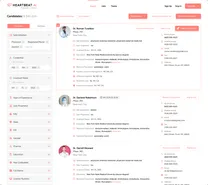
Heartbeat.ai’s platform lets you filter licensed healthcare professionals across the United States, including midwife nurses in California, and build a targeted contact list in minutes rather than piecing one together from scattered public sources.
Records span the different types of midwifery practice you’ll encounter in the field: Certified Nurse-Midwives providing prenatal and postpartum care, Certified Midwives, direct-entry midwives, Certified Professional Midwives who focus on out-of-hospital births, and traditional or community-based practitioners sometimes referred to as lay midwives.
If you’re building a recruitment pipeline or a referral network, the goal is matching the right practitioner type to the right role, not just pulling a generic list of names.
Midwifery in California: A Quick Overview
California recognizes two categories of midwife: Certified Nurse Midwives (CNM), sometimes called Nurse Midwives, and Licensed Midwives (LM). Both are able to practice with a meaningful degree of independence — CNMs and LMs can practice independently and do not require physician supervision, and both are eligible to enroll as Medi-Cal providers with the California Department of Health Care Services.
CNM scope of practice expanded meaningfully after Governor Newsom signed Senate Bill 1237, broadening the certified nurse midwife scope of practice among other changes to the Nursing Practice Act, with the changes allowing additional independence for CNMs in California beginning on January 1, 2021. In practical terms, this means CNMs today generally carry more prescriptive and clinical authority than they did a decade ago — worth knowing if you’re describing role responsibilities in a job posting or recruiting message.
Licensed Midwives operate under a narrower, defined scope. Per the Medical Board of California, midwives are not authorized to practice medicine or perform surgery, though licensed midwives are authorized to directly obtain supplies and devices, obtain and administer drugs and diagnostic tests, order testing, and receive reports necessary to the practice of midwifery. LMs also work within specific clinical boundaries — a licensed midwife may assist a woman in childbirth as long as progress meets criteria accepted as normal.
Academic medical centers such as UCSF Medical Center and Cedars-Sinai remain major training and employment hubs for CNMs in the state, and they factor heavily into both education pipelines and hiring competition.
Why Accurate Contact Data Matters
Three practical scenarios make contact accuracy non-negotiable:
- Recruitment: Incomplete or outdated contact records slow down candidate outreach, delay interview scheduling, and can leave open midwifery positions unfilled longer than necessary.
- Referral and care coordination: When practices need to route patients or coordinate handoffs between a physician and a midwife, having a verified direct line reduces delay.
- Professional networking: Conferences, continuing education programs, and collaborative practice agreements all depend on being able to reach the right person directly rather than through a general office line.
Any communication involving patient information must still comply with applicable privacy and consent requirements — treat contact data as a way to reach professionals, not as a shortcut around standard healthcare communication and privacy obligations.
Why Sourcing Midwife Nurses in California Is Difficult
A few structural factors make this harder than sourcing, say, general RNs:
- Small applicant pool. Midwife nurses represent a narrow specialty within nursing, so even a modest vacancy rate creates real competition among employers.
- Limited local training pipelines. Accredited midwifery programs are concentrated in a handful of institutions, which constrains the supply of new graduates entering the field each year.
- Geographic clustering. Midwives tend to concentrate around major metro medical centers, leaving rural and underserved areas with thinner coverage.
A workable approach to these constraints usually combines a few tactics: widening search beyond local networks using verified national databases, tracking specialization and licensure detail (not just names) so you can match candidates to specific roles, and building a pipeline that includes both active job-seekers and passive candidates who might respond to the right outreach.
What’s Included in Heartbeat’s Midwife Nurse Contact Records
Heartbeat.ai’s database is built to address the sourcing friction described above by consolidating contact and credential details into a single, searchable record. Typical fields include:
- Midwife nurse name
- Location
- Contact numbers (work, cell, mobile)
- Email address
- Specialization
- Years of experience
- Sole proprietor status
- Licensed states
- License number
- Fax
- Address
Midwife Nurse Contact Lists by State
Browse comprehensive midwife nurse contact lists organized by state.
| Midwife nurses by states |
|---|
| Midwife nurses in Alabama |
| Midwife nurses in Alaska |
| Midwife nurses in Arizona |
| Midwife nurses in Arkansas |
| Midwife nurses in California |
| Midwife nurses in Colorado |
| Midwife nurses in Connecticut |
| Midwife nurses in Delaware |
| Midwife nurses in Florida |
| Midwife nurses in Georgia |
| Midwife nurses in Hawaii |
| Midwife nurses in Idaho |
| Midwife nurses in Illinois |
| Midwife nurses in Indiana |
| Midwife nurses in Iowa |
| Midwife nurses in Kansas |
| Midwife nurses in Kentucky |
| Midwife nurses in Louisiana |
| Midwife nurses in Maine |
| Midwife nurses in Maryland |
| Midwife nurses in Massachusetts |
| Midwife nurses in Michigan |
| Midwife nurses in Minnesota |
| Midwife nurses in Mississippi |
| Midwife nurses in Missouri |
| Midwife nurses in Montana |
| Midwife nurses in Nebraska |
| Midwife nurses in Nevada |
| Midwife nurses in New hampshire |
| Midwife nurses in New jersey |
| Midwife nurses in New mexico |
| Midwife nurses in New york |
| Midwife nurses in North carolina |
| Midwife nurses in North dakota |
| Midwife nurses in Ohio |
| Midwife nurses in Oklahoma |
| Midwife nurses in Oregon |
| Midwife nurses in Pennsylvania |
| Midwife nurses in Rhode island |
| Midwife nurses in South carolina |
| Midwife nurses in South dakota |
| Midwife nurses in Tennessee |
| Midwife nurses in Texas |
| Midwife nurses in Utah |
| Midwife nurses in Vermont |
| Midwife nurses in Virginia |
| Midwife nurses in Washington |
| Midwife nurses in West virginia |
| Midwife nurses in Wisconsin |
| Midwife nurses in Wyoming |
How the Data Is Compiled
Heartbeat.ai aggregates provider information from public, private, and official sources into a single searchable platform, then applies verification and modeling processes to keep contact details current. The intent is to reduce the manual work of cross-referencing licensing boards, professional directories, and outdated PDFs one at a time.
No contact database, including this one, is ever going to be perfectly current — providers change roles and numbers constantly. Treat any list as a strong starting point that still benefits from a quick verification step before high-stakes outreach like formal recruitment offers.
Who Uses a Midwife Nurse Contact List?
Common users include:
- Healthcare recruiters sourcing candidates for open midwifery roles
- Marketing teams promoting relevant products, services, or continuing education to practicing midwives
- Researchers conducting outreach for surveys or studies
- Hospital systems and practices coordinating referrals or collaborative care agreements
- Professional associations organizing conferences or networking events
Using the List Effectively
A few practices separate outreach that gets a response from outreach that gets ignored:
- Lead with something useful. A short, relevant piece of information — a job description that clearly states scope and pay, or a genuinely relevant resource — performs better than a generic mass email.
- Respect scheduling constraints. Midwives often work irregular hours tied to deliveries; keep initial messages short and easy to act on when time allows.
- Segment by specialization. A message aimed at a hospital-based CNM won’t land the same way with a community-based direct-entry midwife — tailor accordingly.
- Stay compliant. Follow applicable consent and privacy rules for any communication involving healthcare professionals or patient-adjacent information.
Where This Fits in a Broader Workflow
Contact data solves the “who and how do I reach them” problem — it doesn’t replace credential verification, interview screening, or compliance checks that any responsible hiring or referral process still requires. Pair verified contact records with your existing vetting workflow rather than treating a directory as the final word on a candidate’s qualifications.
Frequently Asked Questions
What qualifications are required to become a midwife nurse in California?
Becoming a CNM in California typically requires completing a nursing degree, passing the NCLEX-RN, and completing an accredited nurse-midwifery graduate program along with national certification and state licensure through the California Board of Registered Nursing.
Can midwife nurses in California prescribe medication?
Yes. The California Board of Registered Nursing allows both nurse-midwives and women’s health nurse practitioners to prescribe or furnish medications, generally under a furnishing number and standardized procedures within their defined scope of practice.
What services do midwife nurses in California provide?
Midwife nurses in California generally provide prenatal care, labor and delivery support, postpartum care, family planning services, and gynecological care, with the specific scope depending on whether they are a Certified Nurse-Midwife or a Licensed Midwife.