In Minnesota State, the role of forensic pathologists is indispensable in the healthcare sector. However, marketing and recruiting the right professionals can be quite the challenge, especially without the correct contact information.
Having up-to-date and accurate details is crucial for healthcare recruitment and networking, as it promotes efficient communication and active engagement. In this blog, we will delve into the importance of an accurate emailing list in making the recruitment and networking processes seamless. You will gain valuable insights into how to optimize your marketing and recruitment strategies through effective communication channels.
Finally, we’ll illustrate how Heartbeat, our bespoke solution, can help streamline these processes, ensuring you connect with the right forensic pathologists in Minnesota State.
What’s on this page:
Get the Best Email List of Forensic pathologist in minnesota from Heartbeat
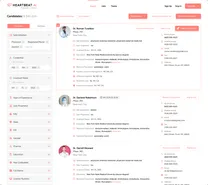
Whether you are looking for healthcare professionals, specialists, or surgeons, Heartbeat.ai’s email list can help you find any licensed professional across the United States. You can use customized filters to narrow down the doctor’s profiles you need and reach out to them in seconds.
In our comprehensive listing, we cover a range of Forensic Pathologist specializations.
These include areas such as Forensic Autopsy Pathologists, Forensic Neuropathologists, Forensic Odontologists, Forensic Anthropologists, and Forensic Toxicologists. These specialists are highly skilled in determining the cause of death, injury identification, and other vital details critical to legal investigations.
If you’re interested in connecting with these professionals, we at Heartbeat.ai are here to assist you. We offer a robust, accurate email list to help you reach out to these essential industry figures.
We can help you bridge the professional gap and form meaningful, valuable connections.
Our aim is to simplify the process for you. Reach out to us at Heartbeat.ai and we’ll guide you through the process, hand you the reins, and watch you take flight.
Connectivity made simple, professional, and efficient; that’s our promise to you. Let’s not wait for opportunity to knock twice.
Contact us today.
Overview of Healthcare Industry in minnesota State
Minnesota’s healthcare system is composed of a varied group of facilities, including renowned entities such as Mayo Clinic and the University of Minnesota Medical Center. There are over 39,000 active physicians in Minnesota, including a diverse selection of forensic pathologists who perform crucial roles in disease investigation and autopsy.
Key healthcare facilities like Regions Hospital and Hennepin Healthcare provide comprehensive medical services, positively impacting the state’s healthcare provision. The state’s healthcare approach weaves in technology, innovation, and a patient-centered focus.
This combined effort ensures that Minnesota residents have access to high-quality medical services, crucial not just for their health, but for the advancement of medical science.
Forensic pathologists play a significant role in this system, contributing to both healthcare and legal proceedings.
Importance of Finding Forensic pathologist Accurate Contact Information
Accurate contact information for forensic pathologists is vitally important for a variety of reasons, especially for personal needs, healthcare recruitment, and professional networking.For personal needs, people may need to contact a forensic pathologist for legal consultations or expert witness testimony during a trial, particularly in criminal cases where cause of death is crucial. Their expertise can play a significant role in dictating the outcome of court proceedings.Healthcare recruitment, on the other hand, relies heavily on accurate contact information. Recruiters need to ensure they are reaching the correct professionals in order to prevent delays and miscommunications that could affect the hiring process or even the organization’s credibility.Finally, in terms of professional networking, forensic pathologists can utilize updated contact information to establish connections with peers, thereby creating opportunities for collaboration in research, continuing education, and career advancement.
Thus, having accurate contact information for forensic pathologists is not merely a matter of convenience, it can deeply impact personal legal matters, the efficiency of the health care recruitment process, and the growth of a professional network.
Challenges in Finding Forensic pathologist in minnesota State
In Minnesota state, finding Forensic Pathologists is a significant challenge. The shortage could be attributed to several factors including prolonged and rigorous academic and training requirements, high stress levels, and financial constraints compared to other medical professions. Also, the nature of work that involves dealing with deceased bodies can also deter aspiring pathologists.However, through the use of technology and databases, these challenges can be overcome.
For instance, advanced online platforms can enable remote working and consultations, which can extend the reach of existing forensic pathologists to more areas. This way, their expertise can cover a wider region, and their skills can be effectively utilized.The use of digital databases of forensic evidence can also promote better sharing and comparison of case information among pathologists. A statewide or nationwide network can be established to facilitate the virtual “second opinion” provision, which can help improve efficiencies and diagnostic capabilities.Digital autopsy technologies — such as post-mortem CT scans or “virtopsy” — can minimize the necessity for invasive procedures.
This technique can make the field more attractive to potential forensic pathologists as it can reduce the psychological burden associated with the traditional, more gruesome aspects of the job.Moreover, databases that track demand for forensic pathologist services across different regions can help to reallocate resources efficiently, making the profession more approachable and bearable.
Consequently, by embracing technology and databases, Minnesota state can not only bridge the gap between demand and supply of forensic pathologists but also ensure high-quality service in this critical sector.
About Heartbeat Forensic pathologist Contact Lists: What You Will Get
The Heartbeat database is a distinct feature for forensic pathologist contact lists potentially aimed at solving challenges highlighted in the previous section. This database can address concerns specific to various state situations across the US by providing precise, constantly updated information. The database incorporates a comprehensive array of details on pathologists such as their names, locations, contact numbers, email addresses, and specialized areas.
The Heartbeat AI technology ensures data accuracy and real-time updates, allowing users to reach the right professionals swiftly and efficiently irrespective of their locations. It addresses potential communication and coordination issues, thus enhancing the field’s overall efficiency.
Moreover, having access to specializations can help users reach out to the most appropriate professionals for their unique case requirements.
Hence, the Heartbeat database is an instrumental tool for overcoming previously encountered challenges, improving the efficacy, and streamlining operations in forensic pathology.
- Forensic pathologist Name
- Location
- Contact Numbers (Work, Cell, Mobile)
- Email Address
- Specialization
- Years of Experience
- Sole Proprietor Status
- Licensed States
- License Number
- Fax
- Address
 Accuracy & coverage of personal contact info were unrivaled by other platforms… this gives any healthcare recruiter a competitive advantage when engaging hard-to-reach healthcare providers.
Senior Growth Strategist





Available Forensic pathologist in Our Contact List by States
“Explore our extensive email list of forensic pathologists categorized by U.S. state availability.”
How Do We Compile Our Data to Create a Contact List of Forensic pathologist in the minnesota State?
We have curated and created a comprehensive list of Forensic Pathologists at Heartbeat.ai by aggregating information from various official, private, and public sources to provide the most up-to-date contact data. Our superlative database includes contact details of over 11 million American healthcare providers with direct cell phone numbers and personal emails. With Heartbeat.ai, you can reduce your hiring time by 10x thanks to direct contact details of 8.8 million cell phone numbers, 9.3 million personal emails, and 6 million direct dials.
The precision of Heartbeat boils down to our use of predictive modeling to ascertain a provider’s contact details, ensuring an accuracy of 84% for cell phone numbers and 92% for personal emails on your first query.
These methods adopted by us ensure that you can connect with healthcare providers rapidly and accurately.
Why Choose Heartbeat.ai’s Forensic pathologist Contact List for minnesota State?
Heartbeat.ai offers numerous benefits, chief of which is its expansive database, which aggregates information on all American healthcare providers inclusive of corresponding cell phone and personal email details. This feature dramatically reduces hiring time by tenfold.
Enjoy the broadest scope of healthcare provider data, complete with direct access to cell phone numbers and personal emails. This is achievable through Heartbeat’s impressive data network, which compiles information from over 200 official, private, and public sources, ensuring you have access to the most current contact data globally.Heartbeat.ai is not just about volume; it also guarantees speed and accuracy. Boasting numbers like 11 million USA healthcare professionals, 8.8 million direct cell phone numbers, 9.3 million personal email addresses, and 6 million direct dials.
Moreover, Heartbeat employs predictive modeling to guess provider’s contact details with considerable accuracy.
Expect up to 84% accuracy on cell phone numbers and 92% on personal emails on your first result. Hence, Heartbeat.ai is an invaluable resource for any recruitment process, providing a comprehensive, reliable, and updated database for instant results.
Who Can Use the Forensic pathologist Email List?
A myriad of individuals and entities can utilize the email contact list for their various needs. This includes company personnel from marketing, sales, HR, or management departments who need to maintain communication with others.
Companies, especially those engaged in e-commerce, digital marketing, or customer service, can also use this list for promotions, newsletters, or surveys. Marketing or real estate agents might need it to reach out to potential clients. Non-profit organizations or political campaigns can use it for fundraising or awareness drives.
Therefore, almost anyone with a communicative need finds an email contact list essential.
How to Utilize Forensic pathologist Email Lists Effectively?
Forensic pathologist contact lists can greatly assist in fulfilling personal needs such as research or queries regarding legal medical matters.
From a marketing or recruitment perspective, these lists can help target specific audience segments, fostering effective campaigns. For personal purposes, these lists can enable global networking with professionals and aid in career progression. Communication with healthcare professionals should follow strict ethical protocols.
For instance, you should respect their time constraints and seek consents before sending promotional content. It is crucial to maintain clarity and professionalism, providing every necessary detail without ambiguity.
Creating a two-way communication thread is beneficial; it promotes engagement and collects meaningful insights for future planning.
Communication should focus on enriching their knowledge rather than hard selling. Also, keeping an appropriate frequency of interaction will ensure steady communication. Implementing these strategies can enhance the utility of forensic pathologist contact lists.
Conclusion
The article notably emphasizes the need for accurate contact information of forensic pathologists in Minnesota due to challenges in locating these professionals.
It introduces the Heartbeat Forensic pathologist Contact Lists as a valuable tool for personal needs, healthcare recruitment, and networking in the state. The way Heartbeat.ai compiles its data to create a detailed and precise contact list is also discussed along with who can utilize these lists and how to effectively use them.
The benefits of using Heartbeat.ai’s Forensic pathologist Contact List underscores the value of such platforms in the healthcare industry.
Frequently Asked Questions
What does a forensic pathologist do?
A forensic pathologist is a medical doctor who performs autopsies and examines bodies to determine the cause and manner of death.
How long does it take to become a forensic pathologist in Minnesota?
Becoming a forensic pathologist in Minnesota typically requires an undergraduate degree, medical school, and several years of residency training in pathology and forensic pathology. This process can take approximately 12-14 years.
Where can I find a forensic pathologist in Minnesota?
You can find forensic pathologists in Minnesota at various medical examiner’s offices, hospitals, and forensic pathology laboratories. It is recommended to check with local hospitals or the Minnesota Department of Health for a list of licensed forensic pathologists in the state.
Is forensic pathology a specialized field in Minnesota?
Yes, forensic pathology is a specialized field in Minnesota. Forensic pathologists undergo additional training and certification in forensic pathology after completing their general pathology residency. They are responsible for performing autopsies and providing expert testimony in legal proceedings.