Getting the right professionals is a crucial aspect in the healthcare sector. Audiologists, for instance, play a key role in Ohio’s healthcare system, making finding the perfect match a critical task for recruiters, marketers, and other health professionals. The challenge, however, lies in accessing accurate and up-to-date contact information necessary for efficient recruitment and networking.
A solution exists within having a reliable emailing list.
The right list can streamline the process, saving precious time and resources. This blog will explore the importance of accurate emailing lists, how they greatly impact healthcare recruitment, what you stand to gain by using these lists, and how Heartbeat can simplify this process for you.
What’s on this page:
Get the Best Email List of Audiologist in ohio from Heartbeat
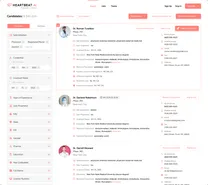
Whether you are looking for healthcare professionals, specialists, or surgeons, Heartbeat.ai’s email list can help you find any licensed professional across the United States. You can use customized filters to narrow down the doctor’s profiles you need and reach out to them in seconds.
Dear Readers,We comprehend your ever-evolving requirements concerning professional connections, and therefore, we are glad to announce that we have an exhaustively compiled list offering various types of Audiologist contacts. Our list includes Pediatric Audiologists, Educational Audiologists, Cochlear Implant Audiologists, Tinnitus Management Audiologists, Hearing Aid Dispensing Audiologists, and Industrial Audiologists, among many other niches in the audiology field.
Each of these professionals is skilled in their respective domains, catering to unique hearing health care needs. Whether you’re looking for an audiologist specializing in working with children, one who works with schools to facilitate better learning environments for students with hearing issues, or experts in diagnosing and managing auditory disorders like tinnitus, we have got you covered.At Heartbeat.ai, we believe in simplifying your search for the right connections without hassles. All you need is to reach out to us and let us know your specific needs.
Utilize our easy-to-navigate platform to swift through the list effortlessly.Our SaaS website is known for its credibility and integrity, providing meticulously verified and up-to-date contact lists, ensuring you always have the right information at your fingertips. Step onto the fast lane to professional expansion and extend your network with proficiency and ease.
The process is straightforward – you contact us, express your needs, and we provide you access to our expansive Audiologist contact database. Say goodbye to the strenuous task of self-compiling lists and embrace a prompt, simple, and reliable solution instead.We welcome you to reach out to Heartbeat.ai today and experience an uncomplicated, scalable, and efficient approach to building your contact list.
Remember, in a world where time is money, swift actions and smart decisions make all the difference. So, why wait? Get in touch now.Best regards,Heartbeat.ai Team.
Overview of Healthcare Industry in ohio State
Ohio’s healthcare system comprises a diverse array of medical professionals, including a significant number of audiologists.
According to the Bureau Labor of Statistics, there are approximately 360 audiologists operating in the state.
They serve in various healthcare facilities like Cleveland Clinic, Ohio State University’s Wexner Medical Center, and Cincinnati Children’s Hospital Medical Center, playing a crucial role in hearing and balance disorders management.
These key healthcare facilities are renowned for sophisticated healthcare provision, significantly impacting the state’s overall healthcare standard. For instance, Cleveland Clinic is globally recognised for its heart services, and Cincinnati Children’s Hospital is a leading children’s hospital in pediatric care. This framework proves beneficial for Ohio residents, integrating specialized care such as audiology into more general health services.
The diversity and number of audiologists enhance Ohio’s ability to provide comprehensive and specialized care for its citizens.
Importance of Finding Audiologist Accurate Contact Information
Accurate contact information for Audiologists is vital for various reasons. For personal needs, it allows individuals with hearing problems to easily reach out to qualified audiologists for assistance.
This is essential for scheduling appointments, consultations, and accessing timely treatment. In healthcare recruitment, correct contact details are necessary for job placements, interviews, and provision of critical updates concerning job opportunities.
Recruiters rely heavily on accurate information to efficiently recruit suitable candidates for various healthcare positions.
Incorrect audiologist’s details could result in missed job opportunities, wasted resources, and loss of quality healthcare service provision.Networking is another area where accurate contact information is crucial.
Networking helps audiologists to connect with peers, share knowledge, and seek collaborative opportunities. They leverage this network for career enhancement, referring patients, or gaining insights from shared experiences.
Inaccurate information could hinder these beneficial connections and growth opportunities.In conclusion, the importance of accurate contact information for audiologists cannot be overstated. It not only ensures efficient personal service provision but also facilitates seamless healthcare recruitment and productive professional networking.
Challenges in Finding Audiologist in ohio State
Finding an audiologist in Ohio State might present several challenges due to various factors such as geographical constraints, a limited number of qualified professionals, and limited information on their availability and expertise. Individuals living in remote areas may find it difficult to locate a local audiologist who cater to their specific needs and schedule.
On the other hand, those residing in urban areas may need to find out the right audiologist among many, which makes it difficult to identify who will be the best fit for their needs. Technology can significantly assist in overcoming these challenges. Databases and search tools can compile comprehensive listings of audiologists in Ohio, complete with crucial information such as their location, contact details, specialization, patient ratings, and reviews.
This not only simplifies the search process but also allows potential patients to make informed decisions about the most suitable professional based on their needs, preferences, and convenience.
Tele-audiology is another technology that makes audiology services more accessible, enabling audiologists to reach patients regardless of their geographical location.
Webinars, video consultations and online hearing tests can all provide critical support to those who struggle to find a local audiologist.Additionally, social media platforms and online communities can provide referrals and shared experiences, aiding those in their search for the right audiologist. Apps on smartphones can provide immediate assistance to those experiencing hearing issues, guiding them to the nearest audiologist or offering temporary solutions.In conclusion, through the use of databases, online platforms, and telehealth technologies, the challenge of finding an audiologist in Ohio State can be significantly mitigated.
About Heartbeat Audiologist Contact Lists: What You Will Get
The Heartbeat database offers a competent solution to the challenges outlined earlier, by providing extensive Audiologist contact lists.
Harnessing the power of artificial intelligence, this database is particularly beneficial in addressing the diverse barrier situations in specific states or across the US. It acts as a comprehensive directory that systematically organizes audiologists by a variety of attributes, designed to assist in quickly locating the most relevant professionals.In terms of specifics, the Heartbeat AI-generated lists typically include a plethora of information on each audiologist.
This includes vital contact details such as their names, locations, phone numbers, and email addresses. More granular data such as their specialties or areas of expertise are also included. This makes it easier to contact or refer to a specific practitioner, based on the auditory requirements at hand.
With the Heartbeat AI database, finding an audiologist tailored to particular needs becomes less of a challenge and more of a quick, straightforward procedure. It serves as a remarkable solution in navigating the complexities of healthcare provision.
- Audiologist Name
- Location
- Contact Numbers (Work, Cell, Mobile)
- Email Address
- Specialization
- Years of Experience
- Sole Proprietor Status
- Licensed States
- License Number
- Fax
- Address
 Accuracy & coverage of personal contact info were unrivaled by other platforms… this gives any healthcare recruiter a competitive advantage when engaging hard-to-reach healthcare providers.
Senior Growth Strategist



Trusted by


Available Audiologist in Our Contact List by States
“Explore our comprehensive email list featuring available audiologists, categorized by states.”
How Do We Compile Our Data to Create a Contact List of Audiologist in the ohio State?
Our approach to curating the contact list of Audiologists leverages Heartbeat.ai’s expansive data network, collating 100% of American healthcare providers’ contact data, including direct cell phone numbers and personal emails. This comprehensive coverage bolsters your hiring process’s speed and efficiency by 10x. Benefitting from an aggregated network of over 200 official, private, and public sources, we attain the freshest and most accurate contact data available.
Our extensive database includes 11 million USA Health Care professionals, 8.8 million direct cell phone numbers, 9.3 million personal email addresses, and 6 million direct dials.The high quality of Heartbeat’s data is due to our predictive modelling strategies, effectively guessing a provider’s contact information with impressive accuracy: 84% for cell phone numbers and 92% for personal emails on the first result. We use sophisticated techniques to ensure the delivery of highly accurate and timely data for your needs.
Why Choose Heartbeat.ai’s Audiologist Contact List for ohio State?
Heartbeat.ai brings several advantage to the table including substantial time savings in the hiring process with its thorough database of American healthcare providers’ contact information. The platform’s broad coverage boasts direct cell phone numbers and personal emails of healthcare providers, which significantly reduces the duration to hire.The value comes from an extensive network of more than 200 public, private, and official data sources providing the most accurate and updated contact information. Offering a staggering count of 11 million healthcare professionals, 8.8 million direct cellphone numbers, 9.3 million personal email addresses, and 6 million direct dials, Heartbeat.ai proves its vast reach in the medical field.Key features are its use of predictive modelling to estimate healthcare provider contact information.
Heartbeat.ai assures dependability, guaranteeing an impressive 84% accuracy for cell phone numbers and 92% for personal emails on the first attempt. Hence, Heartbeat.ai not only speeds up the process but also ensures accuracy and reliability in its services, making it an indispensable tool in the healthcare industry.
Who Can Use the Audiologist Email List?
An email contact list can be utilized by a variety of figures for personal or business needs. These may include personnel from different departments in a company like marketing, sales, and customer service. Companies themselves can use it for newsletters, product updates, and promotional campaigns.
Marketing agencies can leverage it for targeted advertisements.
Recruiters or HR professionals can use it for talent acquisition or communication. Individuals might use it for personal communication and networking.
However, it’s important that these uses comply with data privacy laws to respect recipients’ preferences and rights.
How to Utilize Audiologist Email Lists Effectively?
Audiologist contact lists are crucial tools in various spheres such as personal needs, marketing, recruitment, etc. For marketing and recruitment, these lists can become a targeted outreach medium, helping tailor specific messages or job descriptions. For personal purposes, Audiologist contact list might help in seeking expert advice or choosing a specialist for personal care.
In order to enhance your campaigns, use personalization strategies tailored to each audiologist’s interests, specialization, and experiences.When communicating with healthcare professionals, adhere to best practices. Respect their time and always be professional. Keep your content concise, clear, and relevant.
Use a formal tone and include essential information up front. Always abide by privacy regulations and ensure your message aligns with their preferred mode of communication such as emails, calls, or in-person. Persistence and patience are key; if you don’t get a response immediately, follow up politely without being intrusive.
Conclusion
The article highlights the significance of efficiently locating and connecting with audiologists in Ohio, discussing challenges faced in this regard. Heartbeat.ai offers a comprehensive and accurate audiologist contact list, catering to varied needs including personal, healthcare recruitment, and professional networking. This service compiles data carefully to ensure optimal results and extends its function to users all across the country.
Hence, Heartbeat.ai is presented as an essential resource to effectively utilize audiologist contact lists.
Frequently Asked Questions
What services does an audiologist in Ohio provide?
Audiologists in Ohio provide a range of services, including hearing tests, hearing aid fittings and adjustments, and hearing loss counseling.
How do I find a qualified audiologist in Ohio?
To find a qualified audiologist in Ohio, you can search online directories, ask for referrals from your primary care physician or friends/family, or contact your insurance provider for a list of in-network audiologists.
What are the qualifications of an audiologist in Ohio?
In Ohio, audiologists are required to have a master’s or doctoral degree in audiology from an accredited university. They must also be licensed by the Ohio Board of Speech-Language Pathology and Audiology.