What’s on this page:
Key takeaways
- Ohio audiologists work in settings including hospitals, ENT practices, schools, and hearing aid clinics.
- Licensing records can help verify licensure but may not provide current working contact details.
- A useful contact record may include practice location, contact channels, specialization, and licensing information.
- Contact-data match rates and confidence can vary by field, so verify details before high-stakes outreach.
- Recruiters, marketers, referral coordinators, and researchers may use audiologist contact lists for different purposes.
- Outreach should respect applicable privacy and communication rules, including opt-out preferences.
Last updated: August 31, 2026
Ohio audiologists work in settings such as ENT practices, hospital audiology departments, schools, and hearing aid clinics. For recruiters and referral teams, a key challenge is finding current, usable contact information for these professionals.
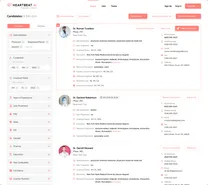
This piece covers what makes audiologist contact data hard to source accurately, what a usable contact list should include, and how Heartbeat’s database approaches the problem.
Audiology Licensing in Ohio: What to Know Before Reaching Out
Audiologists practicing in Ohio are licensed through the Ohio Board of Speech-Language Pathology and Audiology. To become a licensed audiologist in Ohio, a candidate must have a Doctor of Audiology degree or its equivalent as determined by the Board. Licensure also generally requires a minimum of three years of didactic coursework and 350 clock hours of clinical experience prior to the fourth year of training, plus 2,000 clock hours of clinical extern experience in the fourth year, along with passing board-approved examinations.
One detail worth knowing if you’re recruiting across state lines: Ohio is a member state of the Audiology & Speech-Language Pathology Interstate Compact, issuing privileges to practice. That can affect how quickly an audiologist licensed in another compact state can start seeing patients in Ohio. If telepractice is part of your outreach angle, note that providers must hold a state license and adhere to the same requirements as in-person practice.
For recruiters, compact privileges may broaden the candidate pool. An audiologist licensed in another compact state may be able to practice in Ohio under a privilege, but eligibility and timing depend on applicable requirements.
Why Contact Accuracy Is a Bigger Problem Than It Looks
Audiologists may work across multiple settings, such as a hospital audiology department and a private hearing aid clinic. Public directories may not capture those overlapping roles, and licensing board listings generally focus on licensure rather than providing working phone numbers or email addresses.
The practical consequences show up in a few predictable ways:
- Recruitment delays: outdated numbers or old employer emails mean recruiters spend cycles verifying contact info before outreach even starts.
- Missed referral connections: primary care or ENT practices trying to refer patients to a specialist can hit dead-end contact details.
- Wasted marketing spend: campaigns built on stale lists see high bounce rates and low response, which skews performance data and makes it harder to judge what’s actually working.
What a Usable Audiologist Contact Record Should Include
A useful contact record depends on the purpose of the outreach, but recruitment and marketing records may include:
- Audiologist name
- Practice location
- Direct phone numbers (work, cell, or mobile — labeled clearly, since these serve different outreach purposes)
- Email address
- Area of specialization (pediatric, cochlear implant, tinnitus management, hearing aid dispensing, industrial audiology, etc.)
- Years of experience
- Sole proprietor status, if applicable
- Licensed states and license number
- Fax and mailing address, for practices that still route documentation that way
Specialization matters more than it might seem. A recruiter filling a pediatric audiology role and one sourcing a cochlear implant specialist are looking at different candidate pools entirely, even though both are technically “audiologists.”
 Accuracy & coverage of personal contact info were unrivaled by other platforms… this gives any healthcare recruiter a competitive advantage when engaging hard-to-reach healthcare providers.
Senior Growth Strategist





Audiologist Contact Lists by State
| Audiologist by states |
|---|
| Audiologist in Alabama |
| Audiologist in Alaska |
| Audiologist in Arizona |
| Audiologist in Arkansas |
| Audiologist in California |
| Audiologist in Colorado |
| Audiologist in Connecticut |
| Audiologist in Delaware |
| Audiologist in Florida |
| Audiologist in Georgia |
| Audiologist in Hawaii |
| Audiologist in Idaho |
| Audiologist in Illinois |
| Audiologist in Indiana |
| Audiologist in Iowa |
| Audiologist in Kansas |
| Audiologist in Kentucky |
| Audiologist in Louisiana |
| Audiologist in Maine |
| Audiologist in Maryland |
| Audiologist in Massachusetts |
| Audiologist in Michigan |
| Audiologist in Minnesota |
| Audiologist in Mississippi |
| Audiologist in Missouri |
| Audiologist in Montana |
| Audiologist in Nebraska |
| Audiologist in Nevada |
| Audiologist in New hampshire |
| Audiologist in New jersey |
| Audiologist in New mexico |
| Audiologist in New york |
| Audiologist in North carolina |
| Audiologist in North dakota |
| Audiologist in Ohio |
| Audiologist in Oklahoma |
| Audiologist in Oregon |
| Audiologist in Pennsylvania |
| Audiologist in Rhode island |
| Audiologist in South carolina |
| Audiologist in South dakota |
| Audiologist in Tennessee |
| Audiologist in Texas |
| Audiologist in Utah |
| Audiologist in Vermont |
| Audiologist in Virginia |
| Audiologist in Washington |
| Audiologist in West virginia |
| Audiologist in Wisconsin |
| Audiologist in Wyoming |
How Heartbeat Builds Its Audiologist Contact Data
Heartbeat says it uses public, private, and official data sources and predictive modeling to fill gaps when direct records are incomplete or outdated. Its database covers healthcare providers nationally, including audiologists and adjacent specialties such as ENT physicians and hearing aid dispensers.
Predictive contact data can vary in match rates and confidence by field; for example, cell numbers and personal email addresses may have different confidence levels. Verify contact details before high-stakes outreach, such as a formal offer or contract.
Who Actually Uses an Audiologist Contact List
Potential users of an audiologist contact list include healthcare recruiters, marketing teams, referral coordinators, and researchers or associations conducting surveys or continuing-education outreach. Their needs differ: a one-time referral lookup is not the same as a recruiting campaign targeting many contacts.
When using contact lists for outreach, follow applicable privacy and communication regulations, including opt-out preferences and any relevant state-specific consent requirements.
Practical Tips for Reaching Out to Audiologists
- Lead with specifics — mention the specialization or setting relevant to your message rather than a generic pitch.
- Keep initial outreach short; audiologists in clinical roles have limited time between patient appointments.
- Match the channel to the context — a recruiting message might land better by phone, while a product update is fine by email.
- Follow up once or twice at reasonable intervals rather than repeatedly; audiology is a smaller field and reputation travels.
Frequently Asked Questions
What services does an audiologist in Ohio provide?
Audiologists in Ohio typically provide hearing evaluations, hearing aid fittings and adjustments, and counseling related to hearing loss. Scope of practice can vary by specialization and setting.
How do I find a qualified audiologist in Ohio?
Options include searching licensing board records, asking for referrals from a primary care physician, or checking with an insurance provider for in-network specialists.
What are the qualifications of an audiologist in Ohio?
Ohio requires audiologists to hold a doctoral-level audiology degree or equivalent and to be licensed through the Ohio Board of Speech-Language Pathology and Audiology, which also oversees exam and clinical experience requirements.