What’s on this page:
Key takeaways
- A pulmonary disease email list can include contact details for pulmonologists, respiratory therapists, and related professionals.
- Evaluate a list by its accuracy, refresh schedule, sourcing, and usage terms—not only by its size.
- Check whether the available fields support your needs, such as specialty, location, professional title, and contact channels.
- Confirm geographic coverage and contact counts for the states or regions you need.
- Segment and tailor outreach by specialty, role, or geography, and follow applicable privacy and marketing requirements.
Last updated: August 28, 2026
A pulmonary disease email list is a directory of contact details for professionals such as pulmonologists, respiratory therapists, and other pulmonary care specialists. It can support professional networking, recruiting, or marketing, but its usefulness depends on the accuracy, freshness, sourcing, and permitted use of its records.
This guide covers what a pulmonary disease contact database typically includes, how to evaluate one before you buy, who actually uses this kind of list, and practical ways to get more value out of it once you have it.
What’s Typically Included in a Pulmonary Disease Contact Database

Heartbeat AI describes its platform as a way to connect with healthcare professionals, including pulmonary disease specialists, using contact records it says are verified. Before relying on any provider’s records, ask how verification is performed and when the data was last refreshed.
A well-built list gives you more than a name and an email address. Here’s what to look for:
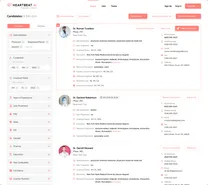
- Regional coverage: Contacts spanning multiple states and practice settings, so you’re not limited to one metro area or health system.
- Multiple contact channels: Email, phone, and mailing address, so you can choose the outreach method that fits your use case.
- Professional detail: Title, specialty, and practice affiliation, which helps you route the right message to the right person instead of sending generic outreach.
Common Data Fields in a Pulmonary Disease Email List
- Name and professional title
- Location and practice address
- Phone numbers (work, cell, mobile)
- Email address
- Specialization or subspecialty
- Years in practice
- Sole proprietor status
- State licensure information
- License number
- Fax number
 Accuracy & coverage of personal contact info were unrivaled by other platforms… this gives any healthcare recruiter a competitive advantage when engaging hard-to-reach healthcare providers.
Senior Growth Strategist






Why Data Quality Matters More Than List Size

A large list can still be of limited use if its email addresses or phone numbers are outdated. Bounces and incorrect numbers can waste outreach effort and may affect deliverability. Evaluate data quality, not just list size.
Time Saved on Research
Instead of manually searching directories and hospital websites for contact details, you start with a working list and spend your time on outreach instead of lookup.
Fewer Wasted Contacts
Current, verified contact details may reduce bounced emails and disconnected numbers compared with unverified records. Ask what the provider means by “verified” and how it measures data freshness.
Better Segmentation for Networking
A directory organized by specialty and location makes it easier to build relationships with the right subset of pulmonologists, respiratory therapists, or thoracic surgeons instead of blasting a generic list.
More Relevant Marketing
Targeting professionals whose roles match your message can make outreach more relevant than sending the same message to a broad, unsegmented audience. Results depend on the audience, message, and campaign.
Timely Outreach for Events or Research
Whether you’re promoting a CME event or sharing research, current contact details mean your message actually reaches the intended recipient.
Credibility in Professional Communication
Messages that reach the right person, addressed correctly, are more likely to be read and trusted than those sent to outdated or mismatched contacts.
Pulmonary Disease Professionals by Category
A pulmonary disease list typically spans several related specialties, not just pulmonologists.
| Pulmonary Disease Professionals by Category |
| Pulmonologists |
| Respiratory Therapists |
| Pulmonary Nurses |
| Thoracic Surgeons |
| Interventional Pulmonologists |
| Pulmonary Function Technologists |
| Allergists/Immunologists |
| Pulmonary Rehabilitation Specialists |
Pulmonary Disease Experts by State
If state-level reach matters, confirm which states are covered and how many relevant contacts are available in each. Do not assume coverage is uniform across all states.
| Pulmonary Disease Experts By States |
| Pulmonary Disease Experts in Alabama |
| Pulmonary Disease Experts in Alaska |
| Pulmonary Disease Experts in Arizona |
| Pulmonary Disease Experts in Arkansas |
| Pulmonary Disease Experts in California |
| Pulmonary Disease Experts in Colorado |
| Pulmonary Disease Experts in Connecticut |
| Pulmonary Disease Experts in Delaware |
| Pulmonary Disease Experts in Florida |
| Pulmonary Disease Experts in Georgia |
| Pulmonary Disease Experts in Hawaii |
| Pulmonary Disease Experts in Idaho |
| Pulmonary Disease Experts in Illinois |
| Pulmonary Disease Experts in Indiana |
| Pulmonary Disease Experts in Iowa |
| Pulmonary Disease Experts in Kansas |
| Pulmonary Disease Experts in Kentucky |
| Pulmonary Disease Experts in Louisiana |
| Pulmonary Disease Experts in Maine |
| Pulmonary Disease Experts in Maryland |
| Pulmonary Disease Experts in Massachusetts |
| Pulmonary Disease Experts in Michigan |
| Pulmonary Disease Experts in Minnesota |
| Pulmonary Disease Experts in Mississippi |
| Pulmonary Disease Experts in Missouri |
| Pulmonary Disease Experts in Montana |
| Pulmonary Disease Experts in Nebraska |
| Pulmonary Disease Experts in Nevada |
| Pulmonary Disease Experts in New Hampshire |
| Pulmonary Disease Experts in New Jersey |
| Pulmonary Disease Experts in New Mexico |
| Pulmonary Disease Experts in New York |
| Pulmonary Disease Experts in North Carolina |
| Pulmonary Disease Experts in North Dakota |
| Pulmonary Disease Experts in Ohio |
| Pulmonary Disease Experts in Oklahoma |
| Pulmonary Disease Experts in Oregon |
| Pulmonary Disease Experts in Pennsylvania |
| Pulmonary Disease Experts in Rhode Island |
| Pulmonary Disease Experts in South Carolina |
| Pulmonary Disease Experts in South Dakota |
| Pulmonary Disease Experts in Tennessee |
| Pulmonary Disease Experts in Texas |
| Pulmonary Disease Experts in Utah |
| Pulmonary Disease Experts in Vermont |
| Pulmonary Disease Experts in Virginia |
| Pulmonary Disease Experts in Washington |
| Pulmonary Disease Experts in West Virginia |
| Pulmonary Disease Experts in Wisconsin |
| Pulmonary Disease Experts in Wyoming |
How This Kind of Data Gets Compiled

Heartbeat AI says it builds pulmonary disease contact records from a mix of sources, industry partnerships, and professional networks, and applies verification checks. Ask the provider for details about these sources and checks.
Public Source Aggregation
Professional directories, healthcare publications, and licensing databases form a baseline of publicly available information.
Industry Partnerships
Working with data partners helps expand and refresh coverage beyond what any single public source provides.
Professional Network Connections
Existing relationships within medical associations and networks help surface updated contact details for specialists in pulmonary care.
Opt-In Contribution
Some data comes from professionals who voluntarily share their own contact information.
Verification and Cross-Checking
The provider says records are compared across sources to flag inconsistencies before they are added to the list. Ask how often this check takes place and how records are corrected or removed.
Legal and Compliance Considerations Before You Buy

Before you commit to a provider, it’s worth checking a few basics that separate a usable list from a liability:
Scale and Access
Heartbeat AI gives access to 11+ million healthcare providers, which covers pulmonary specialists alongside a wide range of other clinical roles.
Verification Practices
Ask any provider how often records are refreshed and what verification steps are applied. Stale data degrades quickly in healthcare, where professionals change practices and titles often.
Regulatory Alignment
Ask how the provider’s data practices and your planned outreach relate to applicable privacy and marketing laws, which may include CCPA, GDPR, and CAN-SPAM depending on the data, audience, and use. Mentioning a law or framework does not by itself establish compliance.
Segmentation Capability
The ability to filter by specialty, state, or role inside the pulmonary disease category makes campaigns easier to target instead of treating every contact the same.
A Quick Checklist Before You Commit to a List
- Source credibility: Is the data pulled from healthcare directories, professional associations, or established data partners rather than scraped indiscriminately?
- Refresh cadence: How often is the list updated, and does the provider disclose this?
- Privacy compliance: Does the vendor reference HIPAA, GDPR, or other applicable privacy frameworks in how data is collected and used?
- CRM compatibility: Can you import the list into your existing CRM or outreach tool without a manual cleanup step?
- Usage terms: Are there restrictions on resharing, reuse limits, or per-seat licensing you need to plan around?
Who Actually Uses a Pulmonary Disease Contact List

Pulmonologists and Respiratory Specialists
Peer-to-peer networking, staying current on research, and building referral relationships with other specialists.
Pharmaceutical Companies
Pharmaceutical companies may use contact lists to identify pulmonologists and respiratory specialists for clinical trial recruitment or product-related outreach. Confirm that the planned use and communications follow applicable privacy, marketing, and research requirements.
Healthcare Recruitment Agencies
Identifying and contacting pulmonologists, respiratory therapists, and related professionals for open roles.
Patient Advocacy Groups
Connecting with clinicians to support awareness campaigns or share patient resources.
Public Health Organizations
Reaching respiratory specialists for educational outreach or public health initiatives tied to lung health.
Getting More Out of the List Once You Have It

Know Who You’re Contacting
A pulmonologist in private practice and a hospital-based respiratory therapist have different priorities. Tailor the message accordingly instead of sending one version to everyone.
Segment Before You Send
Group contacts by specialty, geography, or role so your messaging stays relevant to each subset rather than generic.
Personalize Where It Counts
Using a recipient’s name and tailoring a message to their specialty can make outreach more relevant than a generic template. Whether it improves results depends on the audience and message.
Watch Timing and Frequency
Overly frequent emails wear out a list fast. Space outreach reasonably and track response patterns to find what works for your audience.
Combine Channels
Email can be combined with other appropriate outreach channels, such as a LinkedIn message or phone follow-up. Choose channels based on the recipient, your purpose, and applicable rules.
Bottom Line
A pulmonary disease email list is only useful if its records are suitable for your purpose and its sourcing, refresh, and verification practices meet your requirements. Before choosing a provider, ask how the data is sourced and updated, review usage terms, and assess which privacy and marketing rules apply to your use case.
Heartbeat AI says it compiles pulmonary disease contact data from public sources, industry partnerships, and professional networks, and includes verification in its process. Prospective users should confirm the sourcing, verification methods, refresh schedule, and permitted uses with the provider.
FAQs
Are there restrictions on using a pulmonary disease email database?
Many providers limit third-party resharing or cap how many times you can use a given record, so check licensing terms before you buy.
Can this data be integrated with CRM tools?
Most pulmonary disease contact lists can be imported into standard CRM platforms that support external data imports, which helps with segmentation and campaign tracking.
Are there privacy concerns with using this kind of list?
Yes. Collection, storage, and use of contact data should align with applicable privacy regulations and ethical data practices, and this is worth confirming with any vendor before you commit.