Last updated: August 30, 2026
Texas has a small, specialized pool of prosthodontists working inside a much larger dental and healthcare system. For recruiters, marketers, and healthcare organizations, tracking down accurate, current contact details for these specialists is harder than it looks — general dental directories often lag behind license changes, practice moves, and new affiliations. This article looks at why that gap matters and how to work around it.
What’s on this page:
What Prosthodontists Actually Do
Prosthodontics is a branch of dentistry dedicated to making replacements for missing or damaged teeth, with common treatments including dentures, dental implants, crowns and bridges. After graduating from dental school, a prosthodontist receives three or four additional years of training. That extra training is what separates them from general dentists handling routine restorative work.
Within the specialty, practitioners tend to focus on a few recognized areas. Fixed prosthodontics covers permanent treatments like crowns, bridges and veneers; removable prosthodontics covers oral appliances such as dentures; implant prosthodontics covers restorations that replace a tooth or support fixed or removable work; and maxillofacial prosthodontics covers replacements for missing parts of the face or mouth involved in chewing, speaking, or swallowing. Some practitioners also concentrate on cosmetic outcomes as part of a broader restorative case.
Why Contact Accuracy Matters for This Specialty
Prosthodontists are a smaller population than general dentists, and many split time between hospital-affiliated dental schools, private practice, and academic appointments. That mix creates more opportunities for outdated listings — a provider who moved from a teaching hospital to private practice, or vice versa, may still show old contact details in generic directories for months or longer.
For recruiters, an outdated number or inactive email means lost time chasing dead ends instead of reaching candidates. For marketers and industry partners, incorrect contact data means messages that never land, or worse, land with the wrong person. For anyone building referral relationships or professional networks in oral health, having current, verified contact information is simply a baseline requirement, not a nice-to-have.
Common Challenges in Locating Prosthodontists in Texas
- Limited numbers relative to general dentists — prosthodontists are a niche specialty, so there are fewer of them per capita than general practitioners.
- Geographic concentration — most practice in or near major metro areas, which can mean longer travel for patients and partners in rural parts of the state.
- Inconsistent directory quality — free or public directories vary widely in how often they’re updated, and many don’t verify licensure status.
- Insurance and specialization mismatches — not every prosthodontist accepts the same insurance plans or focuses on the same procedures, which complicates simple keyword searches.
Filtering by proximity, specialization, and license status narrows the search considerably, and cross-referencing a directory against a state licensing board adds a layer of confidence that a listing is current.
Get an Email List of Prosthodontists in Texas from Heartbeat
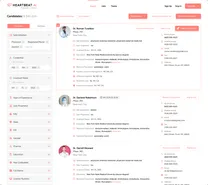
Heartbeat.ai’s platform lets you search and filter healthcare provider profiles, including prosthodontists, across the United States. You can narrow results by specialty, location, and other criteria, then pull contact details for outreach.
The database covers the recognized prosthodontic categories — maxillofacial, fixed, removable, implant, and cosmetic-focused practitioners — along with general profile and licensing information. For recruiters and business teams that need to reach multiple prosthodontists across Texas or nationally, that kind of filtering saves the manual work of piecing together directories, hospital staff pages, and licensing board records one at a time.
What a Heartbeat Prosthodontists Contact Record Includes
Each profile in the database is built to give you enough detail to qualify and reach a contact without additional research:
- Prosthodontist name
- Location
- Contact numbers (work, cell, mobile)
- Email address
- Specialization
- Years of experience
- Sole proprietor status
- Licensed states
- License number
- Fax
- Address
Available Prosthodontists in Our Contact List by State
Explore our list of prosthodontists across other U.S. states.
| Prosthodontists by states |
|---|
| Prosthodontists in Alabama |
| Prosthodontists in Alaska |
| Prosthodontists in Arizona |
| Prosthodontists in Arkansas |
| Prosthodontists in California |
| Prosthodontists in Colorado |
| Prosthodontists in Connecticut |
| Prosthodontists in Delaware |
| Prosthodontists in Florida |
| Prosthodontists in Georgia |
| Prosthodontists in Hawaii |
| Prosthodontists in Idaho |
| Prosthodontists in Illinois |
| Prosthodontists in Indiana |
| Prosthodontists in Iowa |
| Prosthodontists in Kansas |
| Prosthodontists in Kentucky |
| Prosthodontists in Louisiana |
| Prosthodontists in Maine |
| Prosthodontists in Maryland |
| Prosthodontists in Massachusetts |
| Prosthodontists in Michigan |
| Prosthodontists in Minnesota |
| Prosthodontists in Mississippi |
| Prosthodontists in Missouri |
| Prosthodontists in Montana |
| Prosthodontists in Nebraska |
| Prosthodontists in Nevada |
| Prosthodontists in New hampshire |
| Prosthodontists in New jersey |
| Prosthodontists in New mexico |
| Prosthodontists in New york |
| Prosthodontists in North carolina |
| Prosthodontists in North dakota |
| Prosthodontists in Ohio |
| Prosthodontists in Oklahoma |
| Prosthodontists in Oregon |
| Prosthodontists in Pennsylvania |
| Prosthodontists in Rhode island |
| Prosthodontists in South carolina |
| Prosthodontists in South dakota |
| Prosthodontists in Tennessee |
| Prosthodontists in Texas |
| Prosthodontists in Utah |
| Prosthodontists in Vermont |
| Prosthodontists in Virginia |
| Prosthodontists in Washington |
| Prosthodontists in West virginia |
| Prosthodontists in Wisconsin |
| Prosthodontists in Wyoming |
How This Contact Data Is Compiled
Heartbeat.ai builds provider profiles by aggregating information from public licensing boards, professional directories, and other official and private sources, then structures it into searchable records with direct cell phone and personal email fields where available. No directory can guarantee that every listed number or email is current at the moment you search — providers change practices, phone numbers, and email addresses regularly. Cross-checking a candidate’s license status with the Texas State Board of Dental Examiners before outreach is a reasonable extra step, particularly for recruitment or credentialing purposes.
Who Uses a Prosthodontists Contact List
The intended audience for this kind of dataset is fairly broad within healthcare-adjacent work:
- Healthcare recruiters sourcing candidates for open prosthodontic roles
- Medical and dental device or supply companies doing targeted outreach
- Marketing and business development teams building referral or partnership pipelines
- Researchers and associations coordinating with practicing specialists
- Insurance and benefits teams verifying network participation
It’s not intended for patients seeking urgent care or a diagnosis — for that, a referral from a general dentist or a search through a recognized professional association is the more appropriate starting point.
A Practical Workflow for Using the List
- Define your target — decide whether you need a specific prosthodontic subspecialty (implant, maxillofacial, cosmetic) or a broader search.
- Filter by geography and specialization — narrow to the metro areas or regions relevant to your outreach.
- Verify before high-stakes contact — for recruitment or credentialing, confirm license status directly with the state board.
- Personalize outreach — reference the recipient’s specialization or practice setting rather than sending generic messages.
- Track response and update records — contact data degrades over time, so plan for periodic refreshes rather than treating any list as permanent.
Limitations to Keep in Mind
No third-party contact database, including this one, replaces direct verification for licensing, credentialing, or compliance purposes. Contact details can lag behind a provider’s actual practice changes, and coverage of a niche specialty like prosthodontics will naturally be smaller than for general dentistry or primary care. Treat the list as a starting point for outreach, not a substitute for confirming a provider’s current status through official channels.
Conclusion
Prosthodontists play a narrow but important role in restorative and reconstructive dental care across Texas. Because the specialty is small and providers move between academic, hospital, and private settings, keeping contact information current takes more effort than it does for larger provider categories. A structured, filterable contact database can shorten that search considerably, provided it’s paired with basic verification before any outreach that matters — recruitment, credentialing, or partnership building in particular.
Frequently Asked Questions
What services do prosthodontists in Texas offer?
Prosthodontists in Texas specialize in restoring and replacing teeth, including dental implants, dentures, crowns, bridges, and veneers.
How can I find a qualified prosthodontist in Texas?
You can search for prosthodontists in Texas through online directories, referrals from your regular dentist, or by contacting the Texas Dental Association for recommendations.
Are prosthodontists in Texas able to treat complex dental problems?
Yes, prosthodontists are highly trained specialists who can address a range of complex dental issues, including cases involving jaw structure, facial trauma, or full-mouth reconstruction. This is general information, not medical advice — consult a licensed provider for individual dental concerns.