Last updated: August 30, 2026
Recruiting or connecting with a Chief Medical Officer in Indiana usually comes down to one practical problem: finding a working phone number or email address for someone whose contact details rarely appear in public directories. Hospital websites list titles, not direct lines, and general contact forms often get filtered before they reach a CMO’s desk.
This article looks at what makes CMO contact data hard to find in Indiana, what a usable contact list should include, and how Heartbeat’s healthcare provider database approaches the problem.
What’s on this page:
Get a Chief Medical Officer Email List for Indiana from Heartbeat
Heartbeat.ai’s database covers licensed healthcare professionals across the United States, including Chief Medical Officers. You can filter by specialty, location, and role to build a targeted list, then reach out directly instead of routing through general hospital contact forms.
Indiana’s Healthcare Landscape and CMO Roles
Indiana’s hospital and health system landscape includes several large networks with multiple CMO positions spread across specialties and facilities. Indiana University Health, Community Health Network, and Eskenazi Health are among the state’s larger systems, each operating multiple facilities with distinct clinical leadership needs.
Because larger systems often split CMO responsibilities by service line, region, or hospital campus, a single organization may have more than one CMO. This matters for recruiters and vendors: targeting “the CMO” at a large health system without specifying the facility or division often means reaching the wrong person or a general inbox.
Why Accurate CMO Contact Information Matters
A CMO’s direct contact information gets used for a few distinct purposes, and each has different requirements:
- Recruitment: Hiring teams need to reach candidates or prospects directly rather than through gatekeepers, especially for time-sensitive searches.
- Vendor and partnership outreach: Companies pitching clinical technology, research collaborations, or service contracts need a working line to the decision-maker.
- Professional networking: Industry peers, associations, and conference organizers often need direct contact for invitations or collaboration requests.
In each case, outdated or incorrect contact data wastes time and can stall a process that depends on timing, such as a hiring search with a tight deadline.
Common Challenges in Finding a Chief Medical Officer in Indiana
A few recurring obstacles show up when searching for CMO contacts in Indiana or any state:
- Limited candidate pool: The CMO role requires a mix of clinical credibility, management experience, and regulatory knowledge, which narrows the pool of qualified people considerably.
- Verification overhead: Confirming licensure, board certification, and work history takes time, particularly when done manually against state licensing boards.
- Data decay: Executives change roles, and public directories or old press releases often lag behind actual staffing changes by months or years.
- Fragmented sourcing: Health system websites, LinkedIn, and licensing databases each hold partial information, requiring cross-referencing to get a complete, current picture.
Recruitment and data platforms that consolidate licensing, specialty, and contact information into one searchable database can reduce this manual cross-referencing, though no database eliminates the need to verify a contact before relying on it for a critical outreach.
What’s Included in Heartbeat’s CMO Contact Lists
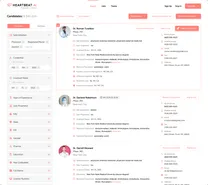
Heartbeat’s database compiles healthcare provider records that typically include the following fields for each contact:
- Chief Medical Officer Name
- Location
- Contact Numbers (Work, Cell, Mobile)
- Email Address
- Specialization
- Years of Experience
- Sole Proprietor Status
- Licensed States
- License Number
- Fax
- Address
 Accuracy & coverage of personal contact info were unrivaled by other platforms… this gives any healthcare recruiter a competitive advantage when engaging hard-to-reach healthcare providers.
Senior Growth Strategist






Chief Medical Officer Contacts by State
Browse CMO contact resources for other states:
| Chief medical officer by states |
|---|
| Chief medical officer in Alabama |
| Chief medical officer in Alaska |
| Chief medical officer in Arizona |
| Chief medical officer in Arkansas |
| Chief medical officer in California |
| Chief medical officer in Colorado |
| Chief medical officer in Connecticut |
| Chief medical officer in Delaware |
| Chief medical officer in Florida |
| Chief medical officer in Georgia |
| Chief medical officer in Hawaii |
| Chief medical officer in Idaho |
| Chief medical officer in Illinois |
| Chief medical officer in Indiana |
| Chief medical officer in Iowa |
| Chief medical officer in Kansas |
| Chief medical officer in Kentucky |
| Chief medical officer in Louisiana |
| Chief medical officer in Maine |
| Chief medical officer in Maryland |
| Chief medical officer in Massachusetts |
| Chief medical officer in Michigan |
| Chief medical officer in Minnesota |
| Chief medical officer in Mississippi |
| Chief medical officer in Missouri |
| Chief medical officer in Montana |
| Chief medical officer in Nebraska |
| Chief medical officer in Nevada |
| Chief medical officer in New hampshire |
| Chief medical officer in New jersey |
| Chief medical officer in New mexico |
| Chief medical officer in New york |
| Chief medical officer in North carolina |
| Chief medical officer in North dakota |
| Chief medical officer in Ohio |
| Chief medical officer in Oklahoma |
| Chief medical officer in Oregon |
| Chief medical officer in Pennsylvania |
| Chief medical officer in Rhode island |
| Chief medical officer in South carolina |
| Chief medical officer in South dakota |
| Chief medical officer in Tennessee |
| Chief medical officer in Texas |
| Chief medical officer in Utah |
| Chief medical officer in Vermont |
| Chief medical officer in Virginia |
| Chief medical officer in Washington |
| Chief medical officer in West virginia |
| Chief medical officer in Wisconsin |
| Chief medical officer in Wyoming |
How the Data Is Compiled
Heartbeat.ai aggregates healthcare provider information from a combination of official, private, and public sources, matching records to cell phone numbers and personal emails where available. The platform’s stated coverage includes roughly 11 million U.S. healthcare professionals with associated cell phone or email records.
Contact fields are estimated using modeling against available source data, so accuracy varies by field and by how recently a provider’s information was updated. Any list, regardless of source, should be treated as a starting point rather than a guarantee — a quick verification step before outreach (checking a hospital directory or LinkedIn, for instance) reduces the risk of contacting an outdated number or the wrong person entirely.
Who Uses a CMO Contact List
Contact lists like this typically serve a handful of use cases:
- Recruiters filling clinical leadership roles
- Healthcare technology and pharma vendors pitching to decision-makers
- Researchers or associations coordinating with clinical leadership
- Event organizers inviting speakers or panelists
Any use of contact data should comply with applicable data protection and communication laws, including rules around unsolicited outreach.
Getting More Out of a CMO Contact List
A list is only as useful as the outreach built around it. A few practical points worth keeping in mind:
- Be specific about the role and facility. A message addressed to a named CMO at a named hospital gets more traction than a generic pitch to “CMO, Indiana.”
- Keep the first message short. Clinical leaders have limited time; a two- or three-sentence message stating purpose and ask performs better than a long pitch.
- Confirm receipt when the matter is time-sensitive, such as a hiring deadline or a contract decision.
- Respect communication preferences and applicable regulations around outreach frequency and opt-outs.
Limitations to Keep in Mind
No contact database is perfectly current. Executive moves, retirements, and role changes happen faster than most public records get updated, and predictive matching for phone numbers or emails carries some margin of error. Treat any purchased or aggregated list as a lead source that still benefits from a quick manual check before a high-stakes outreach.
Frequently Asked Questions
What are the responsibilities of a Chief Medical Officer in Indiana?
A Chief Medical Officer typically oversees medical staff, develops clinical policies, manages patient care quality, and works alongside other healthcare executives to align clinical and operational goals.
What qualifications are required to become a Chief Medical Officer in Indiana?
Most CMO roles require a medical degree, board certification, several years of clinical practice, and demonstrated leadership or management experience within a healthcare setting.
How much does a Chief Medical Officer in Indiana earn?
Compensation varies by organization size, location, and experience level. Figures should be verified against current, Indiana-specific salary data rather than assumed from national averages.