Last updated: August 29, 2026
Addiction counseling is a licensed, fragmented profession — credentials and titles vary by state, and many practitioners work across small practices, treatment centers, or hospital-affiliated programs. That fragmentation makes cold outreach hard: generic contact lists go stale fast, and a counselor’s title on one directory may not match their actual credential or scope of practice. An addiction counselor email list built for B2B outreach solves a narrower problem — it gives you a way to find and segment licensed professionals in this field so your outreach doesn’t waste time on the wrong contacts.
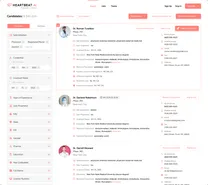
Heartbeat AI maintains a database of addiction counseling professionals across the United States, built for healthcare organizations, recruiters, researchers, and vendors who need direct contact paths rather than general web searches.
What’s on this page:
What’s Included in a Heartbeat Addiction Counselor Contact List

The addiction counselor email directory is built for direct outreach to this specific professional group — whether you’re staffing a program, recruiting talent, or building a referral network across the addiction counseling field.
- Nationwide coverage: Search across the United States rather than being limited to a single region or state directory.
- Multiple use cases: The same dataset supports recruitment, sales outreach, partnership development, and market research, depending on how you filter it.
- Sourced from multiple data partners: Heartbeat AI draws contact data from 200+ partners, which helps keep records current as counselors change jobs or practices.
- Detailed profile fields: Names, locations, phone numbers, email addresses, specialization, and years of experience give you enough context to personalize a first message instead of sending a blanket blast.
Data Fields Typically Included
- Name of the addiction counselor
- Location
- Contact numbers (work, cell, mobile)
- Email address
- Specialization
- Years of experience
- Sole proprietor status
- Licensed states
- License number
- Fax
- Address
 Accuracy & coverage of personal contact info were unrivaled by other platforms… this gives any healthcare recruiter a competitive advantage when engaging hard-to-reach healthcare providers.
Senior Growth Strategist





Why a Verified List Matters More Than a Bigger List
A stale or scraped list doesn’t just waste money — it wastes your outreach window. Here’s what a properly maintained addiction counselor list actually gives you over a generic scrape:
- Targeted outreach: Filtering by specialization or state means your message lands with counselors who are actually relevant to what you’re offering.
- Fewer wasted sends: Accurate contact data cuts down on bounces and outreach aimed at people outside your target group.
- Faster follow-through: Direct email and phone access means updates, invitations, or job postings reach counselors without going through a gatekeeper.
- Relationship building over time: Consistent, relevant contact — not a one-off blast — is what keeps your organization top of mind when a counselor is ready to engage.
- Personalization: Knowing a counselor’s specialization or years of experience lets you tailor the message instead of sending the same copy to everyone.
- Research and feedback channels: A working list also functions as a surveying tool if you need practitioner input on a product or program.
- Lower cost per contact: Email outreach remains cheaper than most traditional advertising channels when the underlying data is accurate.
- Measurable results: Open rates, click-throughs, and reply rates give you a feedback loop that most offline outreach doesn’t.
Compliance is part of this too. Any email outreach to U.S. contacts falls under the CAN-SPAM Act’s requirements — clear sender identification, a working opt-out mechanism, and honest subject lines. A credible list provider should make it straightforward to stay on the right side of these basic rules.
Addiction Counselor Specializations You’ll Find in the List
The field isn’t a single job title. Within a national addiction counselor list, you’ll typically find professionals working across several adjacent specialties, including substance abuse counseling, behavioral addiction, dual diagnosis, and related mental health and trauma-focused practices.
| Addiction Counselor Categories |
| Substance Abuse Counselor |
| Behavioral Addiction Counselor |
| Dual Diagnosis Counselor |
| Mental Health Counselor |
| Gambling Addiction Counselor |
| Eating Disorder Counselor |
| Family and Marriage Therapist |
| Adolescent Addiction Counselor |
| Trauma Counselor |
| Spiritual Counselor |
Worth noting: credential names and scope of practice for these specialties vary by state — a CADC in one state may not be recognized the same way in another. If licensure status matters for your outreach (for example, hiring), verify current credentials directly with the counselor or the relevant state licensing board rather than relying solely on list data.
Find Addiction Counselors by State
If you’re recruiting or building referral networks regionally, state-level segmentation saves time. Here’s the full state breakdown available in the directory.
| Addiction Counselor By States |
| Addiction Counselor in Alabama |
| Addiction Counselor in Alaska |
| Addiction Counselor in Arizona |
| Addiction Counselor in Arkansas |
| Addiction Counselor in California |
| Addiction Counselor in Colorado |
| Addiction Counselor in Connecticut |
| Addiction Counselor in Delaware |
| Addiction Counselor in Florida |
| Addiction Counselor in Georgia |
| Addiction Counselor in Hawaii |
| Addiction Counselor in Idaho |
| Addiction Counselor in Illinois |
| Addiction Counselor in Indiana |
| Addiction Counselor in Iowa |
| Addiction Counselor in Kansas |
| Addiction Counselor in Kentucky |
| Addiction Counselor in Louisiana |
| Addiction Counselor in Maine |
| Addiction Counselor in Maryland |
| Addiction Counselor in Massachusetts |
| Addiction Counselor in Michigan |
| Addiction Counselor in Minnesota |
| Addiction Counselor in Mississippi |
| Addiction Counselor in Missouri |
| Addiction Counselor in Montana |
| Addiction Counselor in Nebraska |
| Addiction Counselor in Nevada |
| Addiction Counselor in New Hampshire |
| Addiction Counselor in New Jersey |
| Addiction Counselor in New Mexico |
| Addiction Counselor in New York |
| Addiction Counselor in North Carolina |
| Addiction Counselor in North Dakota |
| Addiction Counselor in Ohio |
| Addiction Counselor in Oklahoma |
| Addiction Counselor in Oregon |
| Addiction Counselor in Pennsylvania |
| Addiction Counselor in Rhode Island |
| Addiction Counselor in South Carolina |
| Addiction Counselor in South Dakota |
| Addiction Counselor in Tennessee |
| Addiction Counselor in Texas |
| Addiction Counselor in Utah |
| Addiction Counselor in Vermont |
| Addiction Counselor in Virginia |
| Addiction Counselor in Washington |
| Addiction Counselor in West Virginia |
| Addiction Counselor in Wisconsin |
| Addiction Counselor in Wyoming |
How This Data Gets Compiled and Kept Current
Contact data on any professional group decays quickly — counselors switch employers, practices merge, licenses lapse or renew. A list that isn’t actively maintained becomes a liability rather than an asset within months. Here’s what ongoing maintenance should look like:
- Manual review: Entries get checked individually for completeness and accuracy rather than relying solely on automated scraping.
- Segmentation: Records are organized by location, specialization, and experience so outreach can be targeted instead of blanket.
- Privacy compliance: Data handling should follow applicable regulations, including GDPR and HIPAA where relevant to how the information is sourced and used.
- Security controls: Encryption, access controls, and periodic audits reduce the risk of exposure for sensitive contact information.
- Regular refresh cycles: New counselors get added, affiliations get updated, and stale contacts get flagged or removed.
What to Check Before You Buy Any Counselor Contact List
Not every provider treats data quality the same way. Before committing budget, run through this checklist:
- Sourcing method: Ask whether contacts were collected through opt-in channels or scraped from public directories. Opt-in sourcing generally means better deliverability and fewer compliance headaches.
- Verification cadence: Find out how often records are re-verified. A list refreshed quarterly behaves very differently from one that hasn’t been touched in two years.
- Segmentation depth: Confirm you can filter by state, specialization, and experience level — broad, unsegmented lists usually underperform.
- Geographic fit: Match the list’s coverage (regional, national) to your actual outreach goals before paying for scale you don’t need.
- Compliance posture: A credible provider should be able to explain, in plain terms, how it handles privacy regulations relevant to healthcare contact data.
Who Typically Uses This Kind of List

- Healthcare institutions: Hospitals, clinics, and rehabilitation centers use it for staffing and partnership outreach.
- Educational institutions: Universities and training programs use it to promote workshops and continuing education.
- Research organizations: Academic and clinical researchers use it to recruit collaborators or study participants within scope-appropriate limits.
- Healthcare associations: Membership and advocacy groups use it to share updates and organize events.
- Recruitment agencies: Staffing firms use it to identify candidates for open counseling roles.
- Government health departments: Public health agencies use it for coordination on programs and campaigns.
- Nonprofit organizations: Advocacy and treatment-focused nonprofits use it for partnership building.
- Technology and insurance vendors: Companies with relevant products use it for demonstrations, training, or coordination on care programs.
A Practical Outreach Workflow
Buying the list is the easy part. Getting a response depends on how you use it:
- Segment first. Break the list down by specialization or geography before writing a single email — a message to a gambling addiction specialist shouldn’t read the same as one to a substance abuse counselor.
- Write for the specific role. Reference something relevant to their specialty rather than sending generic template copy.
- Lead with something useful. A relevant resource, event invite, or job opening gets better engagement than a pure sales pitch.
- Follow up with a plan, not a guess. Space out follow-ups and vary the angle — an event invite, then a resource, then a direct ask.
- Track what works. Open rates and reply rates tell you which segments and messages are worth repeating.
- Stay compliant throughout. Keep unsubscribe options visible and honor them immediately — this matters more in healthcare-adjacent outreach than in most other B2B contexts.
Limitations Worth Knowing
No purchased contact list is a substitute for verifying credentials directly, especially for hiring or clinical partnership decisions. Licensure titles and requirements differ by state, and a directory entry doesn’t replace confirming a counselor’s current license status with the relevant state board. Contact data also degrades over time regardless of provider — treat any list as a starting point for outreach, not a permanent record.
Conclusion
An addiction counselor email list is useful mainly because it narrows a hard-to-reach, fragmented professional group down to something you can actually segment and act on. The value comes less from the size of the list and more from how current the data stays and how well it’s segmented for your specific outreach goal. Heartbeat AI combines nationwide coverage with regular data refresh cycles, giving healthcare organizations, recruiters, and researchers a workable way to connect with addiction counseling professionals without starting from scratch.
FAQs
What is an addiction counselor email list?
It’s a curated database of contact information for professionals working in addiction counseling, including email addresses, phone numbers, and specialization details.
Are addiction counselor email lists compliant with data protection regulations?
A credible provider should structure its data collection and handling to align with applicable privacy regulations, including GDPR and HIPAA where relevant, and outreach itself should follow CAN-SPAM requirements.
Can these lists support recruitment agencies hiring for counseling roles?
Yes — recruiters commonly use these lists to identify and reach potential candidates, though credentials should still be verified directly with the counselor or state licensing board before extending an offer.
How often should I expect the data to be updated?
Contact information for licensed professionals changes often as people switch employers or renew credentials, so ask any provider about their refresh cadence before relying on the list for time-sensitive outreach.