What’s on this page:
Key takeaways
- Verify a specialist’s current contact details and practice affiliation before important outreach.
- Segment a contact list by subspecialty when outreach is aimed at a particular type of practice.
- Provider databases can help with searching and filtering, but they should not be treated as guaranteed-current sources.
- For recruiting and business outreach, confirm the provider’s practice information before relying on a contact record.
- Follow applicable email and telemarketing rules, and honor opt-out requests.
Last updated: August 30, 2026
Finding accurate contact information for internal medicine specialists in Virginia matters for healthcare recruiting, medical sales, and professional networking. Physician directories can become outdated as practices merge, providers relocate, and phone numbers change, making it important to verify contact details before relying on them.
This guide covers what internal medicine specialists do, why accurate contact data matters for outreach and recruiting, the practical challenges of building a list yourself, and how Heartbeat.ai’s data can help.
Get an Email List of Internal Medicine Specialists in Virginia from Heartbeat
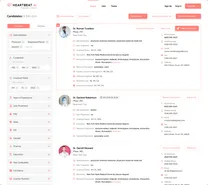
Heartbeat.ai says its platform lets users search for licensed healthcare professionals across the United States and filter by specialty, location, and other criteria to build a targeted contact list.
Internal medicine includes a range of subspecialties. Depending on a provider’s training and practice, relevant categories may include:
- Cardiologists (heart specialists)
- Endocrinologists (hormone specialists)
- Gastroenterologists (digestive system specialists)
- Hematologists (blood disorder specialists)
- Infectious disease specialists
- Nephrologists (kidney disorder specialists)
- Oncologists (cancer specialists)
- Pulmonologists (respiratory system specialists)
- Rheumatologists (joint and muscle disorder specialists)
- Allergists and immunologists
Having these categories separated out helps when you’re targeting outreach to a specific type of practice rather than internal medicine broadly.
Internal Medicine in Virginia’s Healthcare Landscape
Virginia’s internal medicine specialists work in settings that include academic medical centers, regional hospital systems, and independent practices. Major health systems in the state include the University of Virginia Medical Center, Virginia Commonwealth University Health System, Inova Fairfax Hospital, and Carilion Roanoke Memorial Hospital. These organizations are examples of the health-system and academic settings where specialists may practice.
A provider’s affiliation can affect the best way to make contact. Specialists affiliated with large health systems may be reached through institutional contact channels, while independent practitioners may have practice-level contact information.
Why Accurate Contact Data Matters
Outdated contact information causes real friction in three areas:
- Patient-facing communication: incorrect numbers or emails delay scheduling and follow-up.
- Recruiting: a stale list means recruiters chase dead leads, missing qualified candidates while competitors reach them first.
- Professional networking and referrals: referral relationships depend on being able to reach the right specialist promptly, especially in time-sensitive cases.
Contact details and affiliations can change, so verify a provider’s current practice information before relying on a list for important outreach.
Common Challenges in Building an Internal Medicine Contact List
A few recurring problems come up when compiling this kind of list manually:
- Volume: Virginia has a large number of registered internal medicine specialists, and manually verifying each entry is slow.
- Data decay: contact details, affiliations, and license statuses change frequently and directories often lag behind.
- Fragmentation: information is scattered across hospital websites, state licensing boards, and third-party directories, with no single authoritative source.
Databases that aggregate and refresh provider data can reduce the work involved in manual research. No source is guaranteed to be current, so spot-check a provider’s current practice listing before high-stakes outreach.
What a Heartbeat.ai Contact List Includes
Heartbeat.ai says its database can be searched for internal medicine specialists by state or nationally. Available data points may include:
- Specialist name
- Location
- Contact numbers (work, cell, mobile)
- Email address
- Specialization
- Years of experience
- Sole proprietor status
- Licensed states
- License number
- Fax
- Address
Internal Medicine Specialist Lists by State
Explore internal medicine specialist contact data for other states below.
| Internal medicine specialist list by states |
|---|
| Internal medicine specialist list in Alabama |
| Internal medicine specialist list in Alaska |
| Internal medicine specialist list in Arizona |
| Internal medicine specialist list in Arkansas |
| Internal medicine specialist list in California |
| Internal medicine specialist list in Colorado |
| Internal medicine specialist list in Connecticut |
| Internal medicine specialist list in Delaware |
| Internal medicine specialist list in Florida |
| Internal medicine specialist list in Georgia |
| Internal medicine specialist list in Hawaii |
| Internal medicine specialist list in Idaho |
| Internal medicine specialist list in Illinois |
| Internal medicine specialist list in Indiana |
| Internal medicine specialist list in Iowa |
| Internal medicine specialist list in Kansas |
| Internal medicine specialist list in Kentucky |
| Internal medicine specialist list in Louisiana |
| Internal medicine specialist list in Maine |
| Internal medicine specialist list in Maryland |
| Internal medicine specialist list in Massachusetts |
| Internal medicine specialist list in Michigan |
| Internal medicine specialist list in Minnesota |
| Internal medicine specialist list in Mississippi |
| Internal medicine specialist list in Missouri |
| Internal medicine specialist list in Montana |
| Internal medicine specialist list in Nebraska |
| Internal medicine specialist list in Nevada |
| Internal medicine specialist list in New hampshire |
| Internal medicine specialist list in New jersey |
| Internal medicine specialist list in New mexico |
| Internal medicine specialist list in New york |
| Internal medicine specialist list in North carolina |
| Internal medicine specialist list in North dakota |
| Internal medicine specialist list in Ohio |
| Internal medicine specialist list in Oklahoma |
| Internal medicine specialist list in Oregon |
| Internal medicine specialist list in Pennsylvania |
| Internal medicine specialist list in Rhode island |
| Internal medicine specialist list in South carolina |
| Internal medicine specialist list in South dakota |
| Internal medicine specialist list in Tennessee |
| Internal medicine specialist list in Texas |
| Internal medicine specialist list in Utah |
| Internal medicine specialist list in Vermont |
| Internal medicine specialist list in Virginia |
| Internal medicine specialist list in Washington |
| Internal medicine specialist list in West virginia |
| Internal medicine specialist list in Wisconsin |
| Internal medicine specialist list in Wyoming |
How This Data Gets Compiled
Heartbeat.ai says it aggregates provider information from official, private, and public sources and refreshes it on an ongoing basis. The company also says it cross-references multiple data points to improve the matching of phone numbers and email addresses.
Who Uses This Kind of List
Internal medicine contact data gets used by a mix of teams and individuals:
- Recruiters and talent teams sourcing physicians for open roles
- Sales and marketing teams promoting medical equipment, pharmaceuticals, or services relevant to internal medicine practices
- Referral coordinators and other providers building professional networks
- Researchers and healthcare organizations running targeted outreach or awareness campaigns
Using the List Effectively — A Practical Checklist
- Segment before you send. Group contacts by subspecialty rather than treating all internal medicine specialists the same.
- Verify before high-stakes outreach. Cross-check a provider’s current affiliation if the contact is tied to time-sensitive recruiting or referrals.
- Keep messaging concise and relevant. Physicians have limited time; get to the point quickly.
- Get consent and honor opt-outs. Follow applicable email and telemarketing regulations, and remove contacts who ask to be excluded.
- Track responses. Acknowledging replies, even declines, keeps the relationship usable for future outreach.
Limitations to Keep in Mind
No provider database is fully current at all times. Physicians may change practices, retire, or update licensure status before a directory reflects the change. Treat any purchased or aggregated list as a starting point, not a guaranteed-accurate source, and verify the contacts that matter most.
Conclusion
Building a usable internal medicine specialist list in Virginia requires balancing coverage, accuracy, and upkeep. Manual research can be time-consuming, and contact details may become outdated. A regularly refreshed database may reduce some of that work, but verify important contacts before using them for recruiting, outreach, or referral networking.
Frequently Asked Questions
Where can I find a reliable internal medicine specialist list in Virginia?
Check online provider directories, ask your insurance provider for a list of in-network specialists, or request a referral from your primary care physician. Aggregated databases like Heartbeat.ai can also speed up sourcing for recruiting or outreach purposes.
Are all internal medicine specialists in Virginia board-certified?
Not necessarily. Board certification isn’t a universal requirement to practice, so it’s worth verifying a specialist’s certifications and credentials directly before relying on them for a referral or hire.
How can I narrow down the internal medicine specialist list in Virginia to find the right fit?
Consider subspecialty, location, hospital affiliation, patient reviews, accepted insurance, and appointment availability. For recruiting or B2B outreach, filtering by years of experience and practice type is usually more useful than a broad, unfiltered list.