What’s on this page:
Key takeaways
- An internal medicine email list can organize contact data and reduce manual prospecting, but its usefulness depends on accuracy, freshness, and audience fit.
- Before buying a list, ask how contacts are sourced and verified, how often records are refreshed, and how errors or bounced emails are handled.
- Filtering by specialty, geography, or practice type can help tailor outreach when those fields are available and reliable.
- Relevant, targeted messages may be more useful than broad blasts, but response rates are not guaranteed.
- Review applicable privacy and marketing requirements for both the data and your planned outreach.
Last updated: August 28, 2026
Internal medicine is a large, widely distributed physician specialty, which can make outreach challenging. Internists work across hospitals, private practices, and academic centers, and no single directory necessarily captures them all. For recruiting, sales, or education outreach, a key challenge is finding contact details that are current and relevant to your audience.
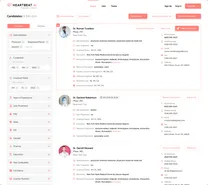
An internal medicine email list is a structured way to identify and contact internists without relying only on hospital switchboards or older directory data. Heartbeat AI describes its lists as built from provider data and says they include personal emails and phone numbers; verify the available fields and how recently they were checked before relying on them.
What’s Included in Heartbeat’s Internal Medicine Email Database

Heartbeat AI describes its platform as supporting healthcare recruitment and provider outreach, with contact information—including personal emails and cell numbers—for healthcare providers across specialties. Confirm the available data fields and coverage for your intended audience.
Here’s what you get from the internal medicine email database specifically:
- Direct access: Contact internists without routing through office staff or generic info@ inboxes.
- Customization: Filter the list by location, specialty focus, or practice type to match your campaign.
- Time savings: Skip manual list-building and go straight to outreach.
- Wider reach: Expand your pipeline of internal medicine contacts beyond your existing network.
- Regular refreshes: Contact data is updated on an ongoing basis rather than compiled once and left static.
- CRM integration: Export data into your existing marketing or recruiting stack without manual reformatting.
Data Fields You Can Expect
- Provider name
- Location and address
- Work, cell, and mobile phone numbers
- Email address
- Specialization
- Years of experience
- Sole proprietor status
- Licensed states and license number
- Fax number
 Accuracy & coverage of personal contact info were unrivaled by other platforms… this gives any healthcare recruiter a competitive advantage when engaging hard-to-reach healthcare providers.
Senior Growth Strategist






Why a Verified Email List Beats Manual Prospecting
Building a contact list by hand from hospital directories, professional networking sites, or conference attendee lists can take time, and the resulting data may vary in completeness. A maintained internal medicine list can reduce manual research, but its usefulness depends on the accuracy, freshness, and relevance of the contacts.
Direct Connection
A direct email address may help you reach an individual internist rather than a shared departmental inbox. Confirm that the address is current and appropriate for your message.
Time Saved
A pre-built list can reduce the time spent sourcing contacts one by one, leaving more time for targeting and message quality. You may still need to verify and segment the data before outreach.
Better Response Rates
A relevant, well-defined audience may be more useful than a broad, unfiltered list, but response rates are not guaranteed. Results depend on factors such as message relevance, timing, and targeting.
Segmentation Insight
Filtering a list by specialty, geography, or practice type can help identify which groups to prioritize before committing an outreach budget.
Networking Access
A working list also opens the door to partnerships, referral relationships, or informal professional exchanges beyond a single campaign.
Internal Medicine Specialist Categories in Our Directory
Our internal medicine directory spans general internists as well as the subspecialties that often fall under the internal medicine umbrella.
| Internal Medicine Specialist Categories |
| General Internist |
| Cardiologist |
| Gastroenterologist |
| Pulmonologist |
| Nephrologist |
| Endocrinologist |
| Rheumatologist |
| Infectious Disease Specialist |
| Hematologist |
| Oncologist |
| Geriatrician |
| Allergist/Immunologist |
| Hospitalist |
| Sports Medicine Specialist |
| Palliative Care Specialist |
Internal Medicine Contacts by State
The directory provides a state-by-state breakdown of the internal medicine contacts it lists. Check the current availability and coverage for the states relevant to your outreach.
How the Data Gets Compiled
A usable internal medicine mailing list requires ongoing attention: contact details can change, so collection, verification, categorization, and refresh practices matter.
Gathering Information
The article says data collection may draw on medical directories, professional networking sites, healthcare conferences, and other provider databases. Ask the vendor which sources apply to the records you plan to use.
Authenticating Data
The article says email addresses, names, and other details go through verification before being offered. Ask what verification involves, when records were last checked, and how inaccurate or bounced contacts are handled.
Categorizing Data
Segmenting contacts by specialty, geography, or practice type can help tailor a campaign. Confirm which filters are available and how those categories are assigned.
Compliance Review
Before using a contact list, review both the vendor’s data practices and your own planned outreach against applicable privacy and marketing requirements. Requirements depend on the data, recipients, and purpose; do not assume that a vendor’s review alone ensures your compliance.
Ongoing Refresh
Contact details can change as physicians move practices or update credentials. Ask how often records are re-verified and treat the list as data that may need further checking.
Customization for Clients
The article says lists can be filtered by geography, specialty, or experience level. Confirm the available filters and whether they fit your campaign needs.
Why Choose Heartbeat.ai’s Internal Medicine Mailing List
Broad Data Coverage
Heartbeat provides a vast database of healthcare providers, including internal medicine specialists, so you’re not stitching together multiple sources.
Predictive Contact Modeling
Heartbeat uses predictive modeling to improve contact accuracy for mobile numbers and personal emails. If accuracy figures matter to your buying decision, ask for current benchmark numbers directly, since match rates can shift as data sources are refreshed.
Time-Saving Tools
The Prospector tool and Chrome Extension let you find and contact internal medicine professionals without building lists manually.
Bulk Data Management
The file upload feature handles large-volume list management, useful if you’re working with extensive contact sets.
Flexible Pricing
Several pricing options are available depending on whether you’re an individual recruiter or a larger organization.
What to Check Before Buying an Internal Medicine Email List
- Accuracy and refresh cadence: Ask how often the vendor updates contact data and how bounce rates are handled.
- Audience specificity: Confirm the list can be filtered to general internists versus subspecialists if that distinction matters for your campaign.
- Legal compliance: The list and your usage of it need to align with applicable privacy regulations such as HIPAA and GDPR where relevant.
- Data origin: Understand how contacts were sourced — direct opt-in, public directories, or licensed data partnerships all carry different reliability profiles.
- Personalization options: Check whether the list can be segmented by location, years in practice, or other filters you actually plan to use.
- Cost versus value: Weigh price against expected response quality rather than defaulting to the cheapest option.
Who Uses an Internal Medicine Email List
Pharmaceutical Companies
Pharmaceutical companies may use a contact list to share information about medications, clinical trials, or drug safety updates relevant to internists. Ensure that the content and outreach comply with applicable requirements.
Medical Equipment Manufacturers
Medical equipment manufacturers may use a list to reach physicians who could evaluate or recommend devices used in internal medicine practices.
Continuing Medical Education Providers
Continuing medical education providers may use a list to promote courses relevant to internal medicine audiences.
Healthcare Recruitment Agencies
Healthcare recruiters may use a list to identify potential candidates for roles in hospitals, clinics, and outpatient practices.
Medical Publications and Journals
Medical publishers may use a list to share research and professional updates with people working in the field.
Healthcare IT Companies
Healthcare IT companies may use a list to reach internists who could evaluate EHR systems, telemedicine platforms, or related tools.
How to Use an Internal Medicine Email List Effectively
- Define your goal first. Selling, informing, and relationship-building call for different messaging and follow-up cadences.
- Segment the list. Break contacts down by location, specialty, or experience level before writing a single email.
- Write content worth reading. A new product, a relevant study, or a genuinely useful update performs better than generic promotional copy.
- Personalize where it counts. Address recipients by name and, where possible, tailor content to their specific practice focus.
- Stay compliant. Review your outreach against GDPR and HIPAA requirements before you hit send.
- Test before scaling. Run smaller batches with variant subject lines or content, then scale what performs on open and response rates.
- Close with a clear ask. Tell the recipient exactly what to do next — visit a page, book a call, register for a session.
Limitations Worth Knowing
No provider contact database is guaranteed to be complete or current. Physicians may change practices, retire, or change specialties, and email addresses may stop working. Treat any list as a working resource that may need periodic re-verification. Response rates also depend on message relevance and targeting, not just list quality.
Closing Thoughts
An internal medicine email list can help organize outreach to internists and reduce manual prospecting. It is most useful when paired with careful segmentation, compliant outreach, and realistic expectations about data freshness.
Heartbeat AI describes its internal medicine contact data as including emails and phone numbers, with segmentation by specialty and geography and tools for managing outreach. Confirm current coverage, available fields, and verification practices before using the data.
Frequently Asked Questions
What topics come up most often when reaching internal medicine contacts by email?
Common topics include new research, treatment guideline updates, clinical trial recruitment, and practice-management or technology news relevant to internists.
How do I find an internal medicine contact list relevant to my specific outreach goals?
Look for vendors that let you filter by specialty, geography, and practice type, and confirm how recently the data was verified before purchasing.
Can I use an internal medicine email list to discuss patient cases or seek medical advice?
No. These lists are for professional business outreach — recruiting, sales, education, or publishing — not for exchanging identifiable patient information or seeking treatment guidance.