Last updated: August 28, 2026
Texas has one of the largest physician populations in the country, trailing only California and New York in total active physicians. That scale is good news for patients and healthcare organizations alike, but it creates a real operational headache for anyone trying to build or maintain a reliable contact list: doctors change practices, join and leave hospital systems, retire, or relocate constantly, and public directories rarely keep pace.
This guide looks at why accurate physician contact data matters, what actually goes into building a usable Texas physician list, and how to evaluate a data provider like Heartbeat before you commit budget to outreach.
What’s on this page:
Get a Physician Email List for Texas from Heartbeat
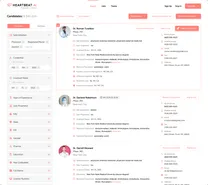
Heartbeat maintains a searchable database of physicians and other healthcare providers, including contact records for doctors practicing in Texas. Rather than functioning as a static directory, it’s built to let recruiters, sales teams, and healthcare organizations filter by specialty, location, and other criteria to find the right contacts faster.
The Texas Healthcare Landscape, Briefly
Texas is the second-most populous state in the country, and its healthcare system reflects that scale, with a large number of hospitals concentrated in metro areas like Houston, Dallas, and San Antonio. Despite that size, workforce data consistently shows gaps: Texas has roughly 74 active primary care physicians per 100,000 population, ranking near the bottom of states and below the national ratio of about 94 per 100,000. The state continues to have fewer active patient care and primary care physicians per capita than the national average, and demand is projected to keep outpacing supply through 2036.
That shortage is exactly why accurate contact data carries more weight in Texas than in states with a denser physician supply. Recruiters have a smaller effective pool to work with, and outdated contact information means wasted outreach cycles chasing doctors who’ve already moved on.
Why Accurate Physician Contact Data Actually Matters
It’s easy to treat a contact list as a commodity. In practice, the quality of the data behind it determines whether outreach succeeds or just generates bounces.
Timely Access for Patients
Patients rely on accurate contact details to schedule appointments, ask billing questions, or reach a provider during a health concern. Outdated numbers or dead email addresses create friction at exactly the wrong moment.
Recruitment Efficiency
Healthcare staffing and recruitment teams live or die by response rates. A list full of bounced emails or disconnected numbers burns through recruiter time and skews the perceived size of an actual candidate pool.
Referral and Consult Workflows
Physicians frequently refer patients to specialists or seek second opinions from colleagues. When contact information is current, those handoffs happen without delay.
Networking and Research Collaboration
Physicians looking to connect with peers for mentorship, research, or professional development depend on being able to actually reach the people they’re trying to contact.
Why This Data Gets Stale So Fast
A few structural factors make Texas physician data harder to keep current than it looks on paper:
- Geographic spread. Texas covers a huge area, and rural counties often have thin physician coverage, which makes verifying practice locations more labor-intensive than in dense urban markets.
- Frequent job and affiliation changes. Physicians move between hospital systems, private practice, and locum tenens work more often than most professions, and each move can change their listed email, phone, or office address.
- Inconsistent source data. State licensing boards, NPI registries, and hospital directories don’t always agree, and none of them update in real time.
Better GIS mapping, automated verification pipelines, and cross-referencing multiple data sources can reduce these gaps, but no database is permanently current. Any list is a snapshot, and the value of a provider comes largely from how often that snapshot gets refreshed.
What You Get With Heartbeat’s Physician Data
- Filterable search. Narrow results by location, specialty, and other practice criteria instead of scrolling through an unsorted directory.
- Ongoing verification. Records are checked and refreshed on a rolling basis to account for the job changes and practice closures common among physicians.
- Use-case flexibility. The same underlying data supports recruitment searches, referral-building, and market research, depending on how you filter it.
Typical Data Fields Included
- Physician name
- Practice location and address
- Contact numbers (work, cell, mobile)
- Email address
- Specialization
- Years of experience
- Licensed states and license number
- Fax number
- Sole proprietor status
 Accuracy & coverage of personal contact info were unrivaled by other platforms… this gives any healthcare recruiter a competitive advantage when engaging hard-to-reach healthcare providers.
Senior Growth Strategist






Physician Categories Available
Search by specialty to narrow results to the type of provider relevant to your outreach:
| Physicians Categories |
| Family physicians |
| Internists |
| Emergency physicians |
| Psychiatrists |
| Obstetricians and gynecologists |
| Neurologists |
| Radiologists |
| Anesthesiologists |
| Pediatricians |
| Cardiologists |
Physicians by State
Looking for physician contact data outside Texas? Browse other state-level directories below.
| Physicians By States |
| Physicians in New Jersey |
| Physicians Mailing in North Carolina |
| Physicians in Alabama |
| Physicians in Alaska |
| Physicians in Arizona |
| Physicians in Arkansas |
| Physicians in California |
| Physicians in Colorado |
| Physicians in Connecticut |
| Physicians in Delaware |
| Physicians in Florida |
| Physicians in Georgia |
| Physicians in Hawaii |
| Physicians in Idaho |
| Physicians in Illinois |
| Physicians in Indiana |
| Physicians in Iowa |
| Physicians in Kansas |
| Physicians in Kentucky |
| Physicians in Louisiana |
| Physicians in Maine |
| Physicians in Maryland |
| Physicians in Massachusetts |
| Physicians in Michigan |
| Physicians in Minnesota |
| Physicians in Mississippi |
| Physicians in Missouri |
| Physicians in Montana |
| Physicians in Nebraska |
| Physicians in Nevada |
| Physicians in New Hampshire |
| Physicians in New Jersey |
| Physicians in New Mexico |
| Physicians in New York |
| Physicians in North Carolina |
| Physicians in North Dakota |
| Physicians in Ohio |
| Physicians in Oklahoma |
| Physicians in Oregon |
| Physicians in Pennsylvania |
| Physicians in Rhode Island |
| Physicians in South Carolina |
| Physicians in South Dakota |
| Physicians in Tennessee |
| Physicians in Utah |
| Physicians in Vermont |
| Physicians in Virginia |
| Physicians in Washington |
| Physicians in West Virginia |
| Physicians in Wisconsin |
| Physicians in Wyoming |
How This Data Gets Built
Compiling a physician database that’s actually usable involves more than scraping a directory once and calling it done. The general workflow looks like this:
1. Data Collection
Records are pulled from a wide range of data partners, including public records, medical boards, healthcare organizations, and professional associations, capturing names, specialties, practice locations, contact details, and affiliations.
2. Verification
Collected records go through cross-referencing against multiple sources to confirm that contact details are still valid and that the physician is still practicing where the record says they are.
3. Cleaning
Duplicate and outdated entries get removed so users aren’t wasting time on dead records or contacting the same person twice under slightly different listings.
4. Categorization
Records get tagged by specialty, location, and affiliation so searches can be filtered down to something specific instead of returning an unmanageable list.
Evaluating a Physician Data Provider: What to Check
Before relying on any physician contact database for Texas outreach, it’s worth running through a short checklist:
- Refresh frequency. Ask how often records are re-verified, not just when the database was first built.
- Source diversity. A provider pulling from a single source (like one licensing board) will miss changes that other sources catch sooner.
- Filtering depth. Can you search by specialty, sub-specialty, and location, or only by broad category?
- Compliance posture. Confirm the provider’s practices align with relevant privacy and data protection expectations for your use case.
- Support for bulk workflows. If you’re a recruiting team or agency, check whether the platform supports team accounts and bulk exports rather than one-off lookups.
Who Actually Uses Physician Contact Lists
- Patients looking to find a doctor, schedule care, or resolve billing questions.
- Health insurers managing provider networks, negotiating contracts, and communicating policy or eligibility changes.
- Pharmaceutical sales teams promoting new drugs or coordinating clinical trial outreach.
- Medical device companies arranging demos, trials, and training with prescribing physicians.
- Public health agencies coordinating outbreak response, licensing oversight, or emergency preparedness across facilities.
Getting More Out of a Physician Mailing List
A list is only as useful as the strategy behind it. A few practical applications worth considering:
- Referral network building. Use specialty filters to identify physicians in complementary fields and build relationships before you need the referral.
- Educational outreach. Share relevant continuing education opportunities or conference information rather than only sales pitches.
- Research collaboration. Filter by specialty and location to identify physicians with overlapping research interests.
- Public health coordination. Health departments and community organizations can use verified contact data to coordinate outreach campaigns more efficiently.
- Compliant marketing. If promoting a product or service, make sure outreach practices follow applicable privacy regulations and consent requirements.
Texas Medical Board Oversight
Physicians practicing in Texas are licensed and regulated by the Texas Medical Board, which is responsible for physician licensing and for addressing unsafe practices or unprofessional conduct. Anyone verifying a physician’s current license status or disciplinary history should check directly with the board rather than relying solely on a third-party contact list.
The Bottom Line
Texas has a large physician workforce, but per-capita access still lags behind much of the country, particularly in primary care and in rural counties. That combination makes contact data quality a genuine differentiator for recruiters, insurers, and healthcare organizations working in the state. A provider like Heartbeat can shortcut the manual verification work, but any list should be treated as a working snapshot, not a permanent record, and cross-checked periodically against original sources for anything mission-critical.
Frequently Asked Questions
What information is typically included in a physician contact list?
A comprehensive physician contact record typically includes name, specialty, license number, clinic or hospital affiliation, phone numbers, email address, and office address.
Are physician contact lists in Texas compliant with privacy regulations?
Reputable providers structure their data practices around applicable privacy and data protection requirements. It’s worth confirming a provider’s specific compliance approach before using their data for any regulated communication.
How can healthcare organizations benefit from a physician contact list in Texas?
Organizations use physician contact data for recruitment, referral network building, service promotion, and research outreach, generally to reduce the time spent tracking down current contact details manually.
How do I access Texas physician contact data through Heartbeat?
Heartbeat provides searchable healthcare contact data, including emails and cell phone numbers for physicians, nurses, and other providers. See pricing here and sign up for a free trial to access Texas physician contact records.