Last updated: August 28, 2026
Building outreach lists for nurses in Idaho requires more than a scraped directory. Idaho’s nursing workforce is shifting quickly, and contact data goes stale fast when licenses lapse, nurses relocate, or facilities merge. This guide covers what an accurate Idaho nurse email list should include, why the state’s staffing situation matters for anyone doing outreach, and how to use contact data responsibly once you have it.

What’s on this page:
Idaho’s Nursing Workforce: Current Picture
Idaho’s nurse shortage is well documented and, by most measures, more serious than the national average. A 2024 Idaho Nursing Workforce Report from the Idaho Center for Nursing found the state short 468 registered nurses to meet baseline needs Idaho is short 468 registered nurses to meet “baseline needs” in the state, according to a 2024 Idaho Nursing Workforce Report conducted by the Idaho Center for Nursing, a nursing research and philanthropy organization. That gap widens considerably once retirement-age nurses are factored out: If you exclude retirement-aged licensed nurses, that deficit widens to 1,867 nurses, the report says.
The state’s nurse-to-population ratio has also fallen. Idaho’s rate of registered nurses per 1,000 residents fell to 7.06 in 2024, down from 9.97 in 2022. Separate national workforce projections put Idaho’s near-term shortfall even higher: Idaho has an expected shortage of 38% in 2025, falling to 17% by 2037. The Idaho Department of Labor tracks this in real time, with state monthly vacancy rates ranging between 750 and 1,000 RN’s for registered nursing roles.
Rural areas feel this most acutely, since clinical training capacity and faculty shortages make it harder to grow the pipeline locally. Nursing schools across the state, including programs in Meridian and a new University of Idaho master’s program approved in 2025, are trying to close the gap, but supply constraints mean recruiters, marketers, and health agencies working in Idaho are competing for a limited pool of professionals. That context matters when you’re building a contact list: the nurses you’re trying to reach are in demand, and generic, poorly targeted outreach is unlikely to land.
Why Accurate Contact Data Matters More in a Tight Labor Market
When nurses are scarce, the cost of a bad contact list goes up. A recruiter chasing a stale email address isn’t just wasting a message — they’re losing time in a market where a qualified candidate may already be fielding offers from other states with higher pay or relocation incentives. Idaho recruiters face this pressure directly, since importing nurses from outside the state can be challenging because surrounding states have higher pay rates and their shortages are greater than ours, and so they’re able to offer significant relocation bonuses and sign-on pay, according to Idaho Center for Nursing’s executive director.
Beyond recruitment, accurate contact information supports a few other practical needs:
- Personalized care coordination: clear, current contact details reduce friction between patients, caregivers, and nursing staff.
- Professional networking: nurses and healthcare organizations rely on working emails and phone numbers to collaborate on training, research, and community health initiatives.
- Vendor and service outreach: companies selling continuing education, insurance, or clinical products need to reach the right specialty and credential level, not just a generic nursing list.
Common Obstacles When Sourcing Nurse Contact Data in Idaho
Limited Visibility in Traditional Channels
Job boards and public directories rarely capture the full pool of licensed nurses in a state. Many working nurses simply aren’t listed anywhere searchable, which creates blind spots for recruiters relying only on postings and referrals.
Geographical Dispersion
Idaho’s rural counties struggle more than its metro areas to attract and retain nursing staff, and that unevenness shows up in contact data too — rural nurses are often harder to find through standard search methods, and turnover in these areas tends to be higher.
No Centralized Source of Truth
There’s no single public database that lists every nurse’s current employer, specialty, and contact details in one place. Without a centralized, regularly refreshed source, outreach teams end up piecing together partial information from multiple channels, which slows down time-to-contact and increases the odds of reaching an outdated number or inbox.
How Technology Helps Close These Gaps
- Aggregated search tools pull from multiple data sources at once instead of relying on a single job board or association list.
- Maintained databases that get refreshed on a schedule reduce the odds of contacting someone who has changed roles, retired, or moved out of state.
- Filterable data by specialty, license status, or location lets you narrow a broad nursing population down to the specific segment relevant to your outreach.
What’s in a Heartbeat Nurses Contact List
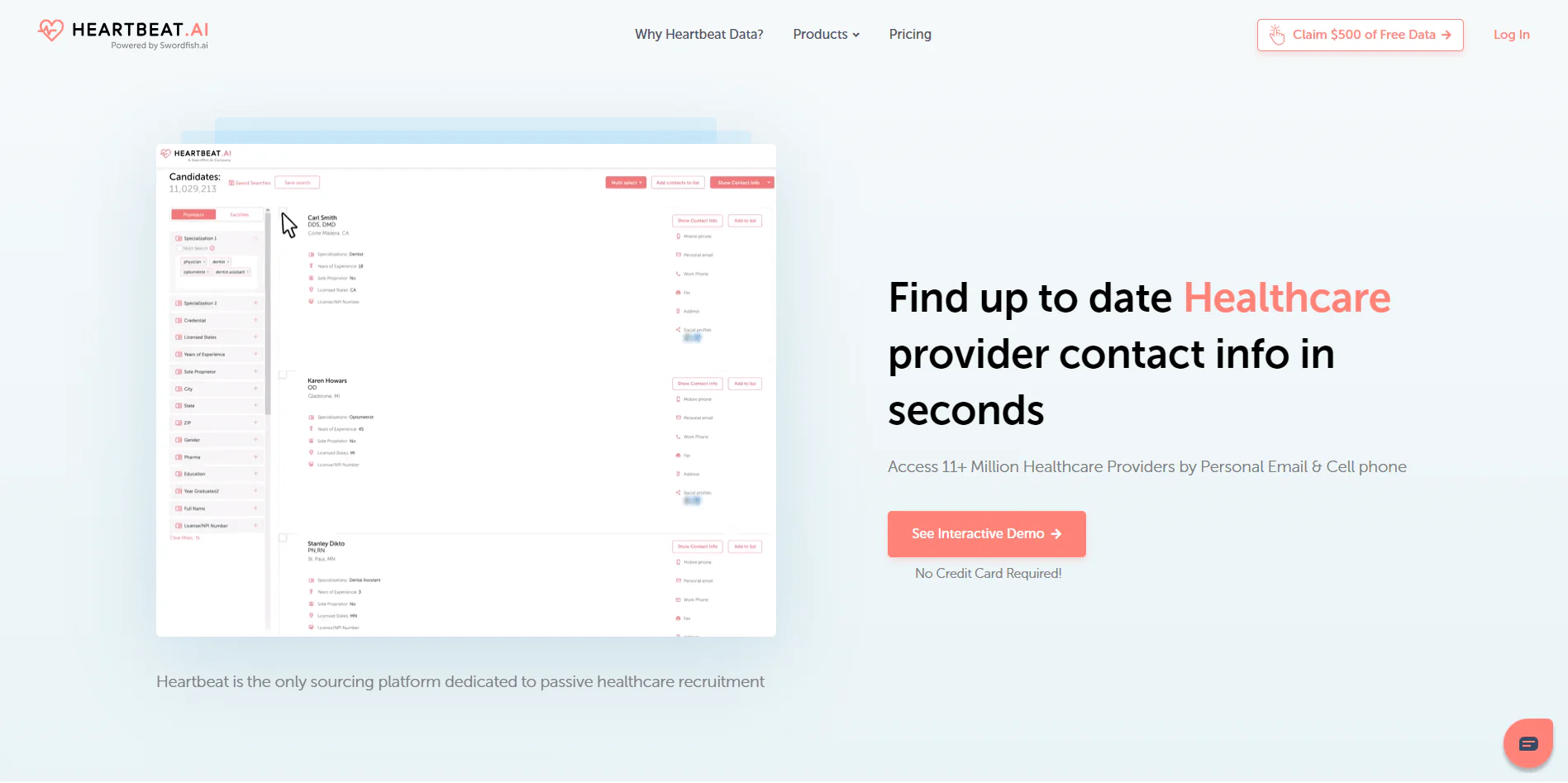
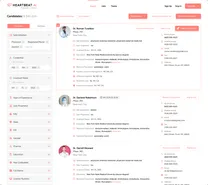
Heartbeat’s nurse data covers the U.S., with the ability to filter down to Idaho specifically. Typical use cases include recruiting, sales outreach, market research, and healthcare communications. Lists can be filtered by specialization, credential, years of experience, and location, and profiles are built to include multiple contact points rather than a single email address.
Data Fields Typically Included
- Nurse name
- Location
- Contact numbers (work, cell, mobile)
- Email address
- Specialization
- Years of experience
- Sole proprietor status
- Licensed states
- License number
- Fax
- Address
 Accuracy & coverage of personal contact info were unrivaled by other platforms… this gives any healthcare recruiter a competitive advantage when engaging hard-to-reach healthcare providers.
Senior Growth Strategist




Nurse Specialties You Can Filter For
Idaho outreach lists can be segmented by specialty and role. Common categories include:
| Nurse Types |
|---|
| Registered Nurses |
| Nurse Practitioners |
| Certified Nursing Assistants |
| Critical Care Nurses |
| Nurse Managers |
| Emergency Nurses |
| Certified Registered Nurse Anesthetists |
| Cardiac Care Nurses |
| Office Based Nurses |
| Licensed Vocational Nurses |
| Acute Care Nurse Practitioners |
| Occupational Health Nurse |
| Ambulatory Care Nurses |
| Adolescent Medicine Nurses |
| Geriatric Nurses |
| Nursing Home Administrators |
| Student Nurses |
| Child Psychiatric Nurse |
| Military Nurses |
| Allergy/Immunology Nurse |
| Public Health Nurses |
| Licensed Practical Nurses |
| Pediatric Nurse Practitioners |
| Perioperative Nurse |
| School Nurses |
| Family Nurse Practitioners |
| Director of Nursing |
| Oncology Nurse |
| Women’s Health Nurse Practitioners |
| Psychiatric-Mental Health Nurse Practitioners |
| Advanced Practice Nurses |
| Neurology Nurses |
| Cardiology Nurse Practitioners |
| HIV/AIDS Nurses |
| IV Certification Nurses |
| Prescriptive Nurse |
| Reproductive Health Nurses |
| Practical/Vocational Nurse |
| Transplant Nurses |
| Camp Nurse |
Available Nurses by State
Heartbeat’s nurse data extends beyond Idaho to cover the rest of the U.S.:
| Nurses By States |
|---|
| Nurses in Alabama |
| Nurses in Alaska |
| Nurses in Arizona |
| Nurses in Arkansas |
| Nurses in California |
| Nurses in Colorado |
| Nurses in Connecticut |
| Nurses in Delaware |
| Nurses in Florida |
| Nurses in Georgia |
| Nurses in Hawaii |
| Nurses in Illinois |
| Nurses in Indiana |
| Nurses in Iowa |
| Nurses in Kansas |
| Nurses in Kentucky |
| Nurses in Louisiana |
| Nurses in Maine |
| Nurses in Maryland |
| Nurses in Massachusetts |
| Nurses in Michigan |
| Nurses in Minnesota |
| Nurses in Mississippi |
| Nurses in Missouri |
| Nurses in Montana |
| Nurses in Nebraska |
| Nurses in Nevada |
| Nurses in New Hampshire |
| Nurses in New Jersey |
| Nurses in New Mexico |
| Nurses in New York |
| Nurses in North Carolina |
| Nurses in North Dakota |
| Nurses in Ohio |
| Nurses in Oklahoma |
| Nurses in Oregon |
| Nurses in Pennsylvania |
| Nurses in Rhode Island |
| Nurses in South Carolina |
| Nurses in South Dakota |
| Nurses in Tennessee |
| Nurses in Texas |
| Nurses in Utah |
| Nurses in Vermont |
| Nurses in Virginia |
| Nurses in Washington |
| Nurses in West Virginia |
| Nurses in Wisconsin |
| Nurses in Wyoming |
How Nurse Contact Data Gets Compiled
Reliable nurse lists come from a defined, repeatable process rather than a one-time scrape:
- Sourcing: data is pulled from multiple healthcare associations, professional networks, and verified platforms rather than a single directory.
- Filtering and matching: automated tools cross-reference records to reduce duplicates and mismatches across data sets.
- Ongoing refresh cycles: because nurses change jobs, retire, or relocate, lists need periodic re-verification rather than a single upload.
- Profile depth: a usable profile includes more than a name and email — specialization, experience, and licensing state all affect whether a contact is actually the right fit for outreach.
- Customization: filtering by specialty, experience level, or geography turns a broad list into something targeted enough to act on.
Evaluating a Nurse Data Provider: What to Check
Not all nurse contact lists are built the same way. Before relying on one for outreach, it helps to check a few things:
- Refresh frequency — how often is the underlying data re-verified against current sources?
- Source transparency — does the provider explain where records come from, even at a high level?
- Filtering depth — can you segment by specialty, credential, experience, and geography, or only by name and state?
- Coverage vs. specificity — a huge national database is only useful if it can be narrowed to the specific Idaho segment you need.
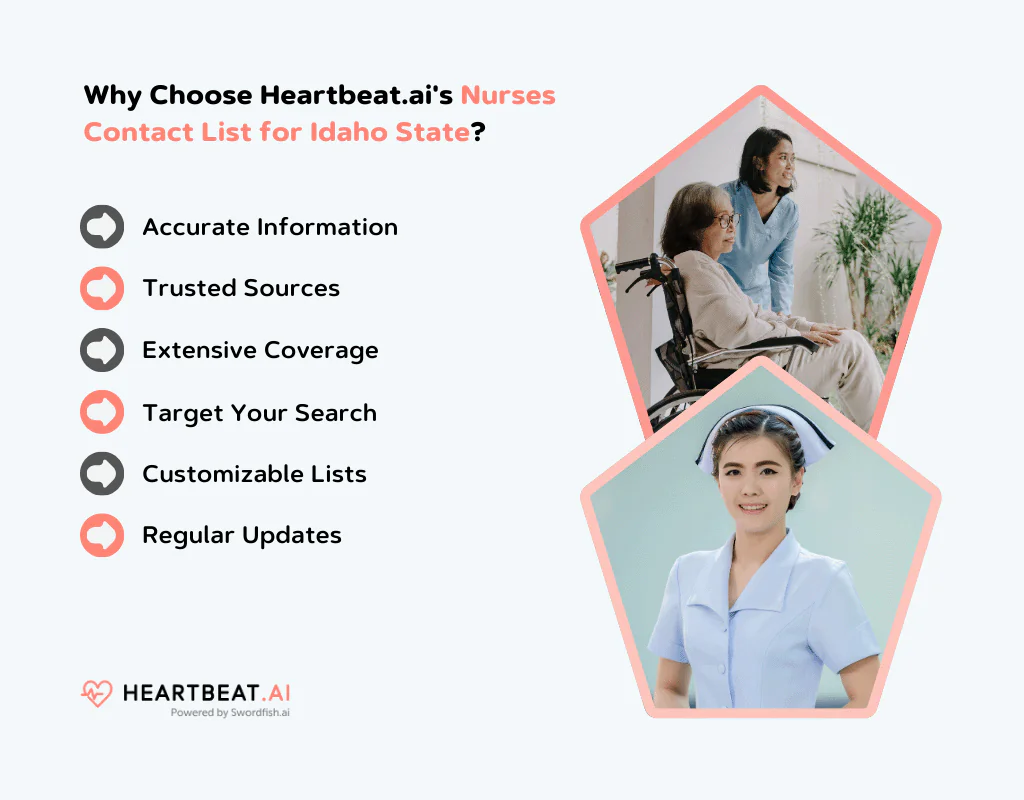
Location-Based Filtering
Idaho’s healthcare needs vary by region — Boise’s metro facilities have different staffing patterns than rural counties near Twin Falls. Filtering by city, town, or zip code helps target outreach to the right geography rather than blasting a statewide list.
Regular Updates
Given how often nurses change roles or locations in a tight labor market, a list that isn’t refreshed regularly loses accuracy quickly. Ask any provider how often records are checked against current sources.
Who Uses This Kind of List
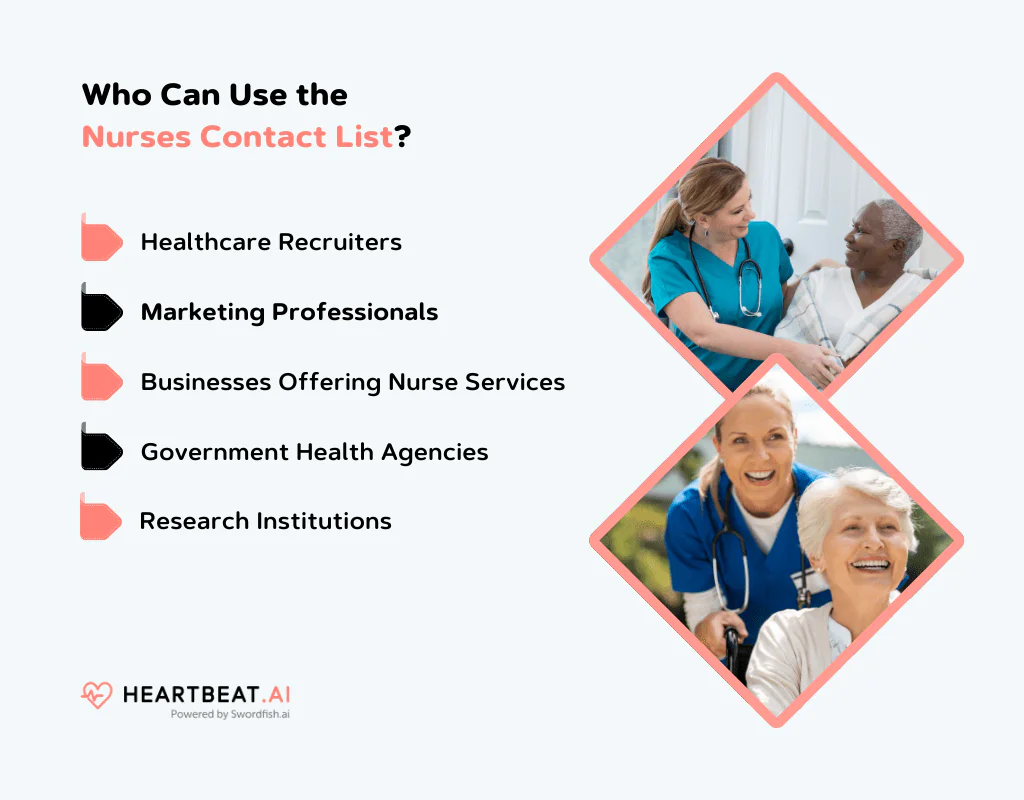
- Healthcare recruiters filling nursing roles who need a faster, more targeted way to identify candidates.
- Marketing professionals running campaigns aimed at nurses for products, education, or services relevant to their specialty.
- Businesses serving nurses directly, such as continuing education or professional development providers.
- Government health agencies coordinating public health outreach or communication with the nursing workforce.
- Research institutions recruiting nurse participants for studies or surveys related to healthcare delivery.
Using Nurse Contact Lists Responsibly and Effectively
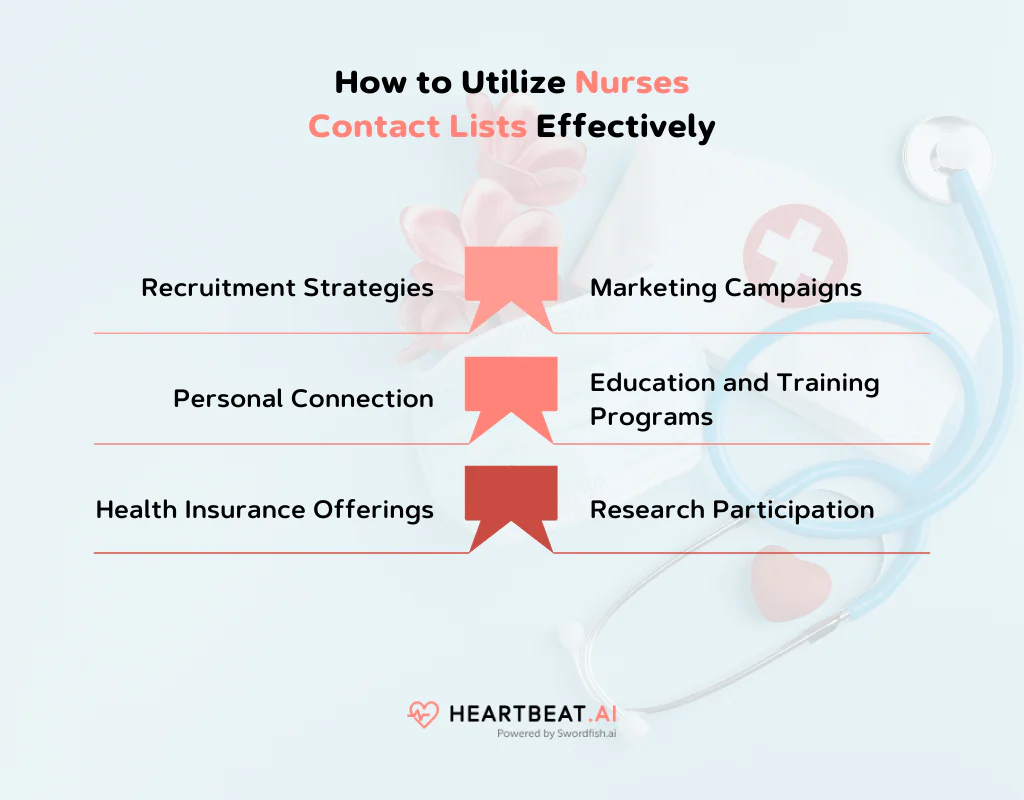
Recruitment Outreach
Generic recruiting messages get ignored. Reference the specific role, the specialty match, and why the opportunity fits the nurse’s background rather than sending a templated blast.
Marketing Campaigns
Messages aimed at nurses should speak to their actual workday — clinical products, scheduling tools, or continuing education framed around real constraints tend to perform better than broad healthcare marketing copy.
Personal or Care-Related Outreach
When contact information is used for personal healthcare coordination, transparency about intent and respect for professional boundaries matters. This is not the place for aggressive sales tactics.
Education and Training Outreach
Continuing education providers should lead with how a program addresses a specific licensing or skill requirement rather than generic professional development language.
Research Participation Requests
Researchers reaching out to nurses for study participation should be explicit about the purpose, time commitment, and potential impact of the research early in the message.
Idaho Board of Nursing
The Idaho Board of Nursing oversees licensing and conduct standards for nurses practicing in the state, and its role is to protect public safety by certifying qualified nurses and addressing unsafe or unprofessional conduct. Anyone verifying a nurse’s credentials before outreach or hiring should check license status directly through the board rather than relying on a contact list alone.
Bottom Line
Idaho’s nursing shortage means the professionals you’re trying to reach are already in demand elsewhere. A contact list that’s accurate, filterable, and regularly refreshed gives recruiters, marketers, and healthcare organizations a real advantage in a market where stale data wastes time you don’t have. Heartbeat.ai provides nurse contact data covering Idaho and the broader U.S., with filtering by specialty, credential, and location.
FAQs
How do I confirm a nurse’s license is current?
Check directly through the Idaho Board of Nursing’s license lookup, using the nurse’s name or license number.
Can I find nurses for in-home care in Idaho?
Yes. Many staffing agencies specialize in home care placements, and contact databases can also be filtered for nurses with relevant home-care experience.
How do I start a collaboration with a nurse found through a contact list?
Reach out directly by email or phone, state your purpose clearly, and outline the specific benefit or objective of working together. Clear, specific outreach performs better than vague introductions.
How do I access Idaho nurse contact data?
Heartbeat.ai provides healthcare contact data, including emails and phone numbers for nurses, physicians, and other licensed providers. See pricing here and sign up for a Heartbeat.ai free trial to access Idaho nurse contact data.