Navigating the healthcare sector in North Carolina can be a daunting task, especially in finding the right healthcare payers. Without the correct and up-to-date contact list, the role of marketers, recruiters, and other healthcare professionals can become significantly more challenging. The lack of valid emailing list in this dynamic industry can cause inaccuracies, missed opportunities, and a lack of effective networking.
This blog will delve deeply into the importance of having a reliable emailing list in the healthcare sector, what you stand to gain as a reader, and ultimately, how Heartbeat stands to be your solution. With Heartbeat, you can optimize your recruitment and networking efforts in the healthcare space by having easy and direct access to the right contacts.
In turn, this helps fast-track your healthcare initiatives.
What’s on this page:
Get the Best Email List of Healthcare payers in north carolina from Heartbeat
Whether you are looking for healthcare professionals, specialists, or surgeons, Heartbeat.ai’s email list can help you find any licensed professional across the United States. You can use customized filters to narrow down the doctor’s profiles you need and reach out to them in seconds.
Dear reader,We want to make sure you have all the information you need about the types of Healthcare payers included in our comprehensive list.
This includes organizations like insurance companies, governmental bodies, and even individuals who finance or reimburse the cost of health services.Our list includes Private Insurance Payers, like commercial health insurance companies. These are organizations like Blue Cross BlueShield, Aetna, and Cigna, to name a few.
It also includes Government Payers such as Medicare and Medicaid, which are federal and state governments, respectively, that pay for healthcare for certain citizens.Moreover, we also include Out-of-Pocket Payers. These are individuals who may be uninsured, or who choose to pay for healthcare services directly out of their pocket. Added to these, Self-Payers or Self-Funded Employer Plans are also part of our list.
These are employers who fund their own employee health benefit plans.We’ve built this comprehensive list to equip you with a wealth of valuable contacts in the healthcare payer landscape.
And, if you’re looking for something specific that isn’t provided on our list, we invite you to contact us at Heartbeat.ai. Our team at Heartbeat.ai is eager and ready to assist you. Not only can we help clarify any questions about our Healthcare Payers list, but we can also provide guidance on how to effectively use this information to assist in growing your business.Thank you for considering Heartbeat.ai.
We hope to hear from you soon to discuss how we can further help you expand your network and succeed in your healthcare-related cause or business.Best Regards,The Heartbeat.ai Team.
Overview of Healthcare Industry in north carolina State
North Carolina’s healthcare system is highly diverse with numerous healthcare payers. The state encompasses a variety of payers including Blue Cross and Blue Shield of North Carolina, UnitedHealthcare, Aetna, and Cigna.
Furthermore, it includes government-sponsored programs such as Medicare, Medicaid, and NC Health Choice. The state’s healthcare facilities vary greatly from renowned research hospitals like Duke University Hospital and Wake Forest Baptist Medical Center, to local community clinics.
The variety in facilities helps ensure accessibility to quality healthcare, addressing rural-urban disparities. Moreover, these key facilities contribute substantially to state’s healthcare provision by facilitating advancements in medicine through research, providing high quality patient care and spearheading health initiatives.
Hence, despite the challenges in delivering equitable healthcare, North Carolina’s multi-payer model and its varied healthcare facilities have a substantial impact on improving health outcomes for a diverse population.
Importance of Finding Healthcare payers Accurate Contact Information
Accurate contact information for healthcare payers is vital for personal needs, healthcare recruitment, and networking for several reasons. For individuals, it aids in resolving issues regarding payment, coverage, and reimbursement effectively. It allows one to reach out directly to the appropriate department or personnel, saving time and avoiding misunderstanding or miscommunication.
From a healthcare recruitment standpoint, accurate contact information is essential in properly communicating job offers, conducting interviews, requisition approvals, and regular updates with candidates. Miscommunication can lead to loss of potential candidates or delay in the hiring process, which can negatively impact patient care.When it comes to networking, accurate contact info is critical to establish interpersonal relationships within the healthcare industry.
It’s key for sharing knowledge, job opportunities, and innovative ideas.
Accurate information ensures seamless communication, fostering relationships that aid career growth.Overall, whether it is for personal needs, recruitment or networking purposes, having accurate contact information of healthcare payers plays a pivotal role. Not only does it improve communication efficiency, but it also promotes smooth operations, reducing errors and misunderstandings that could otherwise impede the delivery of quality healthcare.
Challenges in Finding Healthcare payers in north carolina State
Finding healthcare payers in North Carolina state presents a considerable challenge due to several factors.
First, the healthcare payment system is complex and multifaceted, involving numerous players such as insurance companies, government programs, employers, and individuals. Additionally, privacy laws and varying data reporting standards further complicate the identification and tracking of healthcare payers. Fortunately, the application of technology and databases can help overcome these challenges.
Technological advancements offer efficient solutions for collecting, managing, and analyzing massive amounts of data.
Advanced databases enable the organization and storage of various types of payer data, including their geographical location, payment plans, and history, which can streamline the process of finding the right payers.
Meanwhile, data analytic tools can help identify patterns and trends within the stored data, which is beneficial for payer identification and segmentation.Furthermore, digital networking platforms can provide an avenue to connect healthcare service providers with potential payers. These platforms can facilitate communication and transactions, making it easier for healthcare providers to find and collaborate with payers. Moreover, the rise of AI and machine learning provides a promising solution.
These breakthrough technologies can be utilized to automate data collection from multiple sources, identify potential payers based on predefined criteria, and even predict future trends in payer behavior. In summary, the use of technology and databases can revolutionize the process of finding healthcare payers in North Carolina state.
It counteracts the challenges faced by offering tools capable of handling large amounts of data, improving connectivity, and providing insights into the complex healthcare payer ecosystem.
About Heartbeat Healthcare payers Contact Lists: What You Will Get
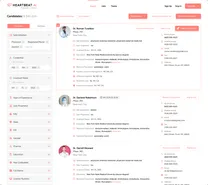
Heartbeat AI infographic database is a dynamic tool that healthcare payers can utilize to address the challenges discussed in the prior section.
It offers comprehensive payer contact lists with meticulously organized information, which can be utilized to streamline communication processes and deliver coordinated healthcare services across various states in the US. The Heartbeat database provides detailed payer profiles that include critical data points such as names, contact numbers, email addresses, and locations.
Additionally, these lists offer insights into the specialization of payers, which can be critical for decision-making and strategic planning, particularly in healthcare organizations.
In terms of addressing challenges, these features play a pivotal role.
For instance, in states where miscommunication or lack of coordination is an issue, the availability of accurate and comprehensive contact information can significantly improve communication efficacy. By having poignant information at their disposal, healthcare providers can better manage their payer relations, streamline operations, and ultimately deliver better patient care/services.
This is just a glimpse of how the Heartbeat database is revolutionizing healthcare payer contact lists.
- Healthcare payers Name
- Location
- Contact Numbers (Work, Cell, Mobile)
- Email Address
- Specialization
- Years of Experience
- Sole Proprietor Status
- Licensed States
- License Number
- Fax
- Address
Available Healthcare payers in Our Contact List by States
“Explore our comprehensive email list detailing diverse healthcare payers across various US states.”
How Do We Compile Our Data to Create a Contact List of Healthcare payers in the north carolina State?
To curate the Heartbeat.ai’s Healthcare Payer contact list, we aggregated information from 100% of American healthcare providers. This process involved securing their matching cell phone and personal email information, substantially reducing the time needed to hire. Sourced from over 200 official, private, and public platforms, we provide the most comprehensive and up-to-date healthcare provider data.
Our contact list breaks down into 11 million health care professionals, 8.8 million direct cell phones, 9.3 million personal emails, and 6 million direct dials. Our data’s quality is due to our predictive modelling technique that accurately predicts a provider’s contact information.
Consequently, you can expect up to 84% and 92% accuracy on cell phone numbers and personal emails, respectively. These strategies and considerations have allowed us to create and maintain a robust and reliable healthcare payer contact list.
Why Choose Heartbeat.ai’s Healthcare payers Contact List for north carolina State?
Heartbeat.ai presents a plethora of benefits bolstered by its exceptional features and extensive database. The tool aggregates the information of all American healthcare providers, greatly expediting your hiring process by reducing your time to hire by a tenfold.
With Heartbeat.ai, you benefit from unparalleled access to the world’s largest databank of healthcare provider data, including their direct cell phone and personal email details. This comprehensive coverage is acquired through Heartbeat’s expansive network, utilizing over 200 official, private, and public sources to provide the most up-to-date contact information available. The tool prides itself on swift and accurate access to healthcare providers with impressive stats; 11 million USA Health Care Professionals, 8.8 million Direct Cell Phone Numbers, 9.3 million Personal Email Addresses, and 6 million Direct Dials.
Heartbeat’s predictive modelling feature augments its reliability, confidently boasting an 84% accuracy rate on cell phone numbers and 92% on personal emails. This superior accuracy and expansive database set Heartbeat.ai apart in the market as a leading tool for healthcare industry connections.
Who Can Use the Healthcare payers Email List?
Email contact lists can be used by various groups for personal and business requirements. These include sales and marketing professionals, pollsters, business owners, non-profit organizations, event planners, and political campaigns. Further, research firms, PR agencies, and e-commerce companies can also utilize the list.
Freelancers, recruiters, and job seekers might be another set too.
For personal needs, individuals may use email lists for sending out invitations, disseminate information, or promoting personal endeavors. Finally, illegal entities, such as spammers and phishing scammers can misuse these lists. Therefore, it’s essential to protect email contact lists from unauthorized usage.
How to Utilize Healthcare payers Email Lists Effectively?
The Healthcare payers contact lists can be a valuable tool for various needs. For personal use, they can help fulfill your healthcare requirements by reaching out to relevant professionals. In marketing, they can be used to target specific professionals, tailoring campaigns to specific healthcare needs and trends.
For recruitment needs, they can enable direct access to potential healthcare candidates, thereby streamlining the talent acquisition process. They can also service personal endeavors, such as research or networking.While communicating with healthcare professionals, the key is to be respectful, clear, and concise. It’s essential to understand their busy schedules so time your calls or emails appropriately.
Always ensure your messages address their needs and interests, while highlighting the value they can gain from the interaction. Lastly, compliance with data protection laws and maintaining confidentiality is vital while using their contact details.
Conclusion
The article highlights the significant role of Heartbeat.ai in providing extensive and accurate contact information of Healthcare payers across North Carolina.
It sheds light on the complexities in locating such data and how this versatile platform addresses this challenge. This comprehensive contact list by Heartbeat.ai not only enhances healthcare industry interactions in the state but also fulfills personal needs and recruiting efforts. An essential tool for anyone looking to connect with North Carolina’s healthcare payers sector.
Frequently Asked Questions
What are some of the major healthcare payers in North Carolina?
Some major healthcare payers in North Carolina include Blue Cross Blue Shield of North Carolina, Aetna, Cigna, and UnitedHealthcare.
How do healthcare payers in North Carolina determine coverage and reimbursement?
Healthcare payers in North Carolina typically determine coverage and reimbursement based on factors such as medical necessity, provider contracts, and member eligibility.
What types of healthcare plans do payers in North Carolina offer?
Healthcare payers in North Carolina offer a variety of plans, including HMOs, PPOs, EPOs, and high-deductible health plans. They may also offer Medicare and Medicaid plans.