What’s on this page:
Key takeaways
- Alaska’s distances and dispersed communities can complicate recruitment for specialty nursing roles.
- A targeted contact list may help recruiters focus outreach by specialty, state, and license status.
- Contact records can become outdated, so verify key details before high-stakes outreach.
- Recruiters should tailor messages to the role and follow applicable privacy and communications requirements.
- A contact database is a starting point, not a guarantee of accurate or complete matches.
Last updated: August 30, 2026
Recruiting allergy/immunology nurses in Alaska can involve logistical challenges, including long distances between facilities, a small pool of specialty-trained nurses, and limited in-state training pipelines. A current, verified contact list may help narrow the search, but its usefulness depends on data accuracy and thoughtful outreach.
This guide covers what makes Alaska’s allergy/immunology nursing workforce hard to reach, why contact accuracy matters more here than in denser states, and how a healthcare contact database like Heartbeat fits into a realistic recruitment or outreach workflow.
Get an Email List of Allergy/Immunology Nurses in Alaska from Heartbeat
Heartbeat.ai says it maintains contact data on licensed healthcare professionals across the United States, including nursing specialties such as allergy/immunology. Recruiters and outreach teams can use its specialty, state, and license-status filters, according to the company, to build a targeted list rather than search facility directories individually.
Healthcare Landscape in Alaska
Alaska’s healthcare system relies on a mix of public and private facilities spread across an unusually large and sparsely populated state. Allergy/immunology nurses working here often deal with region-specific environmental allergens, and their role matters more in areas where specialist physicians are scarce.
Examples of major facilities include Alaska Regional Hospital in Anchorage, Mat-Su Regional Medical Center in Palmer, and Fairbanks Memorial Hospital. These facilities serve their local areas; their role in allergy and immunology services should be confirmed directly with each organization.
Why Accurate Contact Information Matters
Outdated or incorrect contact details create real friction in three areas:
- Patient access: Families trying to reach a nurse about an allergy or immune-related concern need a working number or email, not a disconnected line.
- Recruitment: A wrong phone number or expired email can stall a hiring cycle for weeks, which matters more in a state with a thin specialist pipeline.
- Professional networking: Referrals, consultations, and collaborative research depend on being able to actually reach the right person the first time.
In a low-density state like Alaska, there’s less redundancy in the system — losing time on bad contact data has a bigger relative impact than it would in a metro area with dozens of comparable specialists nearby.
Challenges Specific to Alaska
Alaska’s geography can make recruitment challenging. Long distances, limited road and transit infrastructure in some areas, and seasonal weather may affect how easily specialized nurses can be placed or retained outside major hubs. The availability of in-state nursing education and specialty training options can also influence where aspiring specialists train and whether they return.
Two tools help offset this:
- Telehealth: Remote consultation allows allergy/immunology nurses to support patients in areas without a specialist on-site, extending the reach of a small workforce.
- Contact databases: A well-maintained list of nurses currently licensed or willing to work in Alaska lets health systems and recruiters run targeted outreach instead of cold-searching directories one facility at a time.
What a Heartbeat Contact Record Typically Includes
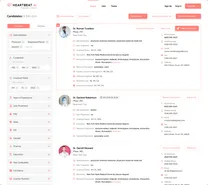
A standard record in Heartbeat’s healthcare provider database is built to give recruiters enough context to qualify a lead before making contact:
- Allergy/immunology nurse name
- Location (city/state)
- Contact numbers (work, cell, mobile)
- Email address
- Specialization
- Years of experience
- Sole proprietor status
- Licensed states
- License number
- Fax
- Address
Allergy/Immunology Nurse Contact Lists by State
| Allergy/immunology nurse by state |
|---|
| Allergyimmunology nurse in Alabama |
| Allergyimmunology nurse in Alaska |
| Allergyimmunology nurse in Arizona |
| Allergyimmunology nurse in Arkansas |
| Allergyimmunology nurse in California |
| Allergyimmunology nurse in Colorado |
| Allergyimmunology nurse in Connecticut |
| Allergyimmunology nurse in Delaware |
| Allergyimmunology nurse in Florida |
| Allergyimmunology nurse in Georgia |
| Allergyimmunology nurse in Hawaii |
| Allergyimmunology nurse in Idaho |
| Allergyimmunology nurse in Illinois |
| Allergyimmunology nurse in Indiana |
| Allergyimmunology nurse in Iowa |
| Allergyimmunology nurse in Kansas |
| Allergyimmunology nurse in Kentucky |
| Allergyimmunology nurse in Louisiana |
| Allergyimmunology nurse in Maine |
| Allergyimmunology nurse in Maryland |
| Allergyimmunology nurse in Massachusetts |
| Allergyimmunology nurse in Michigan |
| Allergyimmunology nurse in Minnesota |
| Allergyimmunology nurse in Mississippi |
| Allergyimmunology nurse in Missouri |
| Allergyimmunology nurse in Montana |
| Allergyimmunology nurse in Nebraska |
| Allergyimmunology nurse in Nevada |
| Allergyimmunology nurse in New hampshire |
| Allergyimmunology nurse in New jersey |
| Allergyimmunology nurse in New mexico |
| Allergyimmunology nurse in New york |
| Allergyimmunology nurse in North carolina |
| Allergyimmunology nurse in North dakota |
| Allergyimmunology nurse in Ohio |
| Allergyimmunology nurse in Oklahoma |
| Allergyimmunology nurse in Oregon |
| Allergyimmunology nurse in Pennsylvania |
| Allergyimmunology nurse in Rhode island |
| Allergyimmunology nurse in South carolina |
| Allergyimmunology nurse in South dakota |
| Allergyimmunology nurse in Tennessee |
| Allergyimmunology nurse in Texas |
| Allergyimmunology nurse in Utah |
| Allergyimmunology nurse in Vermont |
| Allergyimmunology nurse in Virginia |
| Allergyimmunology nurse in Washington |
| Allergyimmunology nurse in West virginia |
| Allergyimmunology nurse in Wisconsin |
| Allergyimmunology nurse in Wyoming |
How Heartbeat Compiles Its Data
Heartbeat says it aggregates contact information from official, private, and public sources and updates records on an ongoing basis. For a small specialty pool, changes in employment and contact details can make it important to verify records before relying on them.
Heartbeat says it uses predictive modeling alongside sourced data to fill gaps and improve match confidence. No contact database can guarantee complete accuracy at any given moment, so treat a list as a starting point and verify records before high-stakes outreach.
Who Uses Allergy/Immunology Nurse Contact Lists?
Common uses for these lists include recruiting for specialty roles, coordinating professional referrals, promoting relevant products or continuing education, and building research networks. Users are responsible for following applicable privacy and communications laws and requirements, including rules for consent and opt-outs in email and phone outreach.
A Practical Outreach Workflow
- Define the specialty and location scope — narrow to allergy/immunology nurses specifically, not general nursing staff, and set the geographic boundary (statewide vs. specific facility catchment areas).
- Pull and verify the list — cross-check a sample of records against license status or facility directories before a full outreach push.
- Segment by role or seniority — a Registered Nurse specializing in allergy/immunology has different career motivators than a Nurse Practitioner or Clinical Nurse Specialist in the same field.
- Personalize the first message — reference the specific role, facility, or research interest rather than sending a generic template.
- Follow up on a reasonable timeline — healthcare professionals often have limited windows to respond; a single well-timed follow-up tends to outperform repeated messages.
Limitations to Keep in Mind
Contact databases are a starting point, not a guarantee. Specialty nursing pools in low-population states are small, so even an accurate list may return a modest number of qualified matches. Data can also lag behind real-world job changes, license renewals, or relocations, so periodic re-verification is worth building into any recruitment cycle rather than treating a single export as permanent.
Conclusion
Recruiting or connecting with allergy/immunology nurses in Alaska can be challenging because of geography, workforce size, and training pipeline limits. A verified, regularly updated contact list may provide a useful starting point, but records should be checked and outreach handled with care.
Frequently Asked Questions
What does an allergy/immunology nurse in Alaska do?
An allergy/immunology nurse assesses and supports patients with allergic and immunological conditions, assists with treatment administration, and educates patients on managing symptoms and triggers.
What qualifications does an allergy/immunology nurse typically need?
Most allergy/immunology nurses hold a nursing degree, an active Registered Nurse (RN) license, and additional training or certification specific to allergy and immunology care.
What conditions do allergy/immunology nurses commonly work with?
Common conditions include seasonal and food allergies, asthma, eczema, and autoimmune disorders such as lupus and rheumatoid arthritis.