What’s on this page:
Key takeaways
- Evaluate a specialist contact list for data accuracy, refresh cadence, sourcing transparency, and segmentation options.
- For regional campaigns, check whether the provider supports state-level filtering.
- Ask vendors how they verify email deliverability and remove duplicate or outdated records.
- Confirm that the provider’s data practices and your planned outreach comply with applicable requirements.
- Heartbeat reports that its broader healthcare database includes 8.8 million direct cell phone numbers and 9.3 million personal email addresses.
Last updated: August 28, 2026

Reaching infectious disease specialists directly can be challenging. Providers in this specialty work across hospitals, health systems, and academic centers, and published contact details can become outdated. For recruiting, medical device sales, clinical trial staffing, or CME outreach, stale data may lead to bounced emails and wasted budget.
This page explains what an infectious disease specialist contact list may include, how such data is commonly compiled and verified, and what to check before relying on a vendor’s list. Heartbeat is one option for sourcing this data; the guidance below also applies when evaluating other providers.
What’s Included in an Infectious Disease Specialist Email List

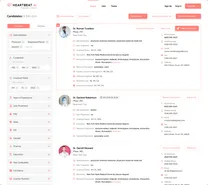
Heartbeat says it maintains a database of infectious disease specialists across the United States for outreach and recruiting workflows.
- Sizeable contact pool: Names and direct contact details for specialists across the country, rather than a handful of major metros.
- Refreshed contact data: Records are checked and updated on an ongoing basis rather than collected once and left static.
- Segmentation options: You can filter by location or specialty focus instead of working through one undifferentiated list.
- CRM-ready format: Data is structured to drop into existing outreach tools, alongside details like practice location and specialization.
Typical Data Fields
- Specialist name
- Location and address
- Contact numbers (work, cell, mobile)
- Email address
- Specialization
- Years of experience
- Sole proprietor status
- Licensed states and license number
- Fax number
 Accuracy & coverage of personal contact info were unrivaled by other platforms… this gives any healthcare recruiter a competitive advantage when engaging hard-to-reach healthcare providers.
Senior Growth Strategist





Why Data Accuracy Matters for This Specialty
Outdated contact lists can cost more than the subscription fee. Bounced emails and disconnected numbers mean time spent chasing dead ends, and a high email bounce rate can harm sender reputation.
- Better targeting: Accurate lists mean you’re reaching specialists who actually match your criteria, not a stale record from a provider who’s changed roles.
- Higher response rates: Messages that land in an active, monitored inbox have a real chance of being read.
- Lower wasted spend: Fewer undeliverable emails means your outreach budget goes toward actual conversations, not cleanup.
- Room for personalization: Detailed records let you tailor messages by location or subspecialty instead of sending one generic blast.
- Fewer bounce-backs: Current contact data keeps your sending domain healthier over time.
Specialist Categories You’ll Find in an Infectious Disease Database
Infectious disease is a broad specialty, so a useful list should let you filter by subspecialty rather than treating all contacts as one group.
| Specialization |
|---|
| Infection Control Specialists |
| Infectious Disease Epidemiologists |
| Infectious Disease Nurses |
| General Infectious Disease Specialists |
| Pediatric Infectious Disease Specialists |
| Bacterial Infectious Disease Specialists |
| Transplant Infectious Disease Specialists |
Infectious Disease Specialists by State
For regional outreach, look for a provider that lets you filter by state instead of requiring you to buy a national list and sort it yourself.
| State Page |
|---|
| Alabama |
| Alaska |
| Arizona |
| Arkansas |
| California |
| Colorado |
| Connecticut |
| Delaware |
| Florida |
| Georgia |
| Hawaii |
| Idaho |
| Illinois |
| Indiana |
| Iowa |
| Kansas |
| Kentucky |
| Louisiana |
| Maine |
| Maryland |
| Massachusetts |
| Michigan |
| Minnesota |
| Mississippi |
| Missouri |
| Montana |
| Nebraska |
| Nevada |
| New Hampshire |
| New Jersey |
| New Mexico |
| New York |
| North Carolina |
| North Dakota |
| Ohio |
| Oklahoma |
| Oregon |
| Pennsylvania |
| Rhode Island |
| South Carolina |
| South Dakota |
| Tennessee |
| Texas |
| Utah |
| Vermont |
| Virginia |
| Washington |
| West Virginia |
| Wisconsin |
| Wyoming |
How This Type of Data Gets Compiled
A specialty contact database may be compiled using steps such as:
- Sourcing from multiple channels: Pulling from licensing boards, professional directories, and industry partners rather than one single feed reduces blind spots.
- Verifying deliverability: Each email should go through a validation step before it’s added to a list you’re paying for.
- Deduplication and cleanup: Removing duplicate or outdated records regularly keeps a database from bloating with dead contacts.
- Ongoing refreshes: Providers change jobs and affiliations often enough that a list needs recurring maintenance, not a one-time build.
- Tagging by specialization and experience: This is what makes segmentation possible later, instead of treating every specialist as interchangeable.
What Heartbeat Offers for This Specialty

Contact Data
Heartbeat reports 84% precision on cell phone numbers and 92% on personal emails, drawn from a pool of 11 million healthcare professionals in the US.
Prospecting Tools
The Heartbeat Prospector is built to find contacts as you browse, and the Chrome extension extends that to sites like LinkedIn and Facebook.
Coverage
Heartbeat reports that its broader healthcare database includes 8.8 million direct cell phone numbers and 9.3 million personal email addresses, with filtering available for specialties such as infectious disease.
Compliance
Heartbeat states that its data collection and distribution practices are designed to address applicable privacy and compliance standards. Ask the provider which standards apply to your intended use and how it meets them.
Refresh Cadence
Heartbeat says records are updated on an ongoing basis rather than left static after initial collection. Ask what this means in practice, including how frequently records are checked.
What to Check Before You Buy Any Specialist Email List

Accuracy and Legal Compliance
Verify that email collection practices meet the standards outlined in the CAN-SPAM Act. Outdated or improperly sourced data wastes budget and creates legal exposure.
Consent and Privacy
Check how the provider handles consent, especially in light of frameworks like GDPR and HIPAA where applicable. Unsolicited outreach that ignores consent norms damages your sender reputation over time.
Relevance to Your Goals
A list segmented by subspecialty may be more useful than a broad, undifferentiated one when your campaign targets a narrower group, such as transplant infectious disease or pediatric ID.
Update Frequency
Ask how often records are refreshed and what the refresh process includes. Providers may change roles and institutions, so contact data can lose value if it is not maintained.
Transparency on Sourcing
Ask vendors to explain their data sources and collection methods so you can assess whether the list is appropriate for your intended use.
Who Typically Uses This Kind of List

Healthcare Providers and Hospitals
Healthcare providers and hospitals may use these lists to identify contacts for referrals, second opinions, or care coordination for patients with complex infections.
Medical Researchers and Academics
Medical researchers and academics may use these lists to contact potential study participants or research collaborators, or to share findings.
Pharmaceutical and Medical Equipment Companies
Pharmaceutical and medical equipment companies may use these lists to introduce treatments, diagnostics, or devices to relevant specialists.
Continuing Medical Education Providers
Continuing medical education providers may use these lists to promote workshops, seminars, and courses relevant to infectious disease practice.
Health Policy Analysts and Non-Profits
Used to share public health guidance or coordinate on prevention initiatives, including work related to infection control.
Getting More Out of the List Once You Have It

- Know your audience first: Understand what infectious disease specialists actually care about before you write a single subject line.
- Set a clear objective: Recruiting, awareness, trial enrollment, and product promotion all call for different messaging.
- Write for the specialty: Generic pharma-marketing copy tends to underperform with clinicians who can spot filler immediately.
- Personalize where it matters: Referencing someone’s subspecialty or location takes minimal effort and noticeably improves response.
- Use email for relationship-building, not just blasts: Invitations to webinars or collaborative projects can outperform pure sales messages.
- Track and adjust: Open rates, click-throughs, and reply rates tell you what’s working faster than guesswork.
The Bottom Line
An infectious disease specialist contact list is only as useful as its accuracy and maintenance. Before choosing a source, check its refresh process, ask how consent and compliance are handled, and confirm that its segmentation options fit your targeting needs. Stale or poorly sourced data can waste budget and harm sender reputation.
FAQs
How can I benefit from using an infectious disease specialist email list in my marketing campaigns?
A targeted list increases the odds your message reaches professionals who are actually relevant to your product or service, which tends to translate into better engagement than a generic healthcare list.
Are the contacts in the infectious disease specialist email list regularly updated to ensure accuracy?
Reputable providers refresh their records on an ongoing basis. Ask any vendor directly about their update cadence before committing.
Can I use the infectious disease specialist email list for recruiting qualified professionals in the field?
Yes. Recruiters use these lists to reach specialists directly rather than relying solely on job boards, which can speed up filling specialized roles.
Can I customize the infectious disease specialist email list based on specific criteria or geographical location?
Most providers, including Heartbeat, allow filtering by state, subspecialty, or other criteria so you’re not buying more data than you need.