What’s on this page:
Key takeaways
- A hand surgeon email list can include contact details, location, specialty information, and practice details; available fields vary by provider.
- Check the provider’s verification cadence and ask how recently the records were reviewed.
- Filtering by geography, area of focus, or practice type can help make outreach more relevant.
- Review data sourcing and applicable email and privacy requirements before using a list.
- Remove bounced addresses from use and honor opt-out requests in accordance with applicable requirements.
Last updated: August 28, 2026
A hand surgeon email list is a database of contact details for professionals who treat hand conditions. Reaching them by email can be difficult: titles vary, many surgeons split time between hospital systems and private practice, and generic physician databases may group orthopedic and plastic surgery specialists without identifying who treats hand conditions. A specialty-focused list can make that search more targeted.
This guide explains what a hand surgeon email list may contain, how providers describe compiling and maintaining one, who uses this data for outreach, and what to check before you buy.
What a Hand Surgeon Email List Should Include
A usable list should include more than a name and email address. Depending on the provider and your needs, look for:
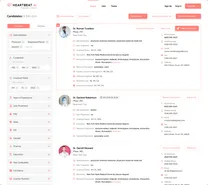
- Hand surgeon name and practice location
- Contact numbers (office, mobile, direct line where available)
- Email address
- Specialization within hand surgery
- Years of experience
- Sole proprietor or group practice status
- Licensed states and license number
- Fax and mailing address
Heartbeat’s hand surgeon data pulls from its broader healthcare provider database, which the company describes as covering 11 million USA healthcare professionals. You can filter by state or work with a nationwide list depending on your campaign.
Why a Verified List Matters More Than Volume
A large list of stale or mismatched contacts can be less useful than a smaller, accurate one. A properly maintained list can support:
- Fewer bounces and spam flags: Outdated addresses hurt sender reputation, which affects deliverability for every campaign you run afterward, not just the one that bounced.
- Faster response cycles: Reaching a surgeon’s actual working inbox, rather than a generic practice alias, increases the odds someone reads and responds.
- Cleaner segmentation: Knowing a surgeon’s subspecialty (carpal tunnel, tendon repair, thumb arthritis, etc.) lets you tailor outreach instead of sending one generic pitch to everyone.
- Lower compliance risk: Lists built from questionable scraping methods increase the odds of hitting invalid or repurposed addresses, which raises legal exposure under email marketing law.
Hand Surgeon Categories You’ll Typically Find
Hand surgery covers a range of areas of focus. A well-segmented list should let you target by area rather than treating all hand surgeons as interchangeable.
| Hand Surgeon Categories |
| Carpal Tunnel Surgeon |
| Trigger Finger Surgeon |
| Ganglion Surgeon |
| Dupuytren’s Surgery and Injection |
| Tendon Injury Surgeon |
| Thumb Arthritis Surgeon |
| Fracture |
Available by State
Coverage varies by geography. Before committing to a nationwide purchase, check whether the provider can filter the list to the states you need.
How This Kind of Data Gets Compiled
Provider databases may be compiled in different ways. Ask about the sourcing, segmentation, verification, and privacy practices behind the data:
- Multiple sourcing channels: Heartbeat draws from 200 sources spanning official, private, and public records rather than relying on a single directory.
- Specialty-specific segmentation: Rather than treating hand surgery as a subset of orthopedics or plastic surgery, records get tagged so subspecialty filtering is possible.
- Ongoing verification: Emails and phone numbers get periodically re-checked, since physicians switch practices, retire, or change email domains fairly often.
- Privacy-law alignment: Reputable providers structure their data collection and list use to align with laws such as GDPR, CCPA, and the CAN-SPAM Act. Note that CAN-SPAM itself operates on an opt-out model rather than requiring prior consent for commercial email, but it still requires accurate sender information and a working unsubscribe mechanism, and the FTC requires opt-out requests to be honored within 10 business days.
What to Check Before You Buy a List
Before purchasing, ask the provider these questions to assess the list and its maintenance:
How recently was the data verified?
Physicians may change practices, retire, or shift specialties. Ask for a specific update cadence rather than relying on a vague claim that the data is "regularly updated."
Does it comply with relevant privacy law?
Ask how the provider’s data collection and use practices address CAN-SPAM and any privacy laws that apply to your campaign, including CCPA where relevant.
Can you segment by subspecialty and geography?
A one-size list can waste effort. Filtering by state, area of focus, or practice type can help you build more relevant campaigns instead of sending the same message to everyone.
What happens after opt-outs?
Under CAN-SPAM, once someone opts out, their address cannot be sold or transferred, even as part of a mailing list. Make sure your outreach process respects this, regardless of where the original data came from.
Who Actually Uses This Kind of List
- Healthcare facilities and recruiters sourcing hand surgeons for open positions, locum coverage, or project-based collaboration.
- Medical device and equipment companies marketing surgical instruments, implants, or rehabilitation tools specific to hand surgery.
- Pharmaceutical companies promoting medications or surgical supplies relevant to hand procedures.
- Researchers and academic teams recruiting participants or gathering input for studies related to hand surgery.
Getting More Out of the List Once You Have It
A verified contact is a starting point, not the finish line. These practices can help make outreach more targeted and responsible:
- Segment before you send. A campaign about carpal tunnel release instruments has no business going to a Dupuytren’s specialist. Use the subspecialty field to split your sends.
- Keep messages short and specific. Surgeons get pitched constantly. A recruitment or product email that gets to the point in the first two sentences performs better than one buried in boilerplate.
- Track bounces and update your suppression list. Bounced or opted-out addresses should come out of rotation immediately, both for compliance and for your own sender reputation.
- Don’t treat one list as permanent. Re-verify or refresh your data periodically rather than running the same file for years.
A hand surgeon email list works best as one part of a broader outreach process, not as a shortcut that replaces follow-up, segmentation, and compliance work. Before using a provider’s list, verify its accuracy and the provider’s data practices rather than assuming that the same standards apply across every specialty.
FAQs
What is a hand surgeon email list, and how can it benefit my business?
It’s a collection of verified contact details for hand surgery professionals, useful for marketing, recruitment, and collaboration outreach within the specialty.
How often should a hand surgeon email list be updated?
Look for providers with a defined, regular verification cadence. Contact data degrades quickly as physicians change practices or retire, so a list that hasn’t been checked in over a year is a risk.
Can a hand surgeon mailing list be used for recruitment?
Yes. Hospitals, healthcare systems, and staffing agencies commonly use these lists to reach hand surgeons directly about open positions or locum opportunities.
Does using this kind of list require recipient consent?
CAN-SPAM does not require prior opt-in consent for commercial email, but it does require accurate sender identification and a functioning opt-out mechanism, and opt-out requests must be honored promptly.