What’s on this page:
Key takeaways
- Psychologist email lists may include contact, location, specialty, and licensing details, but fields and coverage vary by provider.
- Ask how records are sourced, verified, and refreshed; verification does not guarantee that an address is active or deliverable.
- Segment outreach by relevant criteria such as location or specialty, and tailor messages to the intended audience.
- Check applicable privacy, marketing, and professional requirements before using contact data.
- Use a psychologist contact list for professional outreach, not as a patient contact list.
Last updated: August 30, 2026

Psychologists play a central role in mental health care, working with patients on issues ranging from anxiety and depression to addiction and trauma. For referral networks, research collaboration, and healthcare marketing, being able to reach the right psychologist quickly matters.
Psychologist contact information can change as practitioners move, change practices, or retire, so static directories may become outdated. Privacy and marketing rules also affect how contact data can be collected and used; requirements depend on the data, jurisdiction, and type of outreach.
This article walks through what a psychologist email list actually contains, how that data gets compiled, what to check before you buy or use one, and how to put it to work without wasting outreach on dead contacts.
What’s Included in a HeartBeat Psychologist Email List

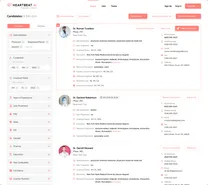
HeartBeat AI maintains a database built for passive healthcare sourcing, with psychologist contact records as one of its coverage areas. Here’s what the platform offers:
- Detailed search filters: Search by license code, license issue and expiration dates, and credentials.
- Verified email data: Email addresses go through a verification step, similar to the process used for phone numbers, to improve deliverability.
- Social profile integration: A Chrome Extension lets you look up healthcare professionals’ contact details while browsing social platforms.
Data Fields in a Psychologist Record
- Name
- Location
- Contact numbers (work, cell, mobile)
- Email address
- Specialization
- Years of experience
- Sole proprietor status
- Licensed states
- License number
- Fax
- Address
 Accuracy & coverage of personal contact info were unrivaled by other platforms… this gives any healthcare recruiter a competitive advantage when engaging hard-to-reach healthcare providers.
Senior Growth Strategist






Why Accurate Contact Data Matters for Outreach
An outdated list can waste time and contribute to bounces or sender-reputation problems. Current, appropriately verified data may help reduce those risks, but verification does not guarantee deliverability.
Targeted Outreach
A targeted mailing list can help you reach a relevant audience segment instead of sending the same generic message to everyone with a psychology license.
Higher Open Rates
Verification can help identify invalid addresses, but it does not guarantee that an address is active or that a message will reach an inbox.
Lower Cost Per Contact
Bounced or misdirected emails can waste outreach spend. Reviewing and cleaning contact data may reduce that waste.
Better Response Rates
Messages sent to psychologists who match your criteria may be more relevant and could be more likely to prompt a reply, whether you are seeking a referral, research collaboration, or partnership.
Professional Credibility
Sending accurate, well-targeted emails signals that you did your homework, which matters in a field built on trust and credentials.
Cleaner Analytics
Accurate contact data can make delivery and bounce metrics more useful, but open and click rates do not measure message quality on their own.
More Conversions
Reaching psychologists who fit your criteria—such as specialty, state, or experience level—can make outreach more relevant and may help start a conversation.
Psychologist Categories Available
Psychologists specialize across a wide range of subfields. Below is a breakdown of the categories represented.
Psychologists Available by State
Coverage is organized by state so you can narrow a search to a specific licensing jurisdiction.
| Psychologist By States |
| Psychologist in Alabama |
| Psychologist in Alaska |
| Psychologist in Arizona |
| Psychologist in Arkansas |
| Psychologist in California |
| Psychologist in Colorado |
| Psychologist in Connecticut |
| Psychologist in Delaware |
| Psychologist in Florida |
| Psychologist in Georgia |
| Psychologist in Hawaii |
| Psychologist in Idaho |
| Psychologist in Illinois |
| Psychologist in Indiana |
| Psychologist in Iowa |
| Psychologist in Kansas |
| Psychologist in Kentucky |
| Psychologist in Louisiana |
| Psychologist in Maine |
| Psychologist in Maryland |
| Psychologist in Massachusetts |
| Psychologist in Michigan |
| Psychologist in Minnesota |
| Psychologist in Mississippi |
| Psychologist in Missouri |
| Psychologist in Montana |
| Psychologist in Nebraska |
| Psychologist in Nevada |
| Psychologist in New Hampshire |
| Psychologist in New Jersey |
| Psychologist in New Mexico |
| Psychologist in New York |
| Psychologist in North Carolina |
| Psychologist in North Dakota |
| Psychologist in Ohio |
| Psychologist in Oklahoma |
| Psychologist in Oregon |
| Psychologist in Pennsylvania |
| Psychologist in Rhode Island |
| Psychologist in South Carolina |
| Psychologist in South Dakota |
| Psychologist in Tennessee |
| Psychologist in Texas |
| Psychologist in Utah |
| Psychologist in Vermont |
| Psychologist in Virginia |
| Psychologist in Washington |
| Psychologist in West Virginia |
| Psychologist in Wisconsin |
| Psychologist in Wyoming |
How This Data Gets Compiled
A reliable psychologist mailing list requires ongoing attention: contact details and credentials can change, so providers and users should check how records are sourced, reviewed, and updated.

1. Research and Identification
Sourcing starts with professional directories, psychology journals, conference attendee lists, and networking platforms where practicing psychologists are listed.
2. Data Collection
Contact details get pulled from those sources using a mix of manual review and automated tooling, with an emphasis on completeness over volume.
3. Credential Verification
Each entry is cross-checked against multiple sources to confirm the person is a currently licensed, practicing psychologist rather than a stale or duplicate record.
4. Data Cleaning and Structuring
Duplicate, malformed, or outdated entries get removed, and the remaining data is organized into a consistent, searchable format.
5. Privacy Compliance Review
Before using contact data, check the privacy, marketing, and professional rules that apply to your situation. Requirements can vary by jurisdiction, data type, and intended use; consent may be required in some circumstances. Confirm current requirements with a qualified compliance professional before launching a campaign.
What to Check Before You Buy a Psychologist Email List

Not every list is created equal. Use this checklist before committing budget:
- Define the purpose first. Referral outreach, research recruitment, and product marketing each call for a different tone and different targeting criteria.
- Confirm the source. Lists built from professional associations and verified directories hold up better than scraped or purchased-then-resold data.
- Ask how often it’s refreshed. Psychologist contact details change with job moves and license renewals; a list that hasn’t been updated in a year will have noticeable decay.
- Check for verification, not just volume. A smaller list of verified emails usually outperforms a larger list padded with guesses.
- Review your own data security practices. Once you have the list, protect it the same way you’d protect any sensitive business data.
Who Typically Uses a Psychologist Email List

Psychologists
For networking, sharing research, and staying connected to a professional community — useful for collaboration on studies or peer consultation.
Mental Health Clinics
To coordinate professional outreach and community initiatives with psychologists. A psychologist contact list should not be treated as a list of patients or used to contact patients.
Researchers
To connect with subject-matter experts, recruit study participants, or share findings with a relevant professional audience.
Educational Institutions
For communicating with faculty and students, promoting continuing education, and maintaining alumni relationships in psychology programs.
Psychology Associations
To keep members informed on policy changes and events, and to run member surveys or feedback campaigns.
Healthcare Providers
To refer patients to psychologists and coordinate care across a broader treatment team.
Getting More Out of a Psychologist Email List

Segment Before You Send
Break the list into smaller groups by location, specialty, or experience level rather than sending one message to everyone. Tailoring content to a group may make the message more relevant.
Write Subject Lines That Are Specific
Use a specific, accurate subject line that signals the reason for contacting the recipient, such as a relevant specialty, location, or event.
Personalize Beyond the Name
Reference the recipient’s specialty or region where relevant. A message that clearly wasn’t written for “anyone with an email address” gets more attention.
Give a Clear Next Step
State plainly what you want the recipient to do — reply, schedule a call, download something — and make that action easy to find.
Track Results and Adjust
Watch open and reply rates over time. If a segment consistently underperforms, that’s a signal to revisit either the targeting or the message itself.
Keep the Tone Professional
Personalization shouldn’t come at the cost of professionalism. Psychologists are busy clinicians; respect that in both tone and frequency.
The Bottom Line
A psychologist email list is only as useful as its accuracy. For referral coordination, research recruitment, or healthcare outreach, prioritize relevant, appropriately verified records over raw list size. Check and update data regularly, and assess privacy and outreach requirements before using it.
If you’re evaluating list providers, HeartBeat AI’s platform is built around verified contact records and searchable filters for healthcare professionals, including psychologists.
Frequently Asked Questions
Are psychologist email lists legally compliant with data privacy regulations?
That depends on the source and how the data is used. Any list you use should account for applicable privacy regulations, and outreach should respect consent requirements and opt-out rights.
How can I ensure the quality of a psychologist email list?
Verify the source’s credibility, ask how often the list is refreshed, and periodically check for bounces or inactive addresses so you can remove them.
Can I customize a psychologist email list to target specific demographics or specialties?
Most providers allow filtering by criteria such as location, specialty (clinical, counseling, school psychology, and others), and years of experience.
What’s the best way to use a psychologist email list for marketing purposes?
Send relevant, specific content — newsletters, research updates, or event invitations — and personalize messages based on specialty or location rather than sending one generic blast.